
BENOPT
Modellfamilie zur Untersuchung künftiger Transformationspfade der energetischen Biomassenutzung im Strom-, Transport- und Wärmesektor sowie Sektoren der Bioökonomie. Aktuell werden zwei Modellvarianten betrieben: BENOPT-EU zielt auf eine Erweiterung des Modells im Europäischen Raum ab. BENOPT-DE fokussiert auf die Modellierung Deutschlands als Ganzes. Über die nachfolgenden Links können Sie mehr über die beiden Versionen erfahren.


Alleinstellungsmerkmale
|
|
Ansprechpersonen:
Danial Esmaeili Aliabadi
Matthias Jordan
Mohammad Sadr
Sandra Gutjahr
Ágnes Csilla T. Szabó
Isabella Kreller
Alumni:
Das BioENergy OPTimization Modell (BENOPT) wurde entwickelt, um den Wettbewerb zwischen verschiedenen Bioenergietechnologien zu simulieren. BENOPT ist ein Optimierungsmodell mit perfekter Voraussicht, das für die optimale Zuteilung von einsatzfähigen erneuerbaren Energieträgern in verschiedenen Sektoren entwickelt wurde. Je nach Modellversion werden folgende Ziele verfolgt: Maximierung der Treibhausgasvermeidung und Kostenminimierung bei gleichzeitiger Erfüllung bestimmter Energie- oder Treibhausgasziele. Zusätzlich ermöglicht BENOPT die Durchführung von Pareto-Analysen durch die Kombination dieser Zielfunktionen.
BENOPT umfasst mehrere Sektoren, darunter Verkehr (Straßenpersonenverkehr, Straßengüterverkehr, Bahnverkehr, Schifffahrt und Luftfahrt), Strom und Wärme (Industrie, Haushalte und Gewerbe) sowie ausgewählte Sektoren der stoffliche Nutzung. BENOPT betrachtet technische negative Emissionstechnologien als auch naturbasierte Lösungen zur Erfüllung der LULUCF Ziele. Das Modell arbeitet jährlich, mit Ausnahme der Residuallast und dem Überschussstrom, welche stündlich analysiert werden können. BENOPT integriert detaillierte Input-Output-, CAPEX- und OPEX-Daten für Rohstoffe, Konversion und Versorgung. Diese Integration ermöglicht umfassende Kostenanalysen und, in Verbindung mit den relevanten Emissionsfaktoren, umfassende Treibhausgasanalysen.
Anhand des Modells kann auch mittels verschiedener Verfahren (Monte Carlo, SOBOL) die Sensitivität der Entwicklungen untersucht werden, auf die eine Vielzahl an Parameter einen Einfluss hat, besonders im komplexen Bereich der Biomassenutzung.
BENOPT wurde/wird in den folgenden Projekten eingesetzt und jeweils angepasst und weiter entwickelt:
MoBioInd (Optimierung: Detaillierte industrielle Prozesswärme)
BioCas (Optimierung: Governance und kaskadierende Nutzung von Biomasse)
BioNET (Optimierung: Negativ-Emissions-Technologien)
Meilensteine 2030 (Simulation: Strom, Wärme, Kraftstoffe)
BEPASO (Optimierung: Strom, Wärme, Kraftstoffe, Chemikalien)
BioPlanW (Optimierung: Wärme)
BKSQuote (Optimierung: Kraftstoffe)
TATBio (Optimierung: Strom, Wärme, Kraftstoffe)
BEniVer (optimierung: biokraftstoffe und elektrokraftstoffe)
AGRI-TRANSFORM (Optimierung: alle Sektoren, einschließlich Lebensmittel)
SmartWirbelschicht, KonditorGas (Optimierung: u. a. fortschrittliche Technologien im Wärmebereich)
SoBio, BIOSTRAT, Symobio 2.0 (Optimierung: Strom, Wärme, Kraftstoffe)
SoBio ll (Optimierung: Bioökonomie)
Man0EUvRE (Optimierung, integrierte Ansicht, EU)
News
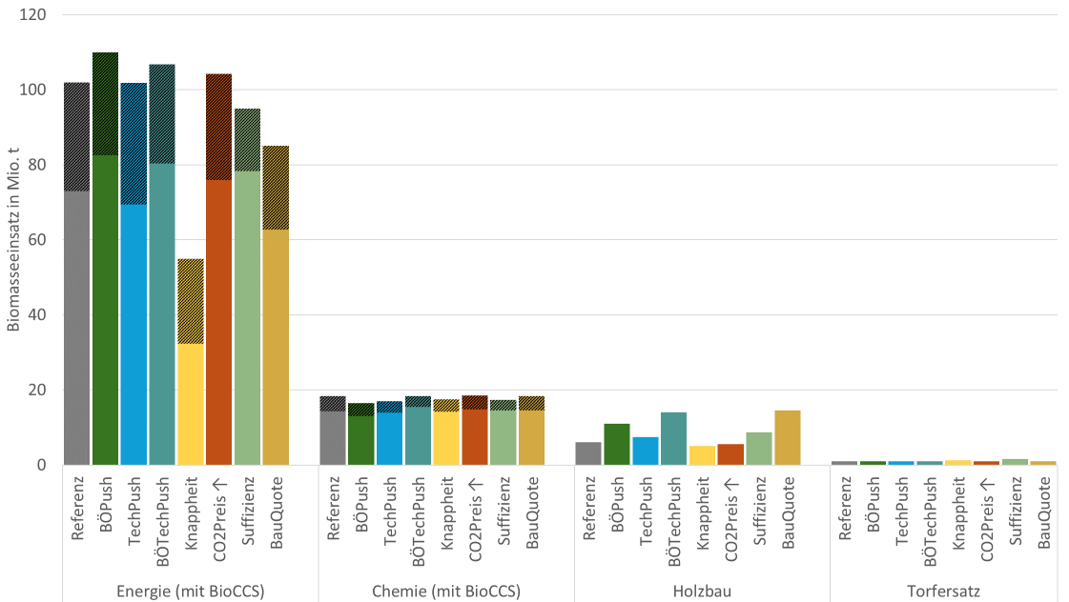
- 06.05.2026: Tagespiegel Background diskutiert BENOPT Ergebnisse die im Rahmen des Projektes SoBio2 erstellt wurden:
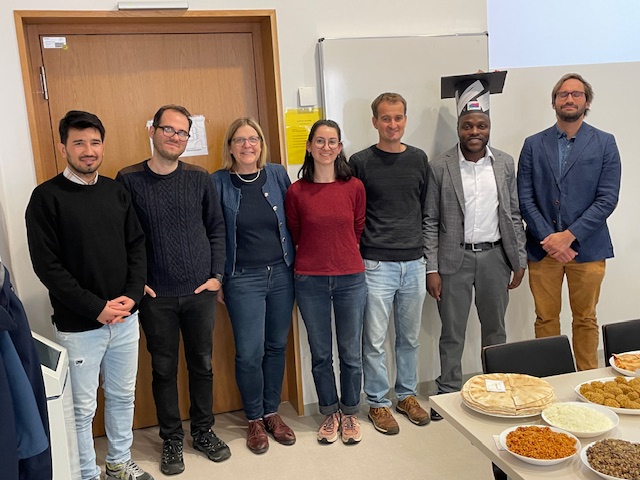
- 26.09.2025: Die Verteidigung der Doktorarbeit von Frazer Musonda an der Universität Leipzig.
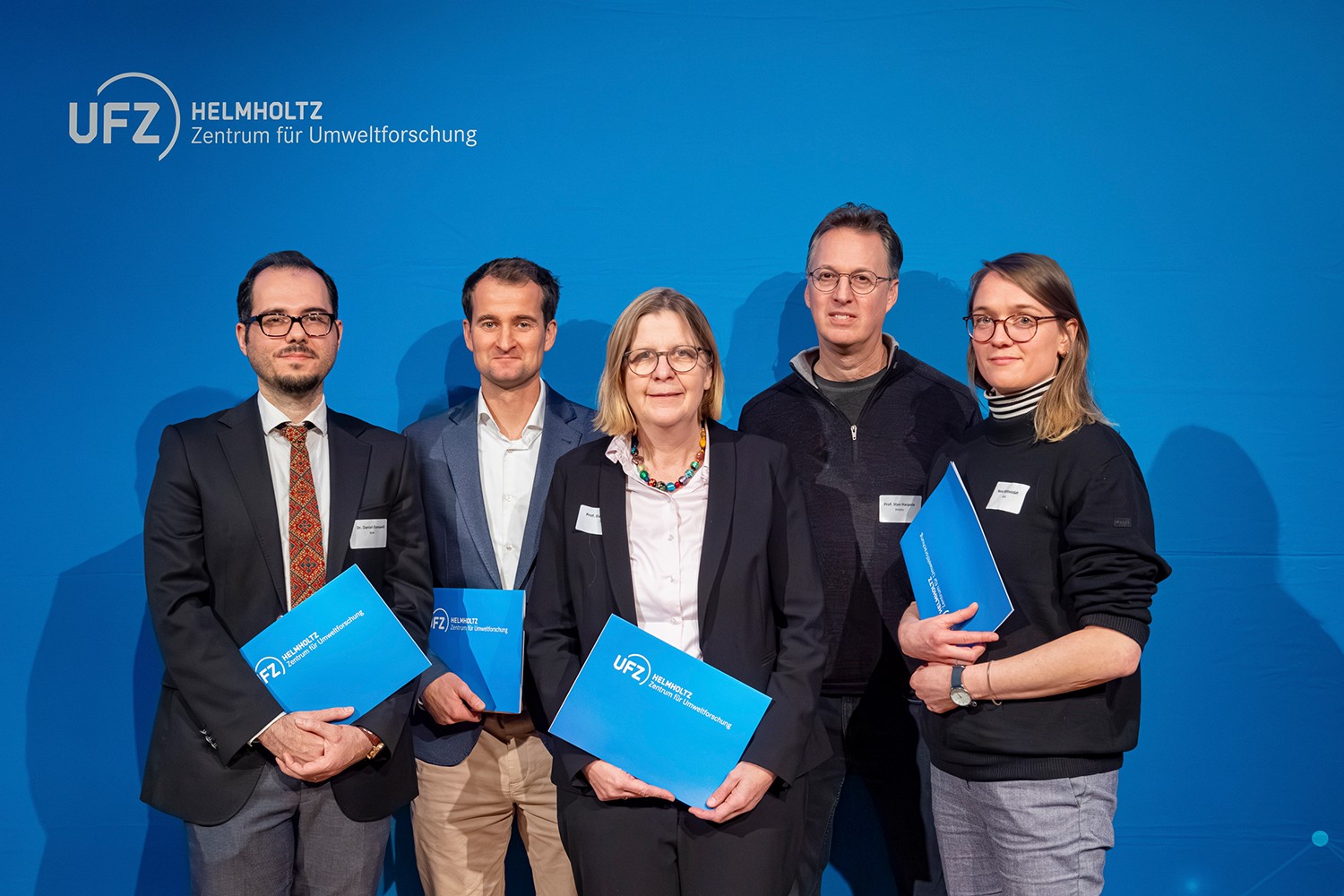
- 10.12.2024: Das BENOPT Team erhält gemeinsam mit anderen Forscher'innen den UFZ-Forschungspreis für deren Leistung zur Realisierung einer nachhaltigen Biomassenutzung für Klimaneutralität in Deutschland.
- Juli 2023 - Das erste Papier über die neue grafische Benutzeroberfläche des BENOPT-Modells ist veröffentlicht worden.
Publikationen:
Sadr, M., Esmaeili Aliabadi, D., Jordan, M., Wollnik, R., Thrän, D. (2026): Unleashing the combined potential of bio-based carbon dioxide removal in Germany’s path to net zero from the bioenergy system perspective, iScience 29 (8), art. 116852 10.1016/j.isci.2026.116852
Gutjahr, S., Thrän, D., Esmaeili Aliabadi, D. (2026): Tango of renewables in the triangle of uncertainty: A German case study, Adv. Appl. Energy 22, art. 100281 10.1016/j.adapen.2026.100281
Cyfka, A., Jordan, M., Vollmers, J., Thrän, D. (2026): The future role of agroforestry and Agri-PV in the German energy system - An analysis with the BENOPTex model. Energy Conv. Manag.-X 10.1016/j.ecmx.2026.101614
Esmaeili Aliabadi, D., Wulff, N., Lehneis, R., Sadr, M., Gutjahr, S., Reutter, F.J., Jordan, M., Lehmann, P., Thrän, D. (2025): Climate change may impair the transition to a fully renewable energy system: A German case study. Energy 338, art. 138684 10.1016/j.energy.2025.138684
Wulff, N., Esmaeili Aliabadi, D., Samuel, H., Pregger, T., Özcan, D., Gils, H.C., Kronshage, S., Ruiz, E.S.A., Grimme, W., Horst, J., Jochem, P. (2025): Energy system implications of demand scenarios and supply strategies for renewable transportation fuels. Energy Strateg. Rev. 58, art. 101606: 10.1016/j.esr.2024.101606
Sadr, M., Esmaeili Aliabadi, D., Jordan, M., Thrän, D. (2024): A bottom-up regional potential assessment of bioenergy with carbon capture and storage in Germany. Environ. Res. Lett. 19 (11), art. 114047 10.1088/1748-9326/ad7edd
Jordan, M., Meisel, K., Dotzauer, M., Schindler, H., Schröder, J., Cyffka, K.-F., Dögnitz, N., Naumann, K., Schmid, C., Lenz, V., Daniel-Gromke, J., Costa de Paiva, G., Esmaeili Aliabadi, D., Szarka, N., Thrän, D. (2024): Do current energy policies in Germany promote the use of biomass in areas where it is particularly beneficial to the system? Analysing short- and long-term energy scenarios. Energy Sustain. Soc. 14 , art. 32 10.1186/s13705-024-00464-1
Sadr, M., Esmaeili Aliabadi, D., Avşar, B., Thrän, D. (2024): Assessing the impact of seasonality on bioenergy production from energy crops in Germany, considering just-in-time philosophy. Biofuels Bioprod. Biorefining 10.1002/bbb.2602
Musonda, F., Millinger, M., & Thrän, D. (2024): Modelling assessment of resource competition for renewable basic chemicals and the effect of recycling. GCB Bioenergy, 16, e13133. https://doi.org/10.1111/gcbb.13133
Esmaeili Aliabadi, D., Chan, K., Wulff, N., Meisel, K., Jordan, M., Österle, I., Pregger, T., Thrän, D. (2023): Future renewable energy targets in the EU: Impacts on the German transport, Transportation Research Part D: Transport and Environment, 124, 103963: https://doi.org/10.1016/j.trd.2023.103963
Jordan, M., Meisel, K., Dotzauer, M., Schröder, J., Cyffka, K.-F., Dögnitz, N., Schmid, C., Lenz, V., Naumann, K., Daniel-Gromke, J., Costa de Paiva, G., Schindler, H., Esmaeili Aliabadi, D., Szarka, N., Thrän, D. (2023): The controversial role of energy crops in the future German energy system: The trade offs of a phase-out and allocation priorities of the remaining biomass residues. Energy Reports, 10, 3848 - 3858: https://doi.org/10.1016/j.egyr.2023.10.055
Esmaeili Aliabadi, D., Manske, D., Seeger, L., Lehneis, R., Thrän, D. (2023). Integrating knowledge acquisition, visualization, and dissemination in energy system models: BENOPTex study. Energies 16 (13), art. 5113: https://doi.org/10.3390/en16135113
Millinger, M., Tafarte, P., Jordan, M., Musonda, F., Chan, K., Meisel, K., & Aliabadi, D. E. (2022). A model for cost-and greenhouse gas optimal material and energy allocation of biomass and hydrogen. SoftwareX, 20, 101264: https://doi.org/10.1016/j.softx.2022.101264
Jordan, M., Millinger, M., & Thrän, D. (2022). Benopt-Heat: An economic optimization model to identify robust bioenergy technologies for the German heat transition. SoftwareX, 18, 101032: https://doi.org/10.1016/j.softx.2022.101032
Lauer, M., Dotzauer, M., Millinger, M., Oehmichen, K., Jordan, M., Kalcher, J., ... & Thraen, D. (2022). The Crucial Role of Bioenergy in a Climate‐Neutral Energy System in Germany. Chemical Engineering & Technology: https://doi.org/10.1002/ceat.202100263
Mutlu, Ö., Jordan, M., Zeng, T., & Lenz, V. (2022). Competitive Options for Bio‐Syngas in High‐Temperature Heat Demand Sectors: Projections until 2050. Chemical Engineering & Technology: https://doi.org/10.1002/ceat.202200217
Aliabadi, D. E., Chan, K., Jordan, M., Millinger, M., & Thrän, D. (2022, April). Abandoning the Residual Load Duration Curve and Overcoming the Computational Challenge. In 2022 Open Source Modelling and Simulation of Energy Systems (OSMSES) (pp. 1-6). IEEE: http://doi.org/10.1109/OSMSES54027.2022.9769166
Musonda, F., Millinger, M., Thrän, D., (2021): Optimal biomass allocation to the German bioeconomy based on conflicting economic and environmental objectives. J. Clean Prod. 309, art. 127465: http://dx.doi.org/10.1016/j.jclepro.2021.127465
Jordan, M., Hopfe, C., Millinger, M., Rode, J., Thrän, D., (2021) Incorporating consumer choice into an optimization model for the German heat sector: Effects on projected bioenergy use. J. Clean Prod. 295, art. 126319: http://dx.doi.org/10.1016/j.jclepro.2021.126319
Millinger, M., Tafarte, P., Jordan, M., Hahn, A., Meisel, K., Thrän, D. (2021): Electrofuels from excess renewable electricity at high variable renewable shares: cost, greenhouse gas abatement, carbon use and competition. Sustainable Energy & Fuels 5 (3): 828-843: http://dx.doi.org/10.1039/D0SE01067
Meisel, K., Millinger, M., Naumann, K., Müller-Langer, F., Majer, S., Thrän, D., (2020): Future renewable fuel mixes in transport in Germany under RED II and climate protection targets. Energies 13 (7), art. 1712: http://dx.doi.org/10.3390/en13071712
Musonda, F., Millinger, M., Thrän, D., (2020): Greenhouse gas abatement potentials and economics of selected biochemicals in Germany. Sustainability 12 (6), art. 2230: http://dx.doi.org/10.3390/su12062230
Jordan, M., Millinger, M., Thrän, D., (2020): Robust bioenergy technologies for the German heat transition: A novel approach combining optimization modeling with Sobol’ sensitivity analysis. Appl. Energy 262 , art. 114534: http://dx.doi.org/10.1016/j.apenergy.2020.114534
Jordan, M., Lenz, V., Millinger, M., Oehmichen, K., Thrän, D., (2019): Future competitive bioenergy technologies in the German heat sector: Findings from an economic optimization approach. Energy 189 , art. 116194: https://doi.org/10.1016/j.energy.2019.116194
Millinger, M., Meisel, K., Thrän, D., (2019): Greenhouse gas abatement optimal deployment of biofuels from crops in Germany. Transport. Res. Part D-Transport. Environ. 69 , 265 - 275: https://doi.org/10.1016/j.trd.2019.02.005. Open source model available here: https://doi.org/10.5281/zenodo.2812986
Millinger, M., (2018): Systems assessment of biofuels : modelling of future cost and greenhouse gas abatement competitiveness between biofuels for transport on the case of Germany. Dissertation, Universität Leipzig, Wirtschaftswissenschaftliche Fakultät. PhD Dissertation 3/2018. Helmholtz-Zentrum für Umweltforschung - UFZ, Leipzig, XVII, 92 pp.
Millinger, M., Meisel, K., Budzinski, M., Thrän, D., (2018): Relative greenhouse gas abatement cost competitiveness of biofuels in Germany. Energies 11 (3), art. 615: https://doi.org/10.3390/en11030615. Open source model available here: https://doi.org/10.5281/zenodo.2810903
Millinger, M., Thrän, D., (2018): Biomass price developments inhibit biofuel investments and research in Germany: The crucial future role of high yields. J. Clean Prod. 172 , 1654 - 1663
Millinger, M., Ponitka, J., Arendt, O., Thrän, D., (2017): Competitiveness of advanced and conventional biofuels: Results from least-cost modelling of biofuel competition in Germany. Energy Policy 107 , 394 - 402
Thrän, D., Arendt, O., Banse, M., Braun, J., Fritsche, U., Gärtner, S., Hennenberg, K.J., Hünneke, K., Millinger, M., Ponitka, J., Rettenmaier, N., Schaldach, R., Schüngel, J., Wern, B., Wolf, V., (2017): Strategy elements for a sustainable bioenergy policy based on scenarios and systems modeling: Germany as example. Chem. Eng. Technol. 40 (2), 211 - 226
Thrän, D., Schaldach, R., Millinger, M., Wolf, V., Arendt, O., Ponitka, J., Gärtner, S., Rettenmaier, N., Hennenberg, K., Schüngel, J., (2016): The MILESTONES modeling framework: An integrated analysis of national bioenergy strategies and their global environmental impacts. Environ. Modell. Softw. 86 , 14 - 29