
Dr. Lisa Hildebrand
Contact
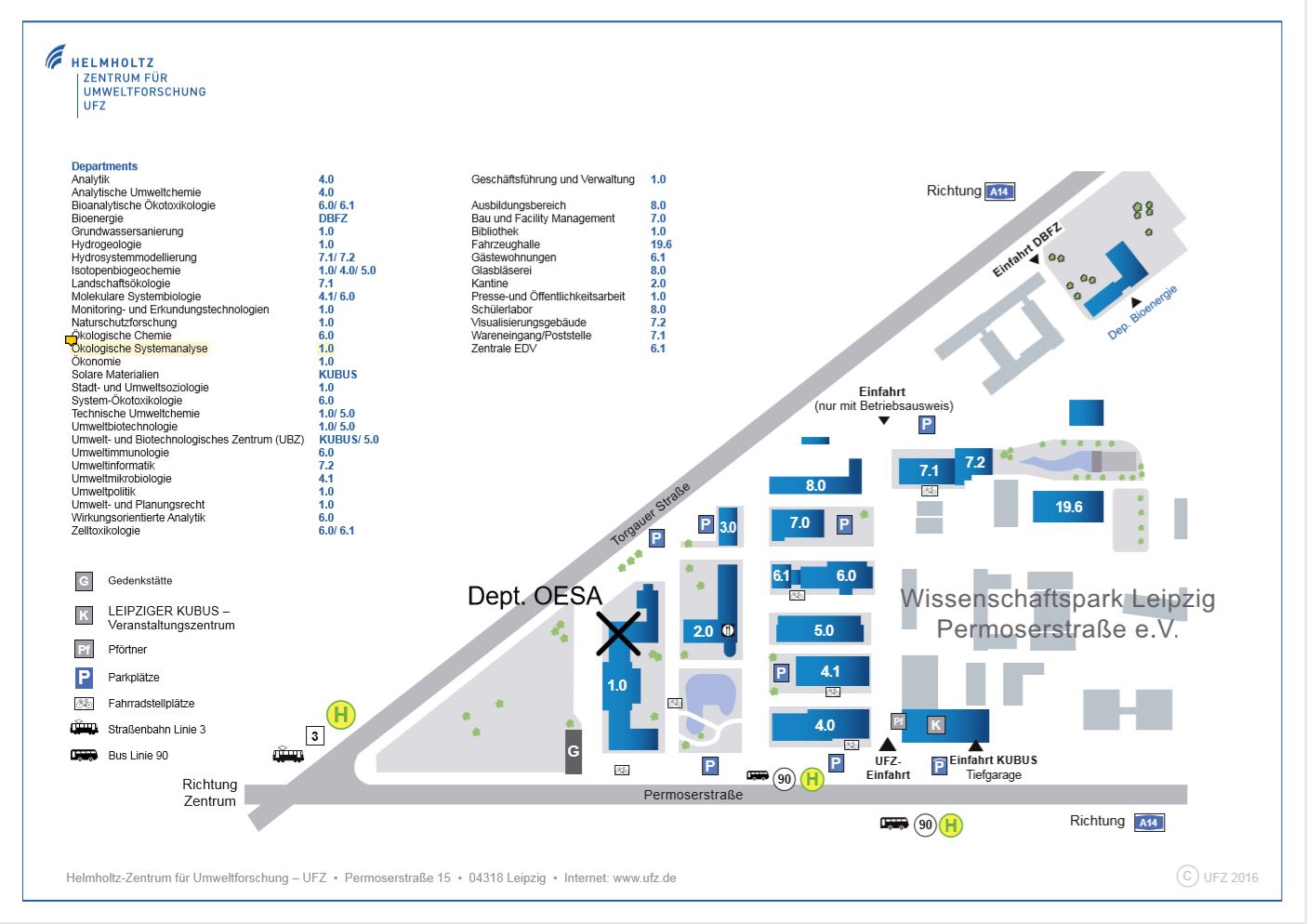
Helmholtz Centre for Environmental Research
Department of Ecological Modelling
Permoserstr. 15
04318 Leipzig
Germany
Building 1.0, Room 202
Phone.: +49 341 235- 1546 (Zoom)
Research Interests
I am a quantitative ecologist interested in how environmental variability and human activities shape animal distribution, movement, behaviour, and population dynamics across spatiotemporal scales. My research integrates ecological theory, spatial analysis, and statistical modelling to better understand species−environment relationships, trophic ecology, habitat use, and responses to environmental change and anthropogenic disturbance. I am also passionate about collaborative, interdisciplinary science, effective communication of research results to diverse audiences, and providing learning and research opportunities to the next generation of scientists.
At the UFZ, I am working with Dr. Tatiane Micheletti in the BirdFutures project within the TripleBird project. BirdFutures, funded by the Bundesministerium für Forschung, Technologie und Raumfahrt under the Forschung für Nachhaltigkeit strategy, uses bird populations as an indicator of how nature and biodiversity are changing in Europe. We combine bird observations collected by our project partner, the Dachverband Deutscher Avifaunisten, with environmental and climate data to forecast future bird distribution and biodiversity scenarios.
CV
Please see full list of publications here.
| 05/2026-Current |
Postdoctoral researcher UFZ | Helmholtz Centre for Environmental Research Project: BirdFutures: A Scalable Framework for Ecological Foresight |
| 01/2021-12/2025 |
Ph.D. Wildlife Science OSU | Oregon State University Dissertation: "Investigating individuals: environmental drivers and health consequences of gray whale foraging ecology" |
| 09/2018-12/2020 |
M.S. Wildlife Science OSU | Oregon State University Thesis: "Tonight's specials include mysids, amphipods, and more: an examination of the zooplankton prey of Oregon gray whales and its impact on foraging choices and prey selection" |
| 09/2015-06/2018 |
B.S. Marine Zoology NU | Newcastle University |