
Identification of risk drivers in complex mixtures
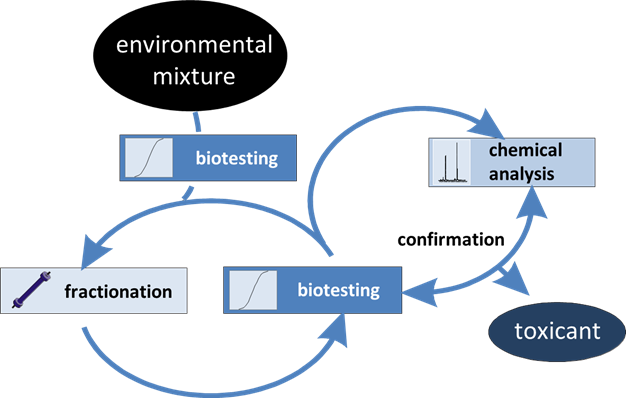
Complex environmental mixtures of chemicals in water, soils or biota typically contain ten thousands of individual compounds that may contribute to mixture effects. However, the number of chemicals that substantially contribute to mixture risks are typically much lower. Particularly for specific effects it might be only few mixture components. We call them risk drivers. To identify these drivers is key for the implementation of mitigation measures to regulate these chemicals, minimize emissions or remediate hazardous pollution.
We are one of the pioneers in developing concepts combining effect-based methods with chemical screening tools, fractionation approaches and computer tools to reduce the complexity of mixtures and to identify compounds causing effects. The major approach is called effect-directed analysis (EDA) and we have applied this approach successfully applied in many cases. Examples are the identification of anti-androgenic coumarin dyes in river water (Muschket et al., 2018), of antidepressants and antihelmintics as the cause of sea urchin toxicity of wastewater discharged to the Biscay Sea (Mijangos et al., 2020) together with the University of the Basque Country and of glucocorticoids in indoor dust together with RECETOX (Pinto-Vidal et al., 2025). Recently our focus is on high-throughput EDA supported by toxicity prediction to make EDA applicable for larger numbers of samples and even monitoring (Alvarez-Mora et al., 2024; Alvarez-Mora et al., 2025).