
Cosmic-Ray Neutron Sensing (CRNS) at UFZ
What is Cosmic-Ray Neutron Sensing?
Cosmic rays continuously generate fast neutrons in the Earth’s atmosphere. Since hydrogen atoms slow these neutrons down particularly efficiently, the water content of the surrounding environment can be determined from the measured neutron intensity near the Earth’s surface—non-contact, low-maintenance, and representative of large areas (~10 soccer fields) and depths down to the root zone (~50 cm). Cosmic-Ray Neutron Sensing (CRNS) utilizes precisely this principle for the non-invasive measurement of soil moisture, snow, and other environmental water reservoirs. The method can help close key gaps in our understanding of the landscape water cycle (Oswald et al., 2024).
Our research topics:
- 1. Environmental monitoring und observation networks
- 2. Agriculture and irrigation management
- 3. Innovative mobile platforms – cars, trains, airships
- 4. Hydrological modelling and drought research
- 5. Snow monitoring in Alps and Arctics
- 6. Solar events and Space Weather
- 7. Fundamental research: detector physics and simulation
1. Environmental monitoring und observation networks
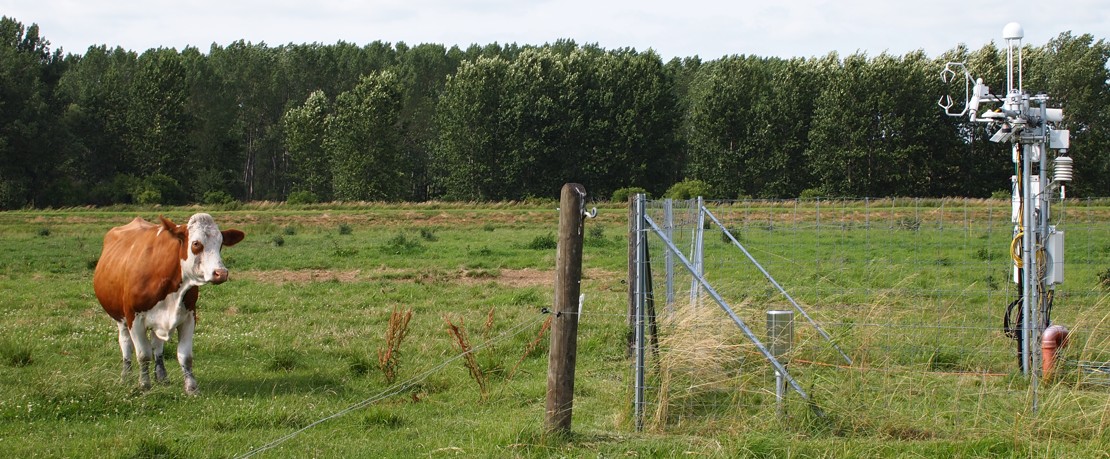
Fixed CRNS sensors enable continuous, area-representative environmental monitoring. At the UFZ, we operate more than 20 stations across Europe and have made a significant contribution to data analysis for the European COSMOS-Europe network (Bogena & Schrön et al., 2022). In densely instrumented catchment areas—both in the Pre-Alpine region and in northern Germany—sensor networks provide high-quality long-term data (Fersch et al., 2020; Heistermann et al., 2023). A decade of continuous monitoring in a German deciduous forest demonstrates the potential for long-term ecosystem monitoring (Pohl et al., 2025). CRNS sensors are also an integral part of TERENO, Germany’s integrated terrestrial environmental observatory (Zacharias et al., 2024). Furthermore, we have demonstrated that CRNS networks can also be deployed in urban areas to monitor the urban water cycle (Schrön et al., 2018b). In collaboration with the University of Bristol, the accuracy of the method was investigated under humid climatic conditions (Iwema et al., 2021). Mobile CRNS systems provide spatial soil moisture data, which for the first time allowed large-scale patterns to be measured and compared with hydrological and weather models (Wieser et al., 2023; Kunz et al., 2022; Handwerker et al., 2025).
2. Agriculture and Irrigation Management
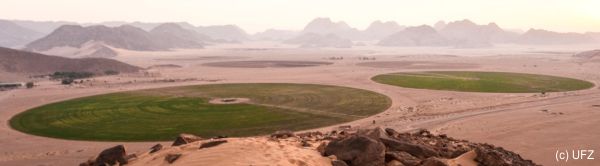
CRNS sensors can be used directly to control drip irrigation (Li et al., 2019). Plant biomass influences the neutron signal and must be taken into account during analysis (Al-Mashharawi et al., 2025). Neutron transport simulations help to better interpret field experiments on irrigated areas and to further develop the method for agricultural practice (Brogi et al., 2026).
3. Innovative mobile platforms – cars, trains, airships
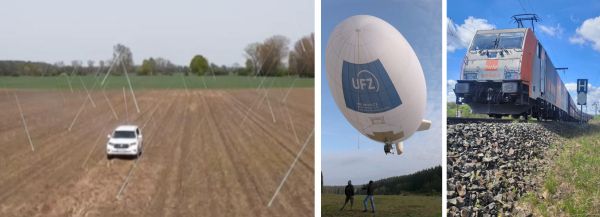
One of CRNS’s particular strengths lies in its mobility. Rover campaigns using CRNS sensors in cars provide spatially differentiated moisture patterns. We demonstrate the benefits for agricultural and hydrological applications and how infrastructure such as roads influences the neutron signal (Schrön et al., 2018a). We have systematically estimated the uncertainties of such spatial measurements (Jakobi et al., 2020). Such measurements can be visualized and analyzed in three dimensions in conjunction with other hydrological measurement and model data (Rink et al., 2022). Finally, machine learning makes it possible to extrapolate from individual measurement sections to the broader area while quantifying the influence of measurement uncertainties (Dega et al., 2023; Paasche et al., 2025). Mounted on trains, mobile systems cover transregional areas (Schrön et al., 2021; Altdorff et al., 2023). Combined with SAR remote sensing and validated by ground samples, this creates a powerful multimodal observation system (Fersch et al., 2018). In Saxony-Anhalt, we have used airborne neutron sensing for the first time on a gyrocopter (Lausch et al., 2019) and in a national park using a hot-air airship (Heistermann et al., 2022). Simulations help us understand how the neutron signal changes with altitude (Francke et al., 2025, Schrön, 2017).
4. Hydrological Modeling and Drought Research
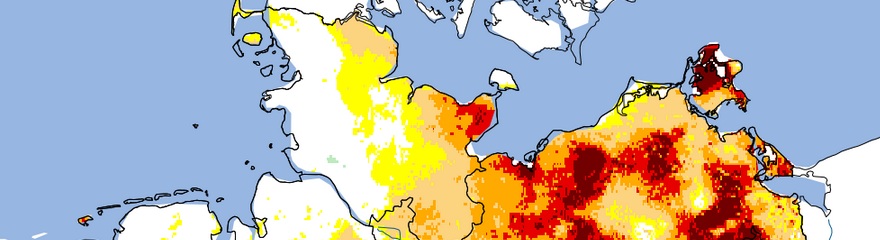
CRNS data significantly improve the parameterization and validation of hydrological models: For the first time, mobile measurements on trains allow for the validation of spatial soil moisture patterns in large-scale models (Fatima et al., 2025), while stationary networks enable the use of the data to validate drought simulations in Germany (Fatima et al., 2024; Boeing et al., 2022) and water balance models in Brandenburg (Heistermann et al., 2026). CRNS also provides important observations for coupled land-atmosphere model systems (Arnault et al., 2025) and could also be useful as an option for parameter optimization of multiscale water balance models (Rakovec et al., 2015; Cuntz et al., 2015). Satellite-based soil moisture products can also be systematically validated by comparing them with CRNS networks (Schmidt et al., 2024).
5. Snow Monitoring in the Arctic and the Alps
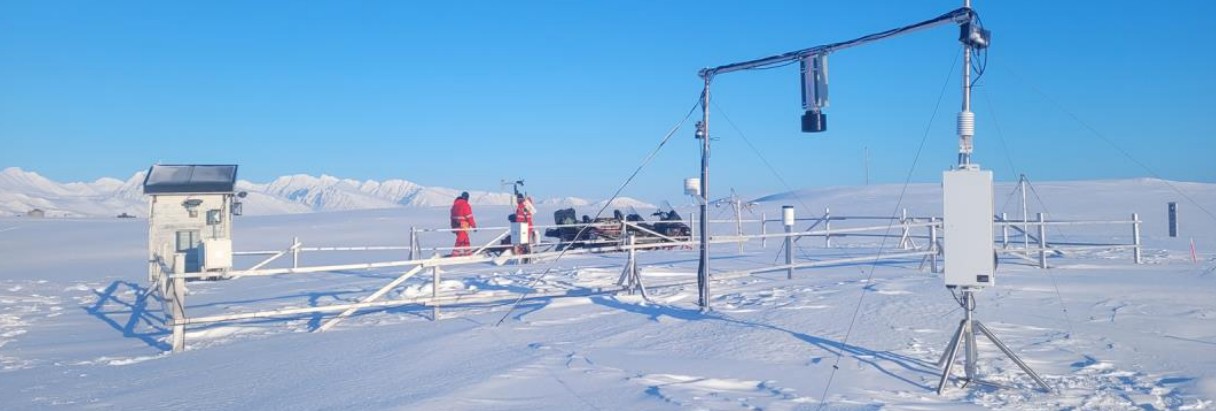
In alpine regions, CRNS enables widespread measurement of snow water equivalent—though the impact of partial snow cover on the signal must be carefully taken into account (Schattan et al., 2019). Mobile CRNS systems on trains open up new possibilities for transregional snow and soil moisture monitoring over long distances (Schrön et al., 2021). On Spitsbergen (Arctic), CRNS detectors are deployed under the coldest conditions in snow and ice to observe heliospheric and geomagnetic influences on cosmic rays (Riggi et al., 2025).
6. Solar Events and Space Weather
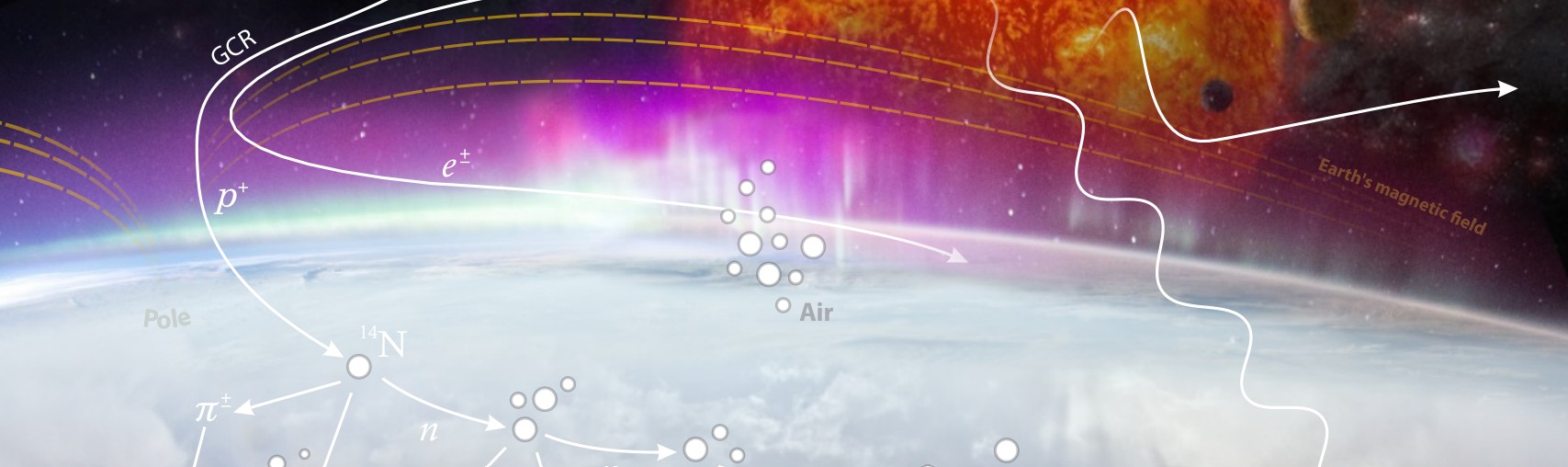
Cosmic neutron intensity is influenced not only by ground moisture but also by solar activity and geomagnetic disturbances. Using a CRNS system on a lake, atmospheric, geomagnetic, and heliospheric influences can be visualized, such as solar storms and increased cosmic radiation from space (Schrön et al., 2016, Schrön & Rasche et al., 2024). The idea was further pursued in Australia, among other places (McJannet et al., 2025). During the extreme solar storms in May 2024, significant events were recorded on Spitsbergen (Riggi & Hertle et al., 2025), and the impact on various neutron energies as well as muons was investigated. We measured how the Earth’s magnetic field affects the global distribution of cosmic rays from Europe to the South Pole using the research vessel “Polarstern” (Hertle et al, 2026). The correct correction of the incoming neutron intensity based on global neutron monitors is a central methodological issue (Hertle et al., 2025) and would serve as a basis for the expansion of future networks (Franz et al., 2025).
7. Fundamental Research: Detector Physics and Simulation
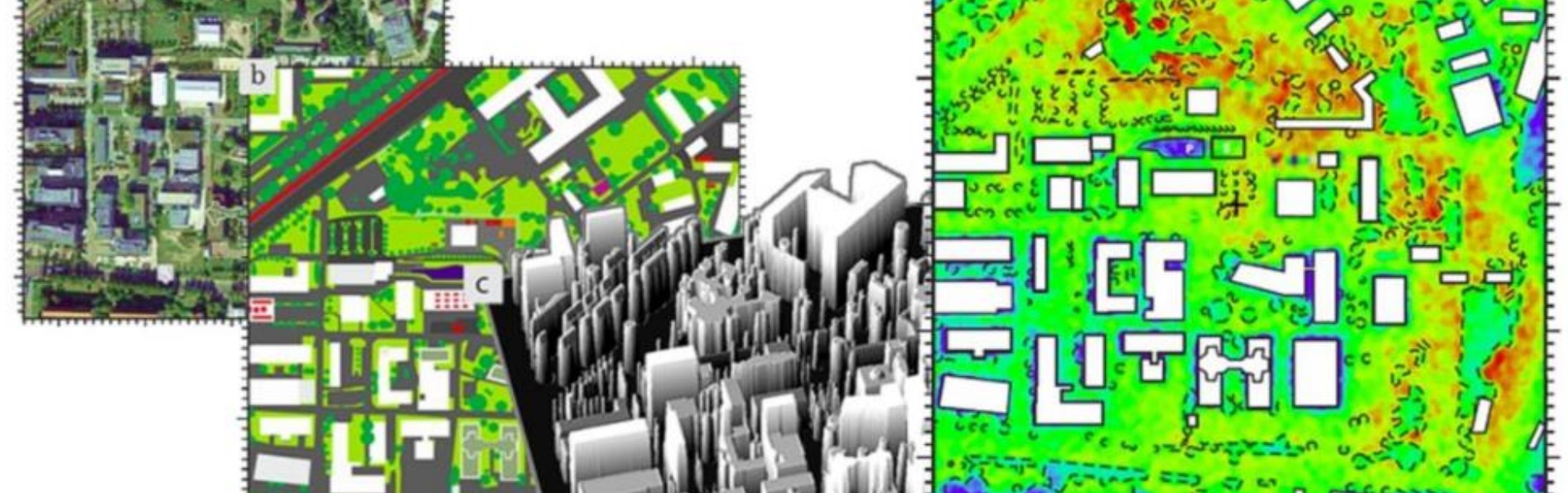
The physical basis of the CRNS method requires a deep understanding of neutron transport and detector properties. In collaboration with Heidelberg University, we developed “URANOS” (Köhli et al., 2023), a neutron transport simulation specifically designed for environmental applications, which allows us to theoretically investigate how neutrons react to various environmental conditions (Francke et al., 2025). This allows us to better understand the measuring instruments themselves (Köhli et al., 2018) and, in practical terms, contribute to a better translation of neutrons into soil moisture, which is particularly important in arid regions (Köhli et al., 2021). By analyzing different neutron energies, we can even resolve heterogeneous soil moisture patterns within the measurement range (Rasche et al., 2021). We were able to fully simulate an urban area using URANOS and compared the predicted neutrons with various detector systems under controlled conditions (Schrön et al., 2018b). New configurations such as directional detectorsn (Francke et al., 2022) and the use of URANOS in boreholes (Rasche et al., 2023) are also being tested and modeled with URANOS. We also investigate the uncertainties of the measurement signal empirically (Baroni et al., 2018, Iwema et al., 2017), and we are developing novel methods for calibrating the sensor without local soil samples, based on globally valid parameters (Heistermann et al., 2024). With this improved theoretical understanding, we can now precisely describe how many neutrons from which region contribute to the measured signal, even in complex environments (Schrön et al., 2023, Brogi et al., 2026).