
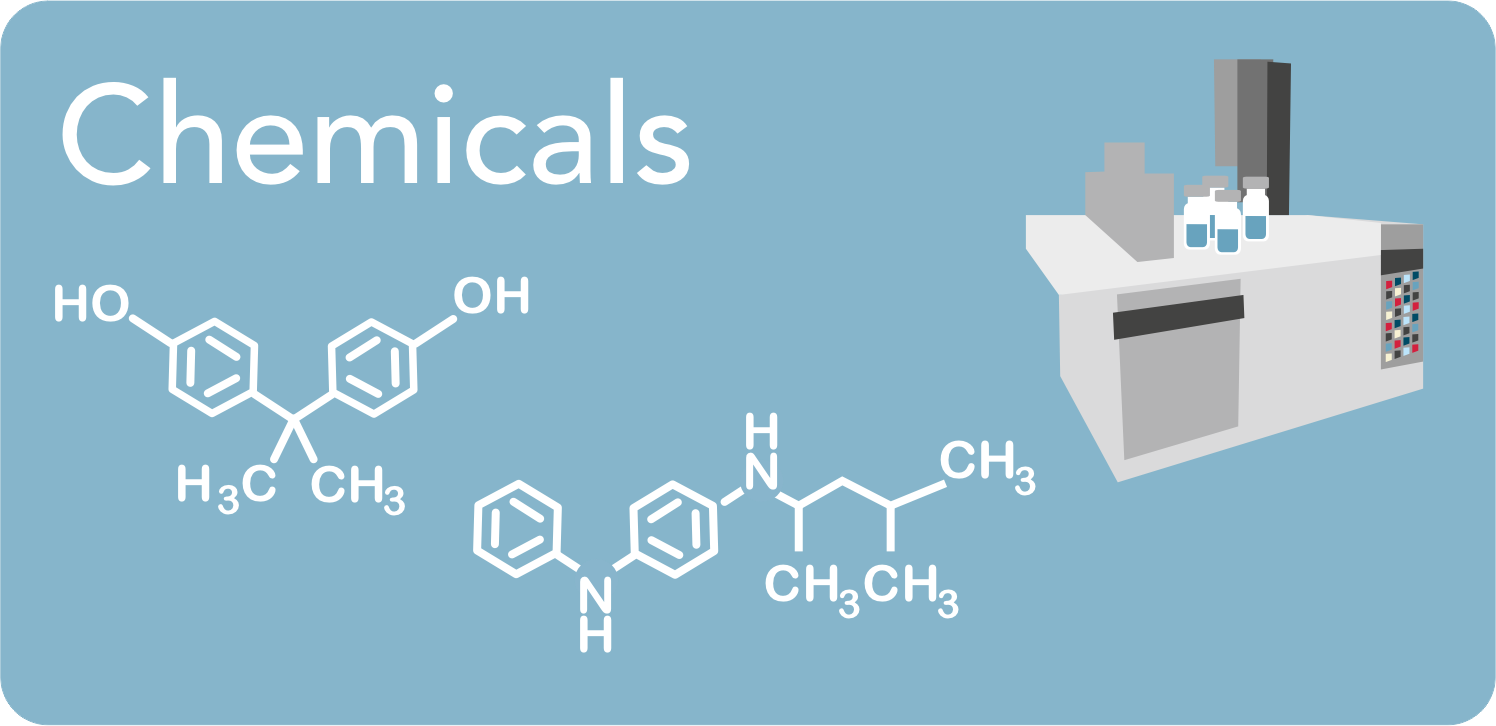
Recent years have extended the focus from particles to the chemicals associated with plastics and tire wear. They can be liberated to the surroundings and undergo partitioning, amongst others into biota.

Our research investigates how plastics and plastic-associated chemicals, particularly metabolism-disrupting chemicals (MDCs), contribute to obesity and related metabolic diseases. We focus on adipose tissue, where MDCs can alter adipocyte function and promote chronic low-grade inflammation. Special attention is given to the interaction between adipocytes and macrophages, key drivers of obesity-associated tissue dysfunction. We aim to identify molecular mechanisms underlying MDC-induced effects on cell differentiation and function to improve the understanding of health risks associated with plastic-associated chemicals with the ultimate goal to support the development of evidence-based prevention and intervention strategies.
https://www.b-tu.de/fg-zellbiologie/page
Kristin Schubert
ORCid
Research team: https://www.b-tu.de/en/fg-zellbiologie/team/chairholder
Publications: https://www.researchgate.net/profile/Kristin-Schubert?ev=hdr_xprf

The PlastChem report identified more than 16,000 chemicals associated with plastics. To better understand how this chemical complexity is reflected across environmental compartments, we use an analytical toolbox that combines target analysis, suspect and non-target screening, and sum parameters.
Analyses are performed using gas and liquid chromatography coupled to tandem or high-resolution mass spectrometry. The target scope includes more than 70 analytes, including plasticizers, UV stabilizers, antioxidants, and flame retardants. The analytical methods have been optimized to achieve the low detection limits required for samples from marine and polar environments. Target analysis is complemented by suspect and non-target screening, enabling the discovery of previously overlooked chemicals and transformation products.
Hanna Joerss ORCiD
Projects

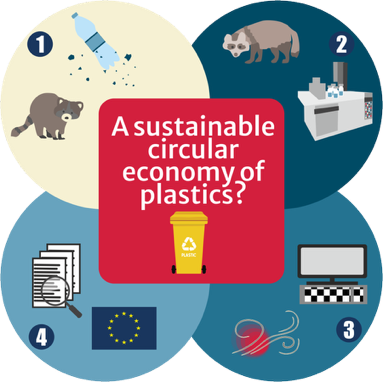
Plastics are known to contain a multitude of compounds to yield desired material properties – recent work showed that it can be more than 16,000 chemicals, some with known hazardous properties. Since they are not chemically bound to the polymer backbone, additives may leach into their surroundings. We characterize plastic-associated chemicals leaching from different polymers into various matrices and model their partitioning. We combine accelerated weathering under strong UV irradiation with chemical analytical determination and characterize their mixture effects using effect-based tools.
Research team:
Elisa Rojo-Nieto
Martin Simoneit
Alexander Böhme
Nadin Ulrich
Publications:
P-LEACH

Tires contain complex mixtures of chemicals that are used in their production and formed during the production process or throughout the tires life-cycle. These chemicals include antioxidants like 6-PPD or its oxidation product 6-PPD quinone and 1,3-diphenylguanidine which aids in the vulcanization process. Many of these chemicals are released to the environment from tire and road wear particles (TRWP) where they may undergo transformation. We analyse and quantify tire-associated chemicals in various media from stormwater run-off to biota and air, describe their release characteristic throughout different life-stages of tires, and study their environmental fate. To better understand the fate of tire related chemicals we combine lab experiments with environmental monitoring.
Research team:
Bettina Seiwert
Daniel Zahn
Harriet Byrne
Volkwin Kuntz
Thorsten Reemtsma

Understanding the fate of plastic additives is essential for accurately assessing their environmental risks. Our modeling approaches explore how these substances leach from polymer materials into the environment and living organisms. By integrating both kinetic and thermodynamic frameworks, we capture processes under realistic conditions as well as in worst-case scenarios. This enables a more robust and comprehensive evaluation of additive release, distribution, and potential exposure pathways.
Projects: