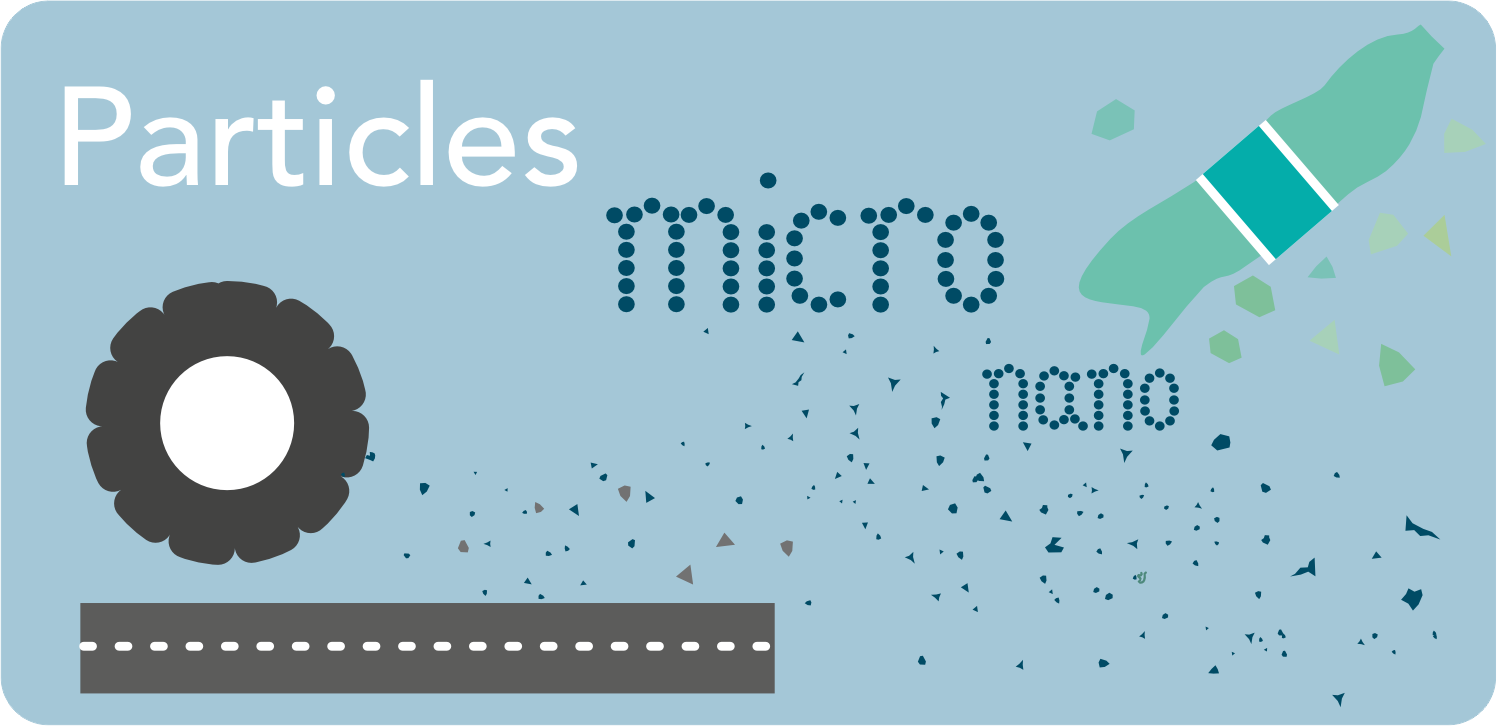
We address macro-, micro- and nanoplastics and also cover tire and road wear particles in diverse projects, settings and ecosystems.
Micro- and nanoplastics

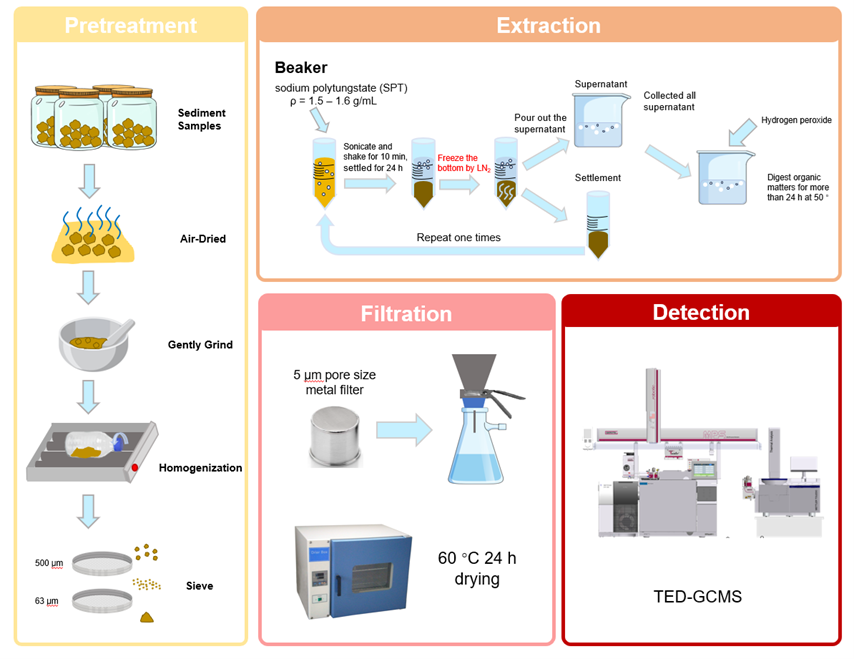
This method is designed for the analysis of polyethylene (PE), polypropylene (PP), polyethylene terephthalate (PET), polyamide (PA), poly methylmethacrylate (PMMA), polystyrene (PS), and polylactic acid (PLA) microplastics in soils and sediments. The sample preparation workflow allows for a high recovery of the MPs due to the combination of density separation and liquid nitrogen-based decanting of the particles. The MPs pollution of the samples is quantified in terms of mass-based derived from pyrolysis and follow-up gas-chromatography mass spectrometry (TED-GC-MS) analysis of the individual polymers.

Isolation and detection of microplastics (MP) in marine samples is extremely cost- and labor-intensive, limiting the speed and amount of data that can be collected. This work develops rapid measurement of large net-collected MPs (net mesh size 300 μm) using a benchtop near-infrared hyperspectral imaging system. The method allows at-sea, near real-time identification of MP polymer types and particle dimensions, and shows great promise for rapid field measurements of microplastics in net-collected samples. Ongoing work seeks to improve polymer and non-polymer particle identification through AI model training.
Aaron Beck
Eric Achterberg
Publications:
Springer

The working group “Microbial Ecology – Microplastics” with in the section Shelf Sea Systems Ecology of the AWI has a strong background in the analysis of microplastics. Its experience covers the extraction and analysis of microplastics from environmental samples covering most types of water samples, Sea ice, snow, sediments, soils, sewage sludge and biota. By correlative analysis approaches covering FTIR, Raman and SEM-EDX analysis microplastic particles are identified and quantified. These include emerging particle types like paints, wind blade abrasion and tire wear particles. Further, results and methods are transferred into the respective ISO- and DIN working groups.
Gunnar Gerdts/ ORCiD
Sebastian Primke/ ORCiD

In the Helmholtz Young Investigator Group Double-Trouble, we investigate the presence and distribution of microplastics in Arctic and Antarctic food webs, alongside organic contaminants such as per- and polyfluoroalkyl substances (PFAS), across a range of polar ecosystems. Our study areas span remote regions, including the central Arctic Ocean and the Weddell Sea, as well as locations more directly influenced by human activity, such as waters around Svalbard. In addition to field-based observations, we conduct controlled experimental studies using multi-stressor scenarios to assess how microplastics, PFAS, and ocean warming interact to affect organism survival and reproduction.

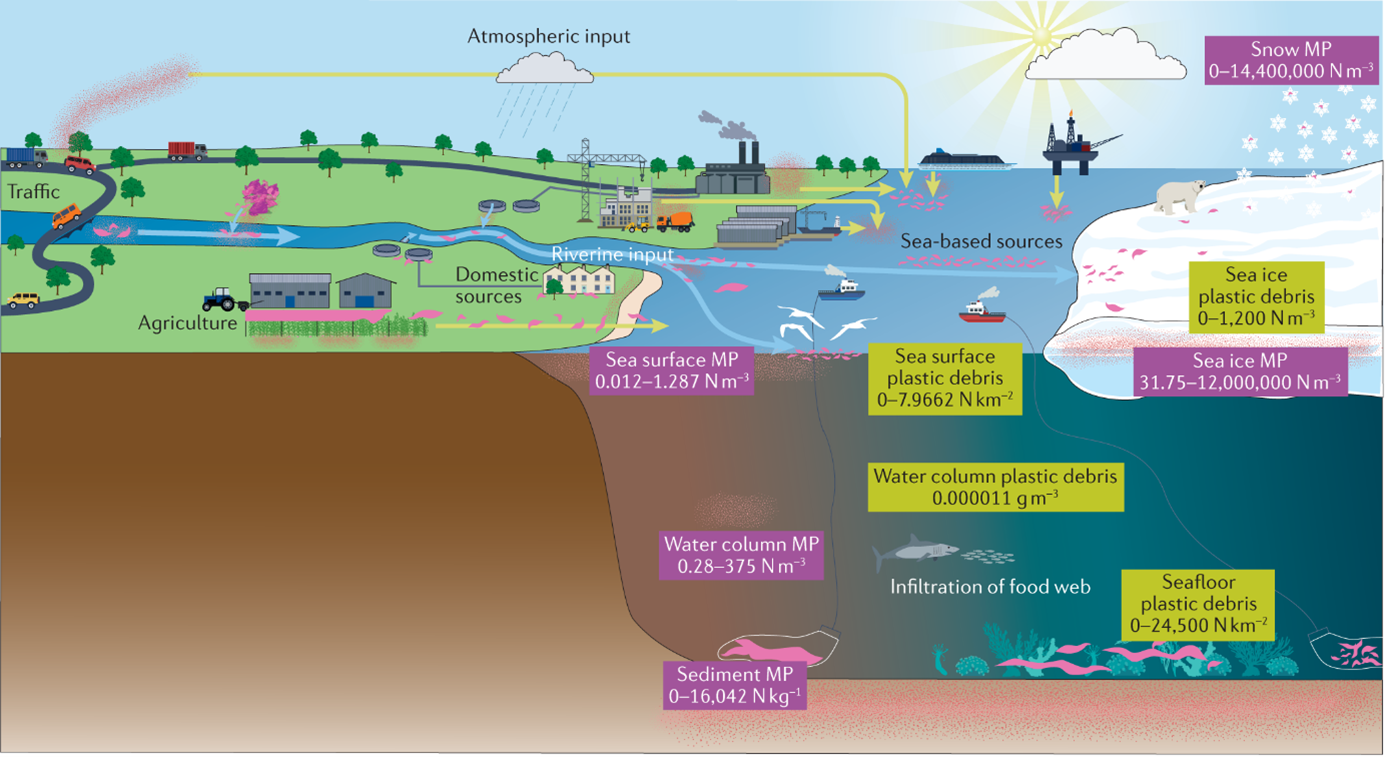
Plastic pollution has become ubiquitous, even in remote regions. Our research has shown that it prevails in all spheres of the Arctic including the cryosphere, sea water, seafloor and beaches in quantities similar or exceeding those of more developed regions. Growing levels of marine debris on the deep seafloor support the projections of models that predict plastic accumulation in the Arctic, which is considered an early-warning system. Increasing levels of smaller particles due to fragmentation of existing plastics will burden sensitive ecosystem and might accelerate climate change. As Arctic ecosystems and communities are already threatened by four times faster warming, it is particularly important to quantify additional stressors such as plastic pollution to inform policy making.
Tire- and Roadwear Particles
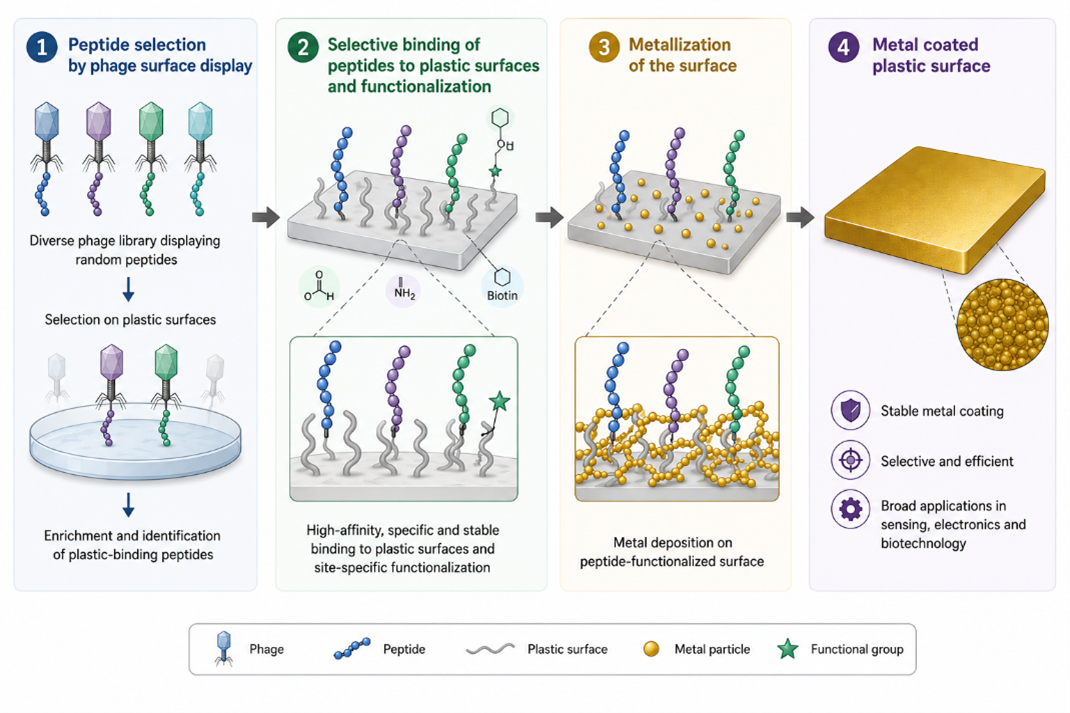
Aim is the development and synthesis of tailor-made strongly and selectively polymer binding peptide constructs that allow the (bio)functionalization of polymeric surfaces, e.g. by bifunctional peptides. These biomolecules are for example suited as adhesion promotors enabling the environmentally friendly galvanization of polymers.
Franziska Lederer
ORCiD
Katrin Pollmann
ORCiD
https://www.hzdr.de

Tire abrasion is assumed to be the single largest source of polymers particles in the environment. Emissions of the resulting tire and road wear particles (TRWP), aggregates of tire and road material, are estimated between 1 and 2 kg/y for each citizen in Germany. Yet methods to accurately and sensitively study the presence, distribution and sinks of these particles in the environment are poorly developed. We develop and utilize methods based on zinc as well as on organic markers to study the environmental occurrence, distribution, transport, removal and aging of TRWP in laboratory experiments and in the environment.
Thorsten Reeemstma
Harriet Burne
Daniel Zahn
Bettina Seiwert
Specimen bank
To foster open and transparent science we share the leftover plastic materials that have formed the core of our past and present plastics-related research activities. The materials have either been characterized chemically and bioanalytically, or both, and the results are in the manuscript preparation stage, have been submitted for publication or are published in the peer-reviewed literature. Plastic materials include undefined materials, both commercially available or collected in the field, and tailor-made materials with known composition (i.e., regarding polymer type and added chemicals), as well as recycled and weathered samples. Scientists can are invited to apply for test material for their studies by sharing information on material identity, quantity and purpose of the research to be conducted, and a scientific committee will decide about sharing the materials. Acknowledging the source of the material will apply to any publications describing related results.