New PRIMA project NBS360 advances scalable Nature-Based Solutions for Mediterranean water resilience
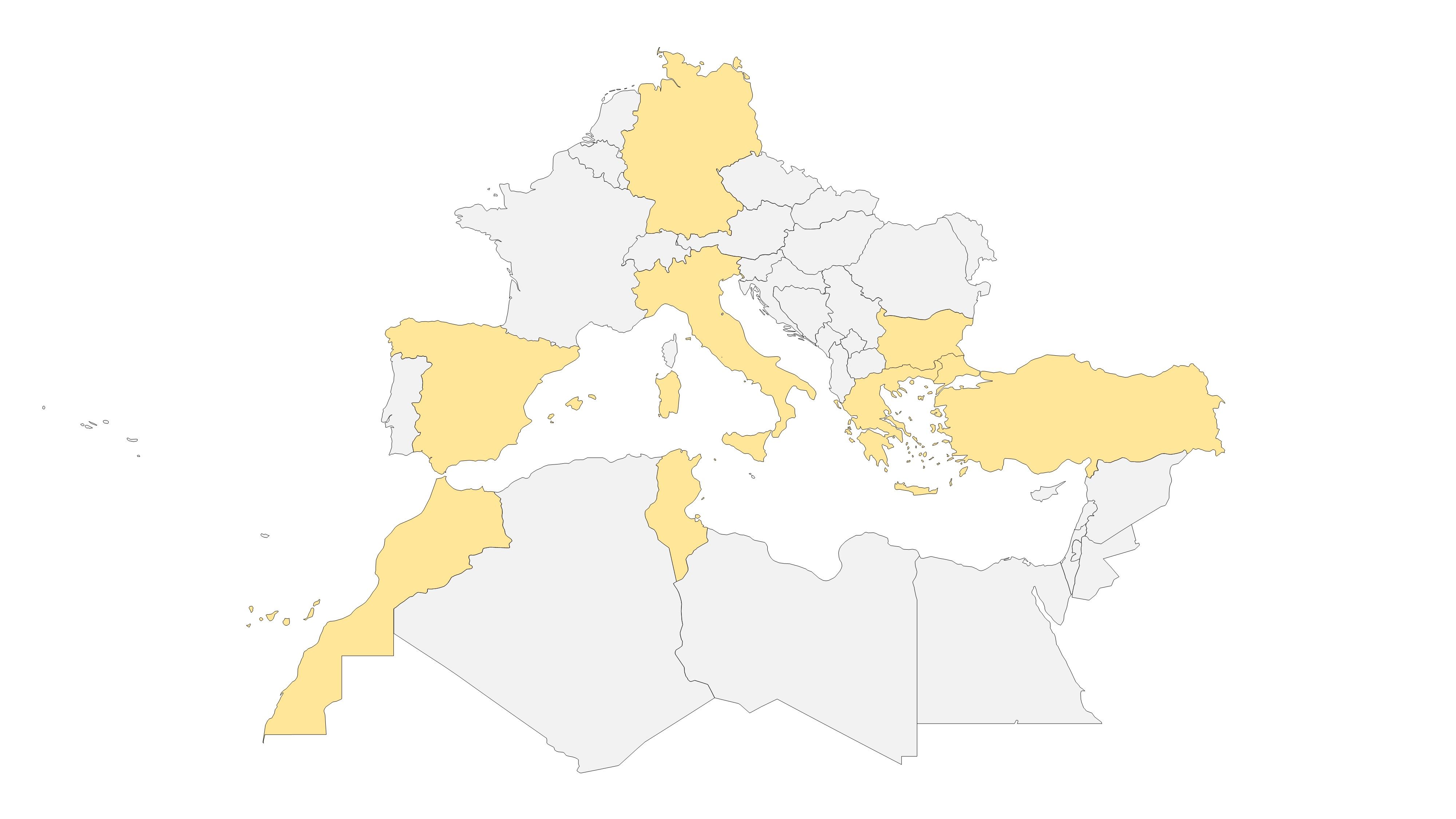
The new PRIMA project NBS360 – A Transformative Innovation Ecosystem for Resilient Water Management through Scalable Nature-Based Solutions in the Mediterranean officially started in May 2026. Over the next three years, 13 partners from eight countries, including Bulgaria, Germany, Greece, Italy, Morocco, Spain, Tunisia and Türkiye, will work together to develop, demonstrate and upscale Nature-Based Solutions (NbS) addressing major water-related challenges across the Mediterranean.
Funded under Section 1 of the PRIMA Programme’s 2025 Call, NBS360 will run for 36 months with a total budget of €2.93 million.
Moving beyond isolated pilot solutions
NBS360 goes beyond demonstrating individual solutions. Across seven pilot sites, the project will build the comprehensive innovation ecosystem that NbS initiatives often lack. It will combine real-time environmental monitoring, a Digital Twin for scenario simulation, an Intelligent Decision Support System, Payments for Ecosystem Services and participatory governance approaches. By connecting scientific evidence, digital technologies, financing mechanisms and local communities, NBS360 aims to transform isolated pilot actions into sustainable and transferable water-management systems.
The demonstration sites represent diverse environmental and socio-economic contexts across the Mediterranean: the transboundary Mesta/Nestos River Basin in Bulgaria and Greece; Làcani and the Rio San Gerolamo basin in Sardinia, Italy; the Júcar basin in Spain; the Gharb plain in Morocco; the downstream Sidi Salem area of the Medjerda basin in Tunisia; and Alibeyköy near Istanbul, Türkiye. Together, the sites address six major challenges: flooding, water scarcity, drought, water pollution, soil degradation and biodiversity loss.
The consortium is coordinated by the Soil and Water Resources Institute of the Hellenic Agricultural Organization – DIMITRA (ELGO-DIMITRA), Greece. It also brings together the Helmholtz Centre for Environmental Research (UFZ), Germany; the Institute of Biodiversity and Ecosystem Research – Bulgarian Academy of Sciences (IBER-BAS), Bulgaria; Universitat Politècnica de València (UPV) and Ecoadapta (ECO), Spain; the University of Sassari – NRD (UNISS), the University of Cagliari – DICAAR (UNICA) and IRIDRA SRL (IRD), Italy; INRA Morocco (INRA), Morocco; École Supérieure des Ingénieurs de Medjez El Bab (ESIM), Tunisia; Boğaziçi University (BU) and DOKTAR Teknoloji A.Ş. (DOK), Türkiye; and Neuralio (NEU), Greece.
Within NBS360, Dr Seifeddine Jomaa from UFZ leads Work Package 2 on the monitoring, evaluation and demonstration of NbS and the assessment of their feasibility for upscaling.
Further information: NBS360 project website
Contact: Dr Seifeddine Jomaa ( seifeddine.jomaa@ufz.de )