
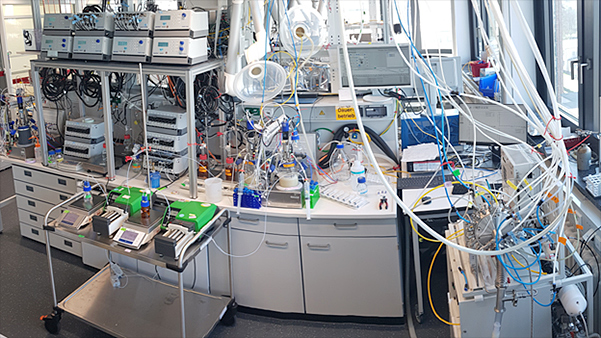
IMPACT – Integrated Microbial Platform for Analytics & Bioprocessing Technologies
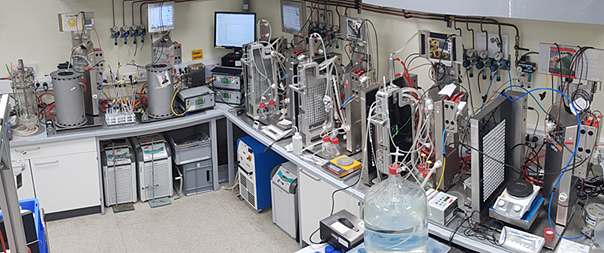
The Integrated Microbial Platform for Analytics & Bioprocessing Technologies provides cultivation, bioprocessing, and analytical expertise and infrastructure for the investigation of microbial performance in pure cultures, co-cultures, and complex reactor microbiomes. The platform is embedded in the Department of Microbial Biotechnology (MIBITECH), which focuses on developing sustainable biotechnological processes for a bio-based circular economy.
Research Focus
Our platform focuses on the quantitative and qualitative characterization of microbial processes, including:- cultivation and physiological characterization of heterotrophic and autotrophic microorganisms
- fermentation and biotransformation processes, including redox reactions and orthologous pathways
- analysis, quantification, and balancing of gaseous compounds such as N₂, O₂, H₂, ethylene, acetylene), some inorganic ions, and organic compounds in solution such as acids, alcohols, sugars, ketones, aldehydes, amino acids, sterols, and fatty acids either as respective derivatization products or native forms, depending on the application
- metabolomics and fluxomics using GC-MS and LC/IC-HRMS
Collaboration and ServiceOur platform actively encourages internal and external collaborations with academic and industrial partners. We particularly support research projects involving:
|
Bioreactor Instrumentation and Capacity
Summary of cultivation devices
| Device | Short name | Approx. operation volume | Operation for | Number of devices |
|---|---|---|---|---|
| Dasgip bioreactors | Dasgips | 1.5 L | photo/heterotrophs | 16 vessels |
| Labfors Flatpanel reactors | FP | 1.8 L | phototrophs | 4 FP reactors |
| Labfors STR Lux | STR Lux | 2.0 L | phototrophs | 2 vessels |
| Labfors STR | STR | 2.0 L | heterotrophs | 2 vessels |
| Multifors 2 | MF2 | 1.0 L | heterotrophs | 6 vessels |
| Multicultivators | MC | 80 ml | phototrophs | 7 units with 8 tubes each |
| Biolector 2 | Biolector | 1.5 mL | heterotrophs | 48 well plate |
| Short name | Brief description | Manufacturer |
|---|---|---|
| Dasgips | Interior lighting by LED-bars, 4 parallel STRs per unit | Eppendorf |
| FP | Exterior lighting by LED panel, single units | Infors |
| STR Lux | Overhead stirred with exterior lighting by LED housing, single units | Infors |
| STR | Overhead stirred, single units | Infors |
| MF2 | Magnetic base stirred, 6 parallel STRs | Infors |
| MC | Parallel tube cultivation system, 8 bubble columns per unit | PSI Photon Instruments |
| Biolector | Parallel cultivation in deep well plates (OD, pH, DO-sensors in each well) | Beckman Coulter (M2P) |
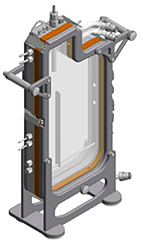
- 4 benchtop cultivation units
- phototrophic cultivations at up to 1.8 L net volume
- batch, repeated batch, fed-batch, and continuous operations (chemostat)
- process control via temperature, pH, pO2, mixed gassing, and IN- and
- OFF-gas analysis
- external photon supply of up to 3.000 µmol m-2 s-1
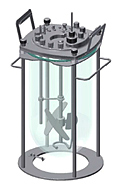
- 2 benchtop stirred tank units
- photo- and heterotrophic cultivations at up to 2.0 L net volume
- batch, repeated batch, fed-batch, and continuous operations (chemostat)
- process control via temperature, pH, pO2, mixed gassing, and IN- and
- OFF-gas analysis
- external photon supply of up to 1.500 µmol m-2 s-1
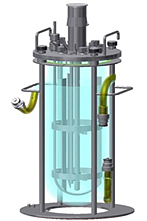
- 2 benchtop stirred tank units
- heterotrophic cultivations at up to 2.0 L net volume
- batch, repeated batch, fed-batch, and continuous operations (chemostat)
- process control via temperature, pH, pO2, mixed gassing, and IN- and
- OFF-gas analysis
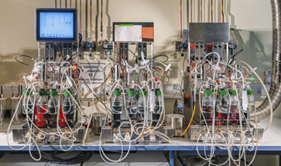
- 6 benchtop stirred tank units, parallel operation feasible
- 3 x 2 vessels controlled in bioblocs
- heterotrophic cultivations at up to 1.0 L net volume
- batch, repeated batch, fed-batch, and continuous operations (chemostat)
- process control via temperature, pH, pO2, and mixed gassing
- OFF-gas analysis via Blue Vary sensors
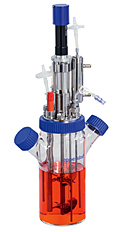
- 16 benchtop stirred tank units, parallel operation feasible
- 4 x 4 vessels controlled in bioblocs
- photo- and heterotrophic cultivations at up to 1.0 L net volume
- batch, repeated batch, fed-batch, and continuous operations (chemostat)
- process control via temperature, pH, pO2, and mixed gassing
- OFF gas analysis via MS (various analytes)
- internal light supply by LED-bars
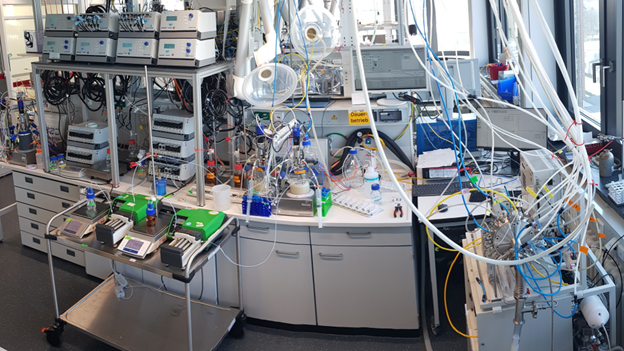
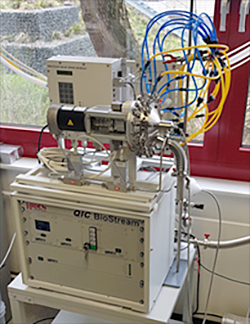
- OFF-gas mass spectrometer coupled to Dasgip reactors
- coupling to all above described units possible via 40-way multi-port valve, using a quadrupole mass-filter
- gas analysis by faraday cup or by a more sensitive SEM detector
- simple gas analysis applications for offgas-analytes of interest such as CO2, O2, N2, Air, H2 etc.
- residual gas analysis, e.g., in terms of isotope peaks
- analysis of complex species including various tools ranging from NIST database and cracking pattern tables to sophisticated spectral libraries
- overall and individual scan-modulation
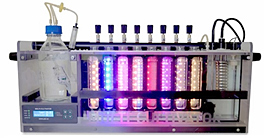
- 8 bubble columns operated in parallel
- phototrophic cultivations of up to 70 ml net volume each
- process control via temperature, mixed gassing, and OD
- feeding-option (turbidostat)
- process data-plotting
- illumination control
- different light spectra and intensities including 5 sets of warm-white light, 1 set of cold-white, and 1 set of customized wavelengths
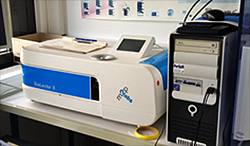
- 48 well-parallel-cultivation (flowerplate), suitable for screenings
- heterotrophic cultivations of up to 1.5 mL net volume each temperature control
- measurement of OD, pH, and DO via optodes
- pH range: 5.5 – 8.5
- substrates / products detection via fluorescence
Analytical Instrumentation and Capacity
Our platform operates with a total of 16 analytical systems, all connected via a central server infrastructure for remote control and data evaluation.
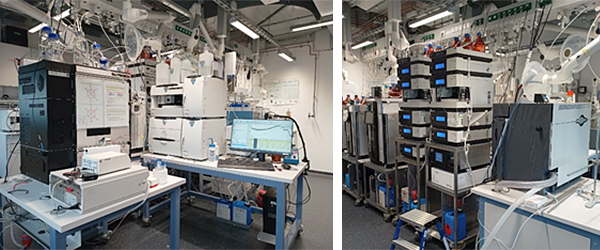
- 4 GC systems (Thermo Trace 1310 series)
- Equipped with thermal conductivity (TCD) and flame ionization (FID) detectors, as well as TriPlus 500 Headspace and TriPlus RSH autosamplers for headspace or liquid injections
- Applications: permanent gases (N₂, O₂, H₂), light hydrocarbons (ethylene, acetylene), volatile and semi-volatile compounds (alcohols, organic acids, FFA)
- 5 HPLC systems (Thermo UltiMate 3000 and Thermo Vanquish)
- Equipped with multiple detectors: UV/DAD (ultraviolet/diode array detection), CAD (charged aerosol detection), RID (refractive index detection) and FLD (fluorescence detection)
- Applications: sugars (e.g. glucose, fructose, sucrose), organic acids (e.g. TCA intermediates), alcohols, ketones, aldehydes, amino acids (including derivatized compounds), proline and hydroxyproline
Cation IC system (Thermo Dionex Integrion)
- equipped with conductivity detector
- Applications: inorganic cations (e.g. sodium, potassium, ammonium)
Anion IC system (Thermo Dionex ICS-6000)
- Equipped with conductivity and electrochemical detectors
- Applications: inorganic anions (e.g. nitrate, sulfate, sulfide), organic acids (e.g. acetate, lactate) and sugars
- Anion-IC-HRMS system (Thermo Dionex ICS-6000 system coupled to Thermo Exploris 240 Orbitrap HRMS) operated with anion-exchange technique
- Applications: Targeted and untargeted metabolomics, organic acids, sugar phosphates, Coenzyme A derivatives (CoA), nucleotide redox coenzymes
- UHPLC-HRMS system (Thermo Vanquish UHPLC system coupled to Thermo Exploris 240 Orbitrap)
- Operated with HILIC or reversed-phase separation techniques
- Applications: Targeted and untargeted metabolomics, amino acids, fatty acids
- GC–MS system (Thermo Trace and ISQ 7000)
- Headspace and derivatization capabilities
- Applications: metabolomics, fluxomics, amino acids, fatty acid methyl esters (FAMEs), identification of unknown compounds (NIST library, SIM/full scan)
- Real-time analysis of dissolved gases (e.g. O₂, CO₂, H₂)