
» Biodiversity Experiments
Funding: DFG | Project term: 2023 - 2026 (7th phase), 2026 - 2029 (8th phase)
Web:
Biodiversity Exploratories

Microorganisms (core project 8, project phase 2023-2026 and 2026-2029)
#Microorganisms & Fungi
"Soil microbial diversity and community composition of agricultural, grassland and forest ecosystems along land-use gradients"
The core project aims at long-term monitoring of biodiversity of soil bacteria, archaea and fungi and their functions in all 300 experimental plots as well as in the newly established field experiments (FOX, REX I+II, LUX). Furthermore, the composition of virus and phage populations are studied.
Further main objectives include:- Identification and characterization of microbial key stone species employing co-occurrence network analyses, followed by selected metagenomics analyses using shotgun sequencing. This will provide better insights into functional microbial diversity.
- Identification and assessment of active bacteria by analysis of rRNA/rDNA ratios. The active bacteria are the functionally relevant proportion, since the majority of soil bacteria is inactive or dormant.
- Functional fingerprinting and reconstruction of microbial genomes from representative grassland areas (metagenomes).
The core project also provides services to contributing projects, such as long-term archiving of soil samples, standardized nucleic acid extraction and storage, next generation sequencing and support for bioinformatic analysis, provision of diversity data on soil microorganisms or organization of coordinated soil sampling campaigns.
UFZ contact: Dr. Kezia Goldmann , Beatrix Schnabel
Web: Microorganisms
Partners:
Leibniz Institute DSMZ - German Collection of Microorganisms and Cell Cultures (Braunschweig), Staatliche Naturwissenschaftliche Sammlungen Bayerns (SNSB), Helmholtz Zentrum München, Technische Universität München (TUM)
Soil (core project 9, project phase 2023 – 2026 and 2026 – 2029)
#Soil biology & Element cycling
"Linking biodiversity and land use to soil functions"
The core soil project provides crucial information on the abiotic soil environment in the biodiversity exploratories and observes whether soil functions change as a result of land management. Particular attention is payed to soil organic matter formation, storage, and turnover, as these play a central role in soil fertility and climate change mitigation.
The core project also provides services to other research projects of the Biodiversity Exploratories. It organises large coordinated soil samplings in each project phase, collects information on soil properties and soil-related ecosystem functions at all experimental plots (EPs), and also maintains the central soil archive.
UFZ contact: Prof. Dr. Marion Schrumpf , Dr. Ingo Schöning
Web: Soil
Partners:
Max-Planck-Institut für Biogeochemie (Jena)
BLD-MultiFuncDiv IV (contributing project, project phase 2023 – 2026)
#Forest & Deadwood
"BELongDead (Biodiversity Exploratories Long-term Deadwood) - Multitrophic functional diversity in deadwood"
The project investigates the decomposition of 13 temperate deciduous and coniferous tree species and the environmental drivers affecting this ecosystem process. It aims to better understand the mechanisms of species diversity and community assembly during decomposition in relation to forest management intensity and forest structure.
In frame of the BESterile (Biodiversity Exploratories deadwood Sterilization) experiment, the project additionally focuses on the mechanisms of species colonization and related processes under different forest management intensities in the early successional phase.
UFZ contact: Dr. Julia Moll
Web: BLD-MultiFuncDiv iV
Partners:
Goethe-Universität Frankfurt am Main, Julius-Kühn-Institut (Braunschweig), Technische Universität Dresden - TU Dresden
BioNeCS (contributing project, project phase 2023 – 2026)
#Soil biology & Element cycling
"Land use and biodiversity determine the contribution of microbial necromass to soil carbon storage"
The project aims to understand how land use intensity gradients affect formation, decomposition, and stabilization of microbial necromass-derived soil organic matter by impacting the microbial community composition and its associated physiological properties.
UFZ contact:
Dr. Kezia Goldmann , Dr. Luis Daniel Prada Salcedo , Akshda Mehrotra , Prof. Dr. Marion Schrumpf
Web: BioNeCS
Partners:
Max-Planck-Institut für Biogeochemie (Jena), Martin-Luther-Universität Halle-Wittenberg
» Oak – an important forest tree: physiology, traits, biotic/abiotic interactions, adaption under a changing environment
Web:
PhytOakmeter

DFG Research Unit 5571 – PhytOakmeter: Using clonal oak phytometers to unravel acclimation and adaptation mechanisms of long-lived forest tree holobionts to ecological variations and climate change.
Climate change and global species loss are the major environmental threats to human well-being in the coming decades. However, fundamental knowledge is still missing about (i) the phenotypic plasticity of forest trees, (ii) about the interplay of trees with their microbiome, and (iii) about how these interactions may facilitate acclimation (regulatory changes) and adaptation based on genetic changes of trees and/or their holobiont partners. The oak holobiont represents here an assemblage of a host and the many other species living in or around it, which together form an ecological unit.
To fill this knowledge gap, the PhytOakmeter project, coordinated by Prof. Lars Opgenoorth from the University of Marburg, Germany, gathers a group of experts in population genetics, epigenetics, transcriptomics, metabolomics, biotic interactions, as well as in tree physiology and morphology. A central benefit of working with Q. robur is the availability of the DF159 clone that is readily in-vitro propagated in large numbers. This resource allows us to exclude genetic variability of the tree host in order to disentangle the role of the holobiont partners in the acclimation and adaptation processes of the oak holobiont.
The UFZ Department of Ecology of Agroecosystems is involved in the following subprojects:
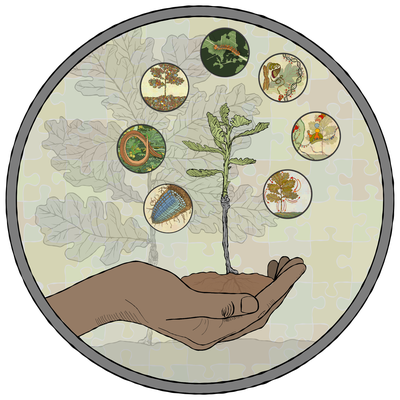
Central coordination project C2 – Experimental Platforms and Plant Material
"Setting up and maintaining experimental resources"
UFZ contact: Dr. Marie-Lara Bouffaud ,
Prof. Mika Tarkka
Web: Central coordination project C2
Subproject 2 – Holobiont transcriptomics
"Holobiont acclimation and adaptation to global change as revealed by the transcriptome"
UFZ contact: Dr. Marie-Lara Bouffaud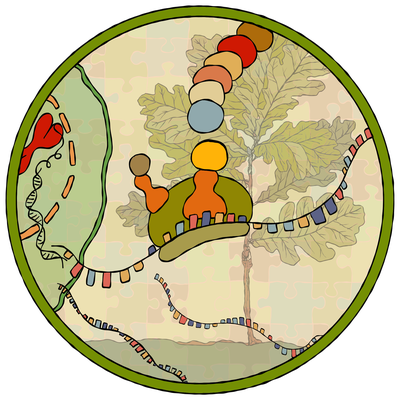
Web: Subproject 2
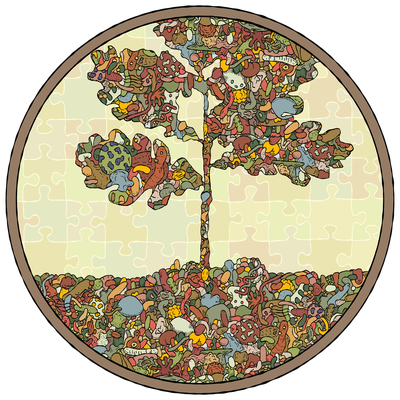
Subproject 4 – Microbiome
"Cross talk between environmental conditions, oak tree performance, and the microbiomes of their soil, endo- and and phyllosphere"
UFZ contact: Dr. Kezia Goldmann ,
Dr. Luis Daniel Prada-Salcedo ,
Camilo Andres Quiroga Gonzalez
Web: Subproject 4
Subproject 5 – Ectomycorrhiza
"Adaptation and acclimation of the clonal oak's ectomycorrhizal fungi to biotic and abiotic environmental factors"
UFZ contact: Prof. Mika Tarkka ,
Erik Teutloff
Web: Subproject 5
Partners: Philipps-Universität Marburg, Universität Freiburg, Universität Leipzig, German Centre for Integrative Biodiversity Research (iDiv) Halle-Jena-Leipzig, Eidg. Forschungsanstalt für Wald, Schnee und Landschaft (WSL) in Birmensdorf (Schweiz) (more details see
here
)
» GCEF – Global Change Experimental Facility: exploring ecosystem processes under climate and land use-specific changes
Funding: UFZ (PhD college) | Project term: 2024 - 2027

„Coupling circular economy principles with environmental hazard management for liquid manure-based sustainable agriculture“
SmartManure develops solutions for on-farm liquid manure management as an essential path to sustainable agriculture. It will combine advanced technologies with ecosystem engineering to transform on-farm liquid manure into an environmentally friendly economic resource, while promoting sustainable agriculture by establishing more resilient ecosystems.
Within four PhD projects, SmartManure will provide a technical concept for the economic use of liquid manure during on-farm storage providing three products simultaneously: methanol and heavy metals for sale to industry, and safe fertilizer low in antibiotics for direct use on farm. It will further assess impacts of liquid manure application on crop performance, microbial agroecology and soil health.
Web: SmartManure
Platform: GCEF

The Department of Ecology of Agroecosystems (AECOL) is involved in two PhD projects:
- PhD3
“Cover crops for resilient soil microbiomes and improved nutrient retention”
The project will increase soil microbiome resilience towards manure-based hazards and simultaneously retain manure-based nutrients in the soil by growing cover crops during intermittent seasons.
Contact:
Dr. Anja Worrich (Dep. AME), Lieke Lipsch (PhD, Dep. AME), Dr. Sara König (Dep. BOSYS), Dr. Luis Daniel Prada Salcedo (Dep. AME, AECOL), Ass. Prof. Dr. Marie Muehe (Dep. AME) - PhD4
“Intercropping for mitigating manure-based hazards to corn production”
The project will minimize contaminant impacts on cash crops by intercropping in liquid manure-based agriculture, providing high-quality, abundant food and intercrop-based bioenergy.
Contact:
Lena Mellin (PhD, Dep. AECOL), Ass. Prof. Dr. Marie Muehe (Dep. AME), Dr. Martin Herzberg (Dep. ANA)
» Further Projects
Funding: Helmholtz Association, Innovation Pool of the Research Field Earth and Environment | Project term: 2025 - 2027
Landscapes as Carbon Sponges (CSponge) – Towards long-term net-negative land use
UFZ-Contact:
Dr. Evgenia Blagodatskaya
(Dep. AECOL), Dr. Oliver Lechtenfeld (Dep. EAC), Dr. Christian Siebert (Dep. CATHYD)
Partners:
Helmholtz Centre Potsdam, GFZ German Research Centre for Geosciences; Helmholtz Centre for Polar and Marine Research, Alfred Wegener Institute (AWI)
Funding: BMBF - Scientific and Technological Cooperation (STC) with Ukraine
Project term: 2024 - 2026
Microbial biologically active metabolites as a biotechnology tool to improve crop productivity and soil health (MicroMet)
UFZ-Contact:
Dr. Evgenia Blagodatskaya
(Dep. AECOL),
Prof. Dr. Mika Tarkka
(Dep. AECOL), Dr. Hryhoriy Stryhanyuk (Dep. TECH), Dr. Nadiiia Yamborok (Dep. TECH)
Partners:
D.K. Zabolotny Institute of Microbiology and Virology of the National Academy of Sciences of Ukraine
Funding:


Project term: 2023 - 2028 | Web: MicroPLUS
Micro- and Meso-PLastics: Identification and Utilization in Soil (MicroPLUS)
Considering a very broad range of bio-based and bio-degradable plastics used in the modern agriculture and numerous plastic degradation pathways by large number of microorganisms there is an urgent need to find efficient ways for plastics identification in the environment, investigate the mechanisms and pathways of plastics transport and decomposition in soil and water and its consequences for carbon stocks and soil health.
This project contributes to the Microplastics Competence Cluster (MPCC) at the UFZ that bundles the expertise of diverse research groups at UFZ and beyond about different aspects of plastics and associated chemicals in the environment.
MPCC
Contact:
Dr. Evgenia Blagodatskaya
(Dep. AECOL), Dr. Matthias Schmidt (Dep. TECH), Dr. Hryhoriy Stryhanyuk (Dep. TECH)
Funding: China Scholarship Council (CSC) | Project term: 2023 - 2027
Web: CSC

Project
"Effects of impaired soil P and N stoichiometries on plant symbioses with microorganisms"
Phosphorus (P) often limits the primary productivity of natural and agroecosystems because of its low availability and mobility in most soils. In response to low P environments, vascular plants have evolved a range of phosphorus acquisition strategies, such as forming root hairs or increasing the root surface by branching. Support to plant P acquisition is obtained from phosphate solubilizing microorganisms that solubilize mineral and organic P, and arbuscular mycorrhizal fungal (AMF) mycelium that provide the mycorrhiza pathway for phosphate uptake that reaches outside the P limitation zone around the roots. The microorganisms may thus account for up to 90% of the total P requirement of the plant. Microorganisms also have a central role in soil nitrogen (N) cycling and plant N uptake. For instance, AMF can acquire N from both mineral and organic N sources and transfer some of this N to their host plants, suggesting a central role in N acquisition in N poor soils. The specific strategies for plant phosphorus acquisition under nutrient addition-induced soil stoichiometric N:P imbalance remain unclear. Based on this, we investigate the following:
Under conditions of different soil N:P stoichiometries, induced by controlled nitrogen and phosphorus fertilizations:- How do the AMF and root architecture respond?
- How do the responses of AMF and phosphate solubilizing microorganisms interact?
- How are root pathways, mycorrhizal pathways, and leaf reabsorption pathways balanced?
- What are the mechanisms underlying the response and interaction between AMF and mycelial bacteria?
- How is this related to the bacteria involved in nitrogen cycling?
Contact:
Prof. Dr. Mika Tarkka , Dr. Kezia Goldmann , Dr. Thomas Reitz , Cheng Peng
Platform:
Static Fertilization Experiment Bad Lauchstädt