Obituary, 12. October 2026
Torn from Life Too Soon – We Mourn the Loss of Our Colleague and Friend Josef Settele
Prof Dr Josef Settele was an agroecologist by profession, a biodiversity and insect researcher by passion, a science communicator driven by his conviction and concern for biodiversity, and a great humanitarian. On 9 October, 2026, he passed away suddenly and unexpectedly at the age of 65. Our deepest sympathies go out to his family.
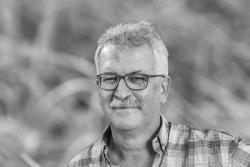
Prof Dr Josef Settele
Photo: André Künzelmann / UFZ
On October 9, 2026, Josef Settele passed away suddenly and unexpectedly. With his passing, we have lost a colleague who was highly regarded by his colleagues at the UFZ, in the scientific and political communities at both the national and international levels, among associations and organizations, and by journalists for his impressive professional expertise and dedication to his work.
Josef Settele was a nationally and internationally renowned biodiversity researcher with outstanding expertise in the fields of “conservation and evolutionary biology of insects” as well as “biodiversity, climate change, and land use.” He headed the UFZ Department of Conservation Biology, was an adjunct professor at Martin Luther University Halle-Wittenberg, an associate professor at the University of the Philippines, an honorary professor at Babe?-Bolyai University in Cluj-Napoca (Romania), and a member of the German Center for Integrative Biodiversity Research Halle-Jena-Leipzig - iDiv. Since 2020, he has been a member of the German Advisory Council on the Environment (SRU); since 2020, a member of the Leibniz Association’s Senate Committee on Competition; since 2022, a member of the Focus Group on Biodiversity – Land Use – Climate of the German National Academy of Sciences Leopoldina, as well as a member of the Multidisciplinary Expert Panel of the Intergovernmental Science-Policy Platform on Biodiversity and Ecosystem Services (IPBES), and, since 2024, a member of the Scientific Advisory Board on Natural Climate Protection (WBNK) of the German Federal Government. Since 2014, Josef Settele has been ranked among the world’s most influential scientists in his field in the annual “Highly Cited Researchers” ranking. In addition to his countless scientific publications, he has authored or co-authored numerous popular science books, including several editions of the butterfly guide “Die Tagfalter Deutschlands“ (The Butterflies of Germany), “Die Triple Krise“ (The Triple Crisis, 2020), and “Keine Zeit für Pessimismus“ (No Time for Pessimism, 2025).
Josef Settele started his scientific career at the University of Hohenheim, where he studied agricultural biology from 1982 to 1988 and earned his doctorate in 1992 with a dissertation on the effects of intensified rice cultivation on arthropods in Philippine rice terraces. In 1993, he joined the newly founded UFZ in Leipzig as a researcher, where he completed his habilitation in 1997 and gained experience co-coordinating large collaborative projects (FIFB, MOSAIK).
In 2002, the MACMAN project (Maculinea Butterflies of the Habitats Directive and European Red List as Indicators and Tools for Habitat Conservation and Management) provided him the opportunity to lead his first major EU project on his own. Already in this project, it became clear how he was able to effectively bring together scientists from nearly 20 countries. This was followed in 2004–2009 by ALARM, the largest EU project on terrestrial biodiversity research to date, involving 67 partners from 35 countries. The project focused on potential risks to biodiversity, such as climate change, the loss of pollinators, environmental pollutants, and the invasion of non-native animal and plant species. This project resulted in over 1,000 scientific publications – including more than 15 in the journals NATURE and SCIENCE. Other notable follow-up projects included the Federal Ministry of Research, Technology and Space (BMFTR) project LEGATO (2011–2016), which investigated how traditional cultural landscapes in Southeast Asia are changing and how local knowledge can be harnessed for sustainable land use, and the STACCATO project (2015–2020), which focused on sustainable agriculture.
The broad scientific expertise he acquired over the years, combined with his skills in interdisciplinary collaboration and the coordination of research projects, provided the ideal foundation for his involvement in the intergovernmental science-policy platforms – the Intergovernmental Panel on Climate Change (IPCC) and the Intergovernmental Science-Policy Platform on Biodiversity and Ecosystem Services (IPBES).
From 2010 to 2014, he served as Coordinating Lead Author for the chapter “Terrestrial Ecosystems and Inland Waters” in the IPCC’s Fifth Assessment Report. In 2014, he began his work with the Intergovernmental Science-Policy Platform on Biodiversity and Ecosystem Services (IPBES), where he held many different roles: as Coordinating Lead Author for the Pollinator Assessment (2014–2016), as Lead Author for the regional Asia-Pacific Assessment (2015–2018), as one of three Co-Chairs of the Global Assessment (2016–2019), and, since 2022, as an elected member of the Multidisciplinary Expert Panel.
That biodiversity is vital to humanity’s survival and that a broad alliance of science, politics, business, and civil society is needed to preserve it – hardly anyone knew this better than Josef Settele. In 2005 this was the impetus for the launch of one of Germany’s best-known citizen science projects, the German Butterfly Monitoring Scheme. At the same time, throughout his research career, he devoted an increasingly large portion of his work and free time to communicating about his research, the importance of biodiversity, the status of ecosystems, the drivers of biodiversity loss, action to safeguard ecosystems in the long term, and how each individual can live more sustainably.
This is evident in countless contributions on radio, in print, and on TV, as well as in his activities at the intersection of politics and other stakeholders. For example, he answered questions with great openness from members of various committees and political parties at the state, federal, and European levels, and sought dialogue with groups pursuing controversial political or economic goals and holding differing views.
With Josef Settele’s passing, we also lose Sepp – who was cherished by many for his open, friendly, and approachable nature – a man who, despite his scientific achievements, never lost touch with reality and always remained authentic. Cultivating personal relationships and discussing projects, ideas, and plans face-to-face – often over a cigarette or a cup of coffee – not only made him approachable as a person; it was his secret recipe and a key to his success.
His death leaves an irreplaceable gap. Yet Josef Settele has left his mark and a legacy to continue championing the cause for which he worked so tirelessly.
Our thoughts are with his family and all those who were close to him personally during these difficult hours. Our deepest sympathies go out to them. We wish them much strength, consolation, and the support of loved ones during this difficult time.
Prof Katrin Böhning-Gaese I Scientific Director UFZ
Dr Sabine Matthiä I Administrative Director UFZ
Prof Ingolf Kühn I Head of UFZ Research Unit Ecosystems of the Future
In case you want to leave a note in the book of condolences please follow this link: https://www.ufz.de/index.php?de=52992
Further information
UFZ press office
Susanne Hufe
Phone: +49 341 6025-1630
presse@ufz.de
In the Helmholtz Centre for Environmental Research (UFZ), scientists conduct research into the causes and consequences of far-reaching environmental changes. Their areas of study cover water resources, ecosystems of the future, environmental technologies and biotechnologies, the effects of chemicals in the environment, modelling and social-scientific issues. The UFZ employs more than 1,100 staff at its sites in Leipzig, Halle and Magdeburg. It is funded by the Federal Government, Saxony and Saxony-Anhalt.
www.ufz.deThe Helmholtz Association contributes to solving major challenges facing society, science and the economy with top scientific achievements in six research fields: Energy; Earth and Environment; Health; Key Technologies; Matter; and Aeronautics, Space and Transport. With some 39,000 employees in 19 research centres, the Helmholtz Association is Germany’s largest scientific organisation.
www.helmholtz.de