
Press Release, 19. November 2026
Two UFZ scientists among the most influential scientists worldwide
In the annual scientific ranking of the most cited researchers (Highly Cited Researchers), two scientists of the UFZ are represented in 2026: Prof Jakob Zscheischler and the late Prof Josef Settele. A total of 6.802 scientists (7.090 awards) from around the world were selected.
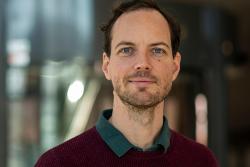
Prof Jakob Zscheischler
Photo: Sebastian Wiedling / UFZ
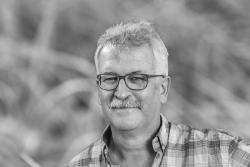
Prof Josef Settele (†)
Photo: ©André Künzelmann UFZ / KI-bearb.
The Highly Cited Researchers™ list from Clarivate™ identifies scientists and social scientists who have demonstrated significant influence through publication of multiple highly cited papers during the last decade.
Each researcher selected has authored multiple Highly Cited Papers which rank in the top 1% by citations for their field(s) and publication year in the Web of Science Core Collection over the past eleven years. However, citation activity is not the sole selection indicator. This list, based on citation data, is then refined using other quantitative metrics, as well as qualitative analysis and expert judgment. The full 2026 Highly Cited Researchers list and executive summary can be found here.
Highly Cited Researcher 2026 at the UFZ:
Prof Jakob Zscheischler / Categories Geosciences and Environment and Ecology
The earth systems scientist has headed the “Compound Environmental Risks” department at the UFZ since 01/2024 and is Professor of Data Analytics in Hydro Sciences at TU Dresden. His research focuses on combined weather and climate events, which have not yet been adequately taken into account in risk assessment. This includes describing and modelling the interaction of various meteorological factors, evaluating the role of combined weather and climate events in the development of social/ecological risks such as floods, forest dieback or crop failures, as well as predicting heatwaves, extreme precipitation, storms, droughts and their effects. He also contributes this expertise as lead author of the 7th Assessment Report of the Intergovernmental Panel on Climate Change (IPCC). https://www.ufz.de/index.php?en=48052
Prof Josef Settele (†) / Category Environment and Ecology
The agricultural biologist, who passed away in October, was the head of the UFZ Department of Conservation Biology and Social-Ecological Systems and Professor (apl.) at the Martin Luther University Halle-Wittenberg (MLU). His research focused on the Conservation and Evolutionary Biology of Insects, Biodiversity and Land Use and Interdisciplinary Cooperation and Project Co-ordination in the field of biodiversity. In the Intergovernmental Science-Policy Platform on Biodiversity and Ecosystem Services (IPBES) he was one of the three co-chairs of the Global Assessment and member of the Multidisciplinary Expert Panel (MEP). He was also member of the German Advisory Council on the Environment (Sachverständigenrat für Umweltfragen - SRU) and of the Advisory Body for Nature-Based Climate Protection (WBNK) of the German government.
Further information
UFZ press office
Susanne Hufe
Phone: +49 341 6025-1630
presse@ufz.de
In the Helmholtz Centre for Environmental Research (UFZ), scientists conduct research into the causes and consequences of far-reaching environmental changes. Their areas of study cover water resources, ecosystems of the future, environmental technologies and biotechnologies, the effects of chemicals in the environment, modelling and social-scientific issues. The UFZ employs more than 1,100 staff at its sites in Leipzig, Halle and Magdeburg. It is funded by the Federal Government, Saxony and Saxony-Anhalt.
www.ufz.deThe Helmholtz Association contributes to solving major challenges facing society, science and the economy with top scientific achievements in six research fields: Energy; Earth and Environment; Health; Key Technologies; Matter; and Aeronautics, Space and Transport. With some 39,000 employees in 19 research centres, the Helmholtz Association is Germany’s largest scientific organisation.
www.helmholtz.de