
Press Release, 23. June 2026
Biogas should complement new power stations, rather than replace them
Joint position paper by DBFZ and UFZ
To secure future electricity supplies, the German government plans to fund new natural gas-fired power stations with a total capacity of 9 gigawatts. In the past, some studies have indicated that climate-friendly electricity from biogas can replace new natural gas-fired power stations. A position paper recently published by the Helmholtz Centre for Environmental Research (UFZ) and the DBFZ shows that biogas production should be increased, but that avoiding new natural gas power stations entirely would make the energy transition more expensive.
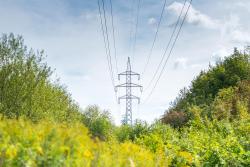
Electricity from biogas as a useful complement to natural gas-fired power stations
Photo: Paul Trainer / DBFZ
The energy transition in Germany is being driven largely by wind and solar energy. However, additional technologies and measures are required to bridge potential periods of low wind and low sunshine. Alongside energy storage systems and mechanisms for adjusting electricity demand, flexible natural gas-fired power stations – which could be fuelled by hydrogen in future – are under discussion. Whilst the need for flexible solutions is widely recognised, estimates regarding the need for new natural gas-fired power stations vary. Reasons for this include the high costs of constructing new power stations and the associated use of climate-damaging natural gas – with corresponding drawbacks for energy security. The uncertain future availability of hydrogen also poses a risk to the climate-friendly operation of such power stations in the future.
Against this backdrop, a joint policy brief by the UFZ and the DBFZ on the German government’s power station strategy highlights that biogas should play a greater role in so-called capacity markets. According to experts at UFZ and DBFZ, it would be technically possible to avoid building new natural gas-fired power stations if existing biogas plants were expanded. However, current modelling results suggest that such a move could incur additional costs of more than EUR 5 billion by as early as 2030 – even when the climate benefits of biogas plants are taken into account. If natural gas or hydrogen were to be completely replaced by biogas in the electricity sector in the long term, the cumulative additional costs could rise to as much as EUR 46 billion – partly because the scarce biomass would then be unavailable for climate protection in other sectors.
“Whilst biogas plants can reduce the need for new natural gas-fired power stations in Germany, they should not replace them entirely. The two options are rather complementary. If we use too much biomass in the electricity sector, it will be lacking, for example, in the transport sector or the chemical industry – which makes climate protection significantly more expensive overall,” says Prof. Dr Daniela Thrän from the UFZ. Dr. Harry Schindler from the DBFZ shares this view: “Biogas is a key component of the energy transition in the electricity sector. However, bioenergy alone cannot meet the major challenges there, if we are to keep costs under control. We therefore also need new power stations that generate electricity using natural gas in the short term and hydrogen in the long term.”
The authors of the policy brief also emphasise, however, that the results depend heavily on assumptions regarding the future availability of hydrogen. If this energy source is not available in the long term to the extent currently expected, a greater role for biogas plants in the electricity sector may be appropriate. Policymakers should therefore regularly reassess their strategy for capacity markets and, where necessary, further expand the role of biogas in electricity generation.
Position paper: https://www.dbfz.de/fileadmin/user_upload/Referenzen/Statements/Biogas_and_Capacity_Markets.pdf
Further information
Prof Dr Daniela Thrän
Head of UFZ Department of System Analysis and Sustainability Assessment
daniela.thraen@ufz.de
Dr Harry Schindler
Deutsches Biomasseforschungszentrum (DBFZ)
harry.schindler@dbfz.de
UFZ press office
Susanne Hufe
Phone: +49 341 6025-1630
presse@ufz.de
In the Helmholtz Centre for Environmental Research (UFZ), scientists conduct research into the causes and consequences of far-reaching environmental changes. Their areas of study cover water resources, ecosystems of the future, environmental technologies and biotechnologies, the effects of chemicals in the environment, modelling and social-scientific issues. The UFZ employs more than 1,100 staff at its sites in Leipzig, Halle and Magdeburg. It is funded by the Federal Government, Saxony and Saxony-Anhalt.
www.ufz.deThe Helmholtz Association contributes to solving major challenges facing society, science and the economy with top scientific achievements in six research fields: Energy; Earth and Environment; Health; Key Technologies; Matter; and Aeronautics, Space and Transport. With some 39,000 employees in 19 research centres, the Helmholtz Association is Germany’s largest scientific organisation.
www.helmholtz.de