
Interview, 01. March 2026
"Water has a democratic dimension"
We should not be talking about global water bankruptcy but rather about possible solutions
A UN report recently warned of a "global water bankruptcy". But is the situation really that bad? In this interview, UFZ hydrobiologist Prof Dr Dietrich Borchardt explains the state of the world’s water resources and outlines what challenges Germany faces in protecting surface water and groundwater, why sustainable water management concerns us all, and how the Helmholtz Association intends to put innovative technologies into practice.
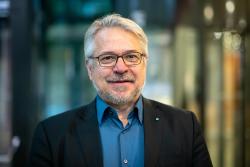
Prof Dr Dietrich Borchardt
Photo: Sebastian Wiedling / UFZ
The United Nations University Institute for Water, Environment and Health (UNU-INWEH) entitled its latest report “Global Water Bankruptcy”. Is the state of global water reserves really so alarming?
The term “water bankruptcy” is intended to illustrate an escalation from water stress and water crises to a state of bankruptcy. The UN aims to highlight the urgency of the issue and demonstrate that some damage is now irreversible. I am rather sceptical about this choice of wording because I question whether the term is actually helpful. The report identifies real and, in some cases, serious problems with water availability and water quality. However, these are not new; they are merely being labelled differently.
Even though there are many good regional examples around the world, a solution-oriented perspective with an analytical focus on the factors that contribute to successful water and aquatic ecosystem management is lacking. Competition for water is inevitable because it is used across all areas of society and the economy. Every water user and every country is inherently a “downstream” actor affected by activities upstream or by interventions elsewhere in the water cycle.
However, it is still within our power to ensure that these multiple uses or rivalries do not escalate into conflicts and that we become more resilient to the effects of climate change. This task must be addressed in ways that reflect regional conditions at the river basin and cross-border level, thereby striking a balanced application of the precautionary and polluter pays principles when authorising or restricting water use.
What is the state of the global water balance?
Water has always been a key resource. In the 21st century, this is truer than ever. This applies to Germany, Europe, and the whole world. The water balance is characterised by considerable regional differences. Natural conditions for rainfall distribution and water storage vary widely, and water is being used ever more intensively in different ways and for different purposes.
In many developing and emerging countries, social and economic development is already being restricted – or will be in the near future – because there is simply not enough water available. Even in Europe and other highly developed regions, medium- to long-term protection against extreme events, reliable water use especially for drinking water, and sufficiently healthy aquatic ecosystems with adequate biodiversity are not assured. All these developments are influenced by the effects of climate change on the water cycle and are exacerbated in many regions of the world.
Added to this is the issue of water quality. While “water scarcity” and “water stress” have been central to national and international policy debates over the past two decades under the UN Millennium Development Goals agenda (2000 to 2015) alongside access to drinking water and sanitation, chemical pollution has received comparatively little attention. This also applies to the follow-up process for the UN Sustainable Development Goals.
Where do you see the greatest challenges for Europe?
The challenges in Europe are representative of global challenges – apart from countries where the basic infrastructure for the supply of safe drinking water and sanitation facilities is not in place. Broadly speaking, water quantity combined with inadequate quality dominates in regional hotspots in southern countries, whereas widespread poor water quality is the more pressing issue in northern countries. The effects of climate change are being felt across Europe with increasingly severe water extremes. In other words, there is “too much water in too short a time” and “too little water over too long a period often combined with heat”. This is accompanied by a loss of biodiversity and healthy aquatic ecosystems, albeit in different forms. Where water bodies had been on an ecological recovery path, regeneration now appears to be slowing or stagnating. Water use will also change as part of the energy transition – for example, through greater use of groundwater as a dynamic heat or cold store and the use of large-scale water heat pump technologies in surface waters within regional supply systems.
What problems are we facing in Germany?
In Germany, we have long been used to having groundwater and surface water available at any time, in high quality, and in ample quantities. However, water resources are also increasingly under threat in our part of the world. One reason for this is the climate crisis, which is having a widespread impact on the water balance, albeit with regional variations. Climate scenarios predict further rising temperatures and changing precipitation patterns. Climate models designed for precautionary planning indicate hotter and drier summers, greater fluctuations or decreases in soil moisture, and similar medium- to long-term trends in groundwater levels, particularly in regions already experiencing falling groundwater tables when human interventions in the water cycle are taken into account. This affects agricultural crops and grassland as well as forests and other ecosystems, especially water-based terrestrial ecosystems with protected species and habitats. Heavy rainfall and flooding are becoming more frequent while snowfall is becoming less common in winter. The climate crisis therefore has serious consequences for water availability. As a result, the risk of overuse has increased considerably. Unsustainable uses also play a role. All water use in urban and rural areas must therefore be adapted in such a way that both individual crisis events such as isolated floods and periods of drought and long-term changes in water availability such as less usable groundwater or declining water flow in rivers can be managed.
Another threat and environmental policy challenge arises from pollution of water bodies with nitrogen and phosphorus as well as trace contaminants and microplastics. These pressures jeopardise the good condition of water bodies. Obtaining and supplying water in the quality and quantity required for its many uses is becoming increasingly costly.
Demographic change, shifts in lifestyles, structural economic change (including digitalisation), and changes in land use also affect water resources and water management.
Can this be expressed in figures?
The hydrological consequences of climate change alone have considerable economic implications and are closely linked to damage caused by heat, drought, and flooding. According to a Prognos study, damage caused by extreme weather in Germany between 2000 and 2021 is estimated at almost € 145 billion, including estimated indirect losses exceeding €30 billion.
This does not yet include damage caused by extreme events such as the 2021 flooding in the Ahr Valley. However, the humanitarian implications of these are particularly severe. The Ahr Valley floods claimed at least 135 lives. Current figures put the financial damage in the Ahr Valley at over €40 billion; this required a special federal fund, substantial insurance payouts, and considerable private investment. These dimensions of damage push even strong economies such as Germany to the limits of their capacity.
In contrast, drinking water prices in Germany are moderate when we consider that they are set according to the cost recovery principle, including environmental and resource costs. The price per 1,000 litres in 2023 was approx. €2.50 on average nationwide. For their drinking water consumption (currently 121 litres on average), each citizen pays an average of around €0.30 per day – or just over €9 per month. Surveys show that over half of the population either does not know their water charges – or considerably overestimates them. The current quality and security of supply are also rated very positively. However, over two-thirds of respondents fear that this could deteriorate.
In this context, you often talk about the need for greater “water literacy”. What do you mean by that?
Better informed citizens. The sustainable use of water is a task for society as a whole. Without the involvement of every individual, this will not be achievable at either the personal level or within institutions and companies. Such engagement requires the appropriate knowledge. Valid information is the basis for responsible decisions, but it also helps us to appreciate clean drinking water and effective wastewater disposal as well as the ecosystem services – including as habitats – that water bodies provide for us. Finally, water has a fundamental democratic dimension because its sustainable use forces us to act together and balance interests. This applies to water catchment areas and river basins that span municipalities, countries, and borders because water and the water cycle do not adhere to administrative or political boundaries.
To solve the water problems in Germany, in 2023, the federal government adopted a “National Water Strategy”, which you helped to develop. Was the complex participation and consultation process worthwhile?
Yes, it was worth it in the end: Since 2018, across three federal governments and coalition agreements, the “National Water Dialogue” and the “National Water Strategy” have provided the framework for political action because they were developed with broad civil society support and agreed by all relevant ministries.
It was agreed by consensus that water management and water protection face major challenges because of climate change, globalisation, diffuse pollutant inputs, and demographic change and that these challenges cannot be addressed in isolation by individual sectors. The aim is to work together to ensure the sustainable use of our water resources in the medium term up to 2050 and beyond.
Are there any concrete solutions?
The National Water Strategy is linked to an action programme comprising 78 packages of measures. By 2030, these measures are to be jointly and gradually implemented by the federal states, local authorities, and various stakeholders in the water sector and accompanied by scientific review. Implementation has been closely aligned with the “Natural Climate Protection” action programme for which the German government has allocated more than €4 billion until 2029. It is planned to use appropriate portions of these funds for climate-related measures in water management, watercourse development, and water-sensitive urban development measures.
In my view, four priority and overarching areas of action for Germany and Europe can be derived from the 10 strategic themes of the National Water Strategy: securing the drinking water supply, strengthening and restoring the natural water balance, adapting water infrastructure to the climate crisis, and ensuring clean water in all rivers and lakes.
In each of these areas of action, there is a need for scientific systems and process knowledge, robust databases, and innovative methodologies that translate this into actionable solutions. This ranges from satellite-based Earth observation, sensor technology, and information processing systems to water treatment and purification technologies to the high-resolution analysis of complex mixtures of substances and genomic signatures in aquatic ecosystems. This knowledge is an important basis for political decision-making and implementation processes at many different levels and is often linked to social discourse. Therefore, knowledge must be prepared and made available in line with requirements. In this way, the overarching goal of water security can be sustainably achieved by 2050 and beyond across these priority areas.
The National Water Strategy also emphasises the involvement of stakeholders. Civil society participation and civic engagement, which also includes citizen science, are anchored as central components of successful water protection in the individual fields of action. The Helmholtz Association is focusing on precisely these challenges with its “Water Safety and Security” research campaign.
What is the aim of this Helmholtz campaign?
With the water security campaign launched in January 2026 and coordinated by the UFZ, we aim to develop concepts for integrated water management, new approaches for climate-resilient water management in entire river landscapes and cities, and solutions for dealing with water extremes that can be used worldwide. We are 13 research centres belonging to the Helmholtz Association. Our research expertise uniquely covers the entire water cycle – from global and terrestrial systems down to the molecular level. We are focusing on three real-world laboratories – the catchment areas of the Elbe and Rur rivers and the city of Leipzig – each with typical problems and are working closely with citizens and representatives from nature conservation, urban development, agriculture, industry, and water supply from the outset. We aim to transfer innovative technologies and scientific expertise into practice more quickly than before.
Further information
Prof Dr Dietrich Borchardt
Senior Professor TU Dresden / Senior Adviser UFZ / Speaker Helmholtz Research Campaign “Water Safety and Security”
dietrich.borchardt@ufz.de
UFZ press office
Susanne Hufe
Phone: +49 341 6025-1630
presse@ufz.de
In the Helmholtz Centre for Environmental Research (UFZ), scientists conduct research into the causes and consequences of far-reaching environmental changes. Their areas of study cover water resources, ecosystems of the future, environmental technologies and biotechnologies, the effects of chemicals in the environment, modelling and social-scientific issues. The UFZ employs more than 1,100 staff at its sites in Leipzig, Halle and Magdeburg. It is funded by the Federal Government, Saxony and Saxony-Anhalt.
www.ufz.deThe Helmholtz Association contributes to solving major challenges facing society, science and the economy with top scientific achievements in six research fields: Energy; Earth and Environment; Health; Key Technologies; Matter; and Aeronautics, Space and Transport. With some 39,000 employees in 19 research centres, the Helmholtz Association is Germany’s largest scientific organisation.
www.helmholtz.de