Department Umweltinformatik
Technologische Nutzungen im Bereich des Wasserressourcenmanagements und der Energiewirtschaft sind durch unterschiedliche physikalische, chemische und (mikro)biologische Prozesse sowie deren Interaktionen untereinander gekennzeichnet. Ihr Einfluss auf die Umwelt wirft unterschiedliche Fragestellungen auf: Wie kann eine nachhaltige Bewirtschaftung von Wasserressourcen gerade in Gebieten mit Wasserknappheit erreicht werden? Welche Herausforderungen entstehen durch die zunehmende Nutzung des unterirdischen Raums als Energieressource, Speicher oder die sichere Verwahrung von Abfallstoffen? Was sind ökonomische und gleichzeitig umweltschonende Technologien zur Nutzung aquatischer Ökosysteme und Quellen erneuerbarer Energien? Wie können Nutzungskonflikte und Gefahren für Mensch und Umwelt vermieden werden?
Diese vielfältigen Fragestellungen benötigen als gemeinsame Basis fundierte Planungsinstrumente auf der Grundlage von Fachwissen sowie realitätsnahen Prozessanalysen. Es müssen also Modelle verfügbar sein, die in der Lage sind, die komplexen Zusammenhänge abzubilden und vor allem fähig sind, „in die Zukunft“ schauen zu können. Eine weitere Gemeinsamkeit dieser Fragestellungen ist die Bewertung von Umweltwirkungen als Folge von Eingriffen in die Natur durch den Menschen.
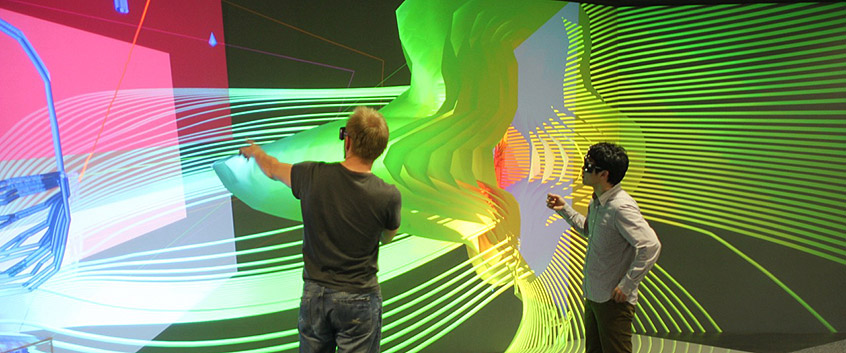
Im Department für Umweltinformatik (ENVINF) entwickeln wir Modelle und Software zur Simulation von Umweltprozessen in hydrologischen, geologischen und energietechnischen Systemen. Die Verlässlichkeit solcher prozessbasierten Ansätze hängt von einem physikalisch korrekten Konzept, aber auch von der verfügbaren Datenbasis und der Parametrisierbarkeit der Modelle ab. Daher wird die Modellierung als vollständiger Workflow betrachtet: von der Datenerhebung und -integration über Prozesssimulation und Datenanalyse bis hin zur wissenschaftlichen Visualisierung. Das Department ENVINF bündelt (in der OpenGeoSys-Initiative) diesen Workflow in einem qualitätsgesicherten Open-Source Software-Paket, bestehend aus dem Prozess-Simulator OpenGeoSys, dem Datenintegrations- und Visualisierungswerkzeug OGS Data Explorer sowie einer Anbindung an das Visualisierungszentrum TESSIN VISLab des UFZ.
Ziele unserer wissenschaftlichen Arbeit sind sowohl die Entwicklung innovativer numerischer Methoden für die Simulation von Umweltprozessen, deren flexible und effiziente Umsetzung in Software-Produkte (Computer Science) als auch der Einsatz für vielfältige Anwendungsfragen in der Umweltforschung. Der Modellierungs-Workflow dient sowohl als Instrument zur Beantwortung relevanter wissenschaftlicher Fragestellungen als auch letztlich als Managementwerkzeug für Entscheidungsträger oder Versorger (siehe weiterführende Links).
Mehr Informationen
- Wasserforschung: „Urban Catchments“ - Entwicklung eines Trinkwasserfrühwarnsystems für die Stadt Chaohu in der chinesischen Provinz Anhui (www.ufz.de/urbancatchments).
- Energieforschung: „ANGUS+“ - Raumordnung des Untergrundes (ANGUS-Webseite)
- OpenGeoSys-Initiative (www.opengeosys.org)
- Benchmarkbücher und Tutorials (docs.opengeosys.org/books)