

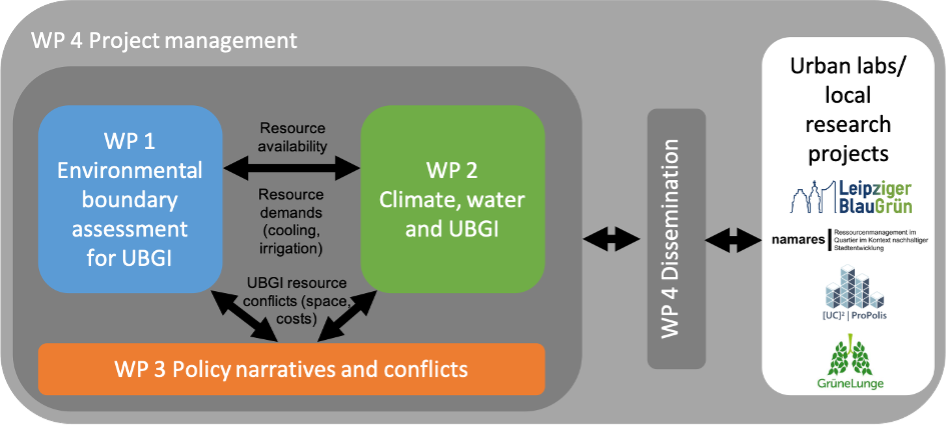
Urban blue-green infrastructure (UBGI) offers essential strategies for addressing climate change impacts such as flooding, heat stress, and biodiversity loss. Yet, the implementation of UBGI is constrained by limited resources—particularly space and water availability—and by interactions with existing centralized infrastructure systems. As cities aim to transition toward more resilient and sustainable designs, understanding these environmental boundaries becomes critical for informed decision-making.
Work package 1 (WP 1) focuses on identifying and quantifying these boundary conditions. It asks a fundamental question: How much UBGI can a city afford in terms of environmental resources? While UBGI is, in principle, highly multifunctional, each intervention typically relies on different resource requirements and addresses distinct priorities such as stormwater mitigation, cooling, or biodiversity. WP 1 therefore develops a scenario-based framework that distinguishes between these core functions and evaluates the associated environmental constraints.
The goal is to translate resource limitations—such as restricted irrigation water or limited available land—into actionable boundaries that inform UBGI planning across different types of municipalities, including those with scarce data availability. By integrating hydrological modelling, spatial analysis, and scenario development, WP 1 provides a structured methodology that supports both high-level planning and block-scale UBGI design.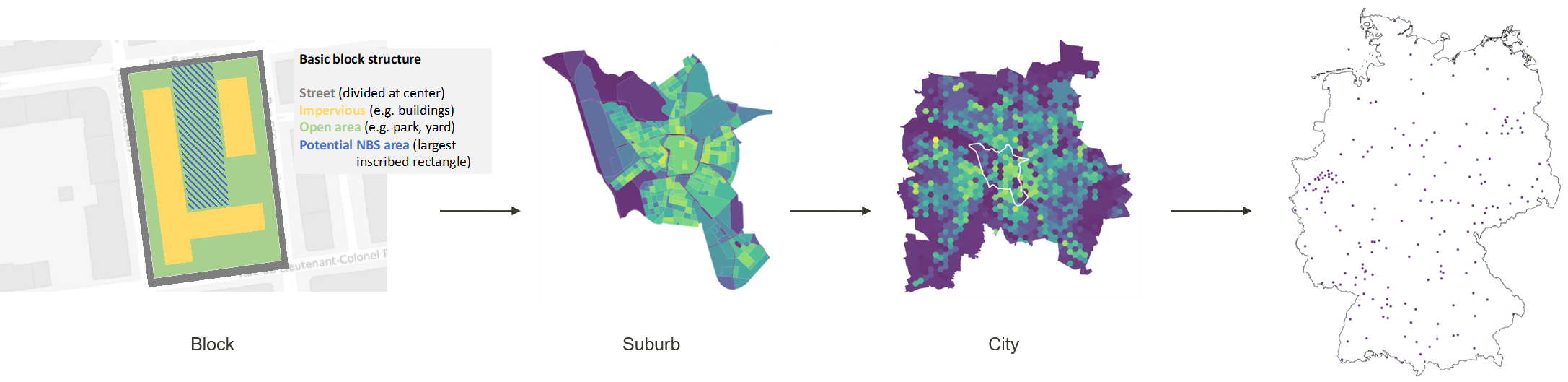
This task establishes distinct UBGI scenarios that reflect different functional priorities and resource constraints. Scenarios may emphasize, for example, stormwater infiltration to reduce sewer loads, irrigation for biodiversity, or water demand for maximum cooling. These scenario “blueprints” are developed in collaboration with WPs 2 and 3 and can be adapted to local municipal needs. Over the project period, the scenarios will be refined using scientific findings, stakeholder input, and insights from conflict and narrative analysis.
Using the UrbanWaterBlocks tool, we evaluate how much UBGI can be implemented under different scenarios at the block, district, and city scales. Hydrological models (SWMM, SWMM-EVA) simulate stormwater reduction and irrigation water availability. Spatial data (e.g., cadastral data, land cover, meteorology) are mapped onto urban blocks, and scenario restrictions—such as using only municipal properties—can be applied. The modelling will be automated and run on the UFZ EVE compute cluster, initially focusing on Helmholtz model cities. These results will feed into WP 3 for conflict analysis and into WP 2 for scenario parameterization.
The final task aims to scale up the approach from demonstration cities to a broader Germany-wide UBGI potential visualization platform. This tool will rely primarily on open data sources (OpenStreetMap, DWD, satellite products) and enable municipalities—especially small and medium-sized ones with limited data capacity—to compare their UBGI potential with other cities. Scenario-based maps and generalized indicators will support planning, stakeholder dialogue, and dissemination activities. WP 3 and WP 4 will use these visualizations for engagement and consultation processes.
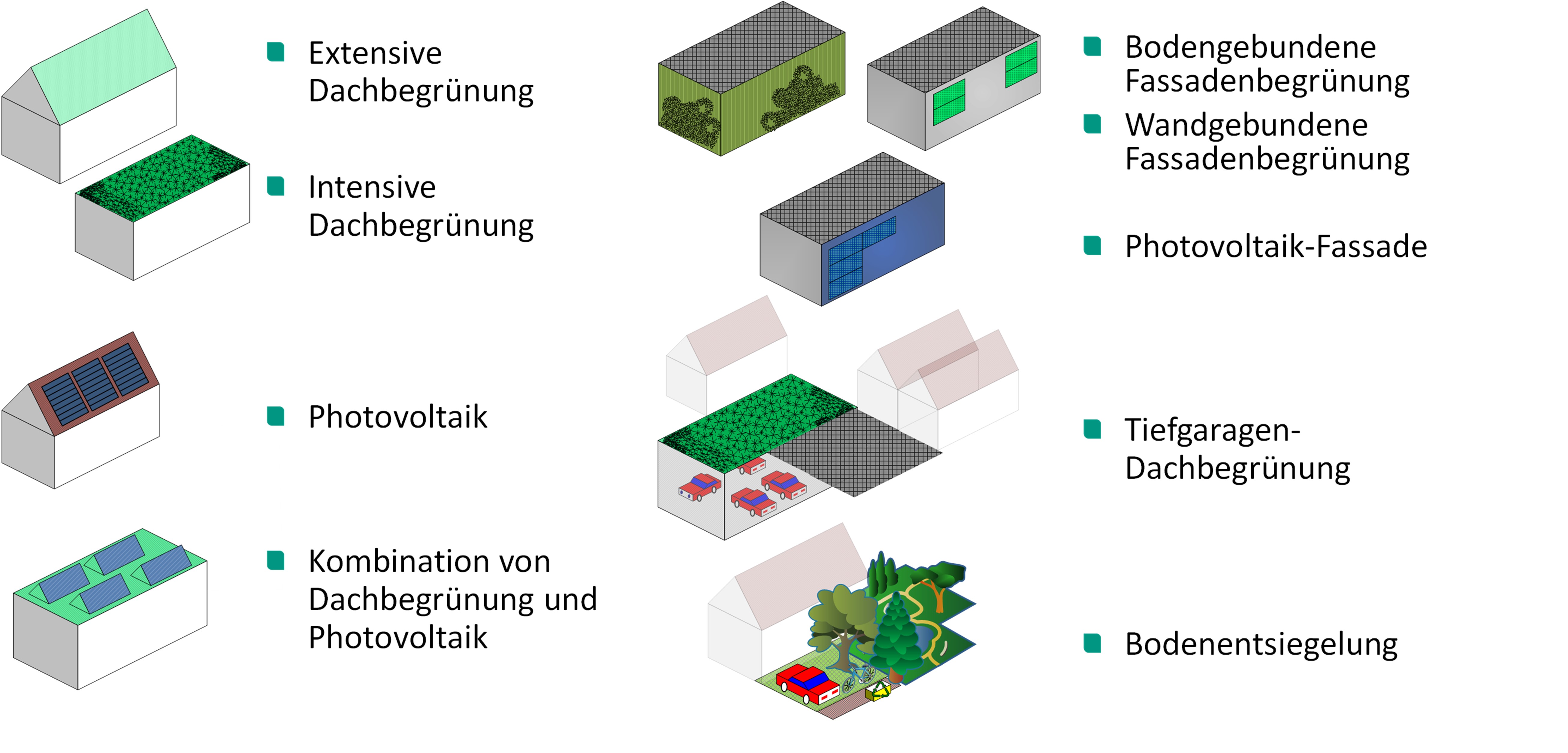
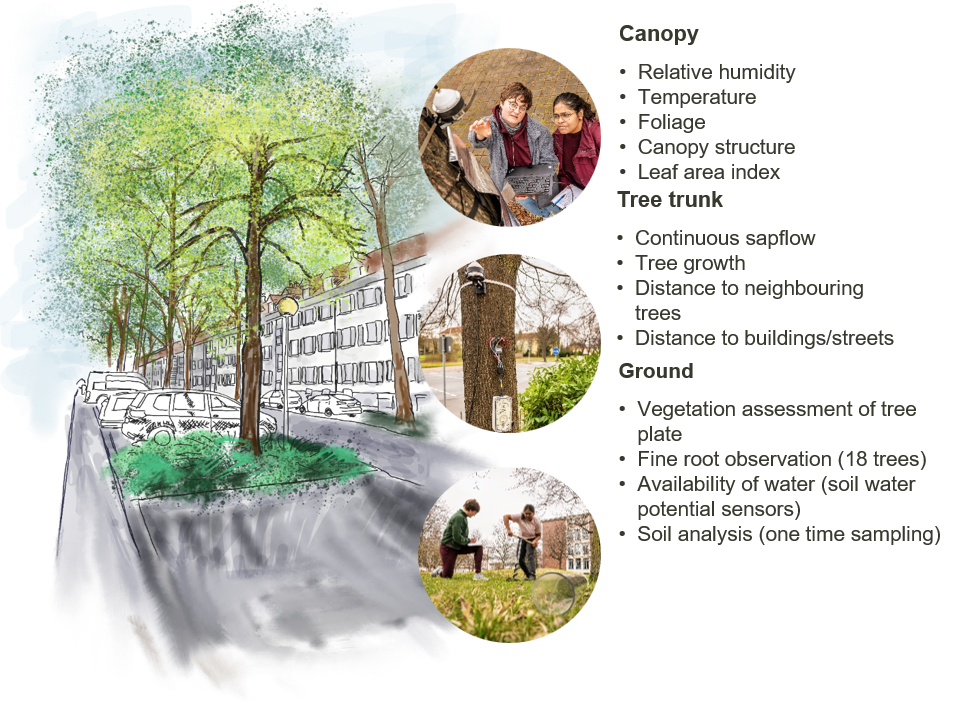
Urban blue-green infrastructure (UBGI) can make cities more livable. Green roofs and urban gardens, for instance, can increase biodiversity and improve resilience to heatwaves and heavy rainfall. Thus, UBGI play a central role in urban transformations towards sustainability. At the same time, implementing UBGI often leads to conflicts – e.g. over the use of brownfield sites for new construction or green space development or over the unsealing of car parking spaces. Such conflicts are rooted e.g. by diverging goals, interests and values of involved actors, and they are shaped and driven by divergent narratives of the involved actors. These narratives can either facilitate or hinder the implementation of UBGI.
Work package 3 (WP 3) aims to bridge conflict and narrative analysis by developing novel methodological approaches to generate knowledge for successful urban transformations in the field of UBGI. Specifically, WP 3 will explore strategies for conflict negotiation and policy formulation that can overcome entrenched conflicts. This includes exploring how scientific models and indicators, when communicated through compelling narratives, can either facilitate or impede political prioritization towards sustainable transformation. This will include a critical analysis of how storytelling and framing in science communication influence policy decisions, and how emerging UBGI conflicts can be adequately addressed through appropriate negotiation strategies.
Methodologically, WP 3 is rooted in a case study approach. Initially, cases of land use conflicts including UBGI will be collected at the block and district levels to gain an overview of the diversity of existing UBGI conflicts. Subsequently, selected cases will undergo in-depth case analysis using methods such as policy document reviews, media analysis, interviews with key stakeholders, and focus groups. Furthermore, in collaboration with the other work packages, stakeholder workshops will be organized to develop and discuss UBGI scenarios and strategies for their successful implementation. By integrating these methods, WP 3 seeks to provide actionable insights for a broader implementation of UBGI. Our case studies:
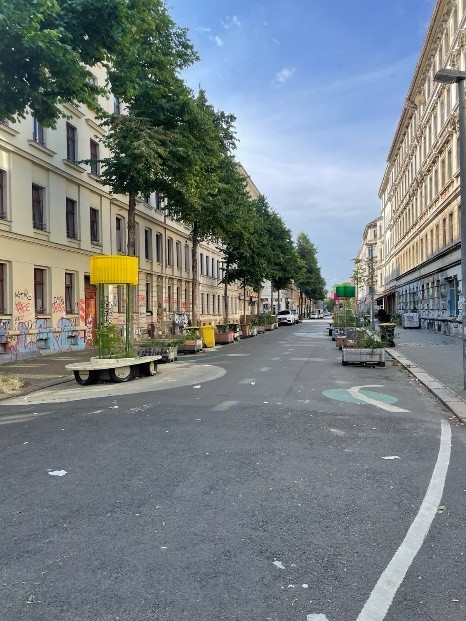
Currently, we conduct an in-depth case study about the Superblocks project in the Leipziger East. Inspired by the Superblocks project in Barcelona, the Leipzig initiative aimed to create traffic-calmed areas and increase green infrastructure. Local civil society, the municipality and academia collaborated to implement the measures. While many measures could be implemented successfully, various challenges and conflicts also arose. In order to investigate this complex conflict setting, we will analyse how the competing narratives of the stakeholders involved shape the discourse and the implementation of concrete measures. Based on the results, we will discuss approaches for successfully negotiating such intertwined local conflicts in a stakeholder workshop. Furthermore, we plan to conduct case studies on the development of housing in conflict with the preservation of green spaces at the Bürgerbahnhof Plagwitz in Leipzig, and on the preservation of green spaces in conflict with plans to develop a solar park for green energy production at a former landfill site in the Leipzig district of Seehausen.