
BGR Sync
BGR Sync strengthens the sector coupling of water and energy in urban districts. The objective is to develop a functional digital twin that integrates hydrological, thermo-hydraulic, and geotechnical processes, thereby supporting the planning, operation, and control of decentralized BGR systems. This is demonstrated through concepts such as underground thermal energy storage (e.g. in groundwater), energy recovery from wastewater (e.g. in the form of heat), and a predictive operational strategy that takes weather conditions, usage patterns, and energy market dynamics into account. At the same time, potential impacts on water quality and subsurface microbiology are investigated in order to identify and minimize risks at an early stage.
The main outcome of BGR Sync is the first demonstration of the functional digital twin, including its various components, at the Leipzig Science Park. This demonstration will serve as a blueprint for feasibility studies of similar integrated water and energy concepts at other locations. In the final year of the project, the BGR Sync team intends to work together with stakeholders to develop a methodology for implementing the digital twin in another urban district.
Work packages
- Data research: Geology of the Leipzig subsurface, heating demand of buildings at the Science Park, collaboration with local experts (BFM UFZ, TCM TechnoServ, Leipzig Water Authority), fundamentals of wastewater heat recovery as a shared basis with project partner HZDR.
- Development of numerical groundwater model: Based on the hydrogeological state model of Saxony and reference-date measurements by LfULG using OGS.
- Sensitivity analysis with simplified borehole heat exchanger model: Determination of the uncertainty of key soil parameters (permeability, thermal conductivity, …) for the two scenarios (borehole heat exchangers only into the unconsolidated rock layers or down into the bedrock of the basement).
- Development of borehole heat exchanger geothermal model: Feasibility study of a borehole heat exchanger system for a selected building at the Science Park.
- Synthesis model with HZDR: Feasibility study of a combined use of geothermal energy and wastewater heat recovery for Leipzig Science Park. For example, in the context of BTES use (borehole thermal energy storage) with heat storage in the subsurface.
Profiles
Uwe Hampel
Prof. Dr. Uwe Hampel is Co-Director of the Institute of Fluid Dynamics at HZDR and holds the Chair of Process Diagnostics for Energy and Process Engineering at the Institute of Power Engineering at TU Dresden. Under Prof. Hampel’s leadership, the Institute of Fluid Dynamics develops simulation tools for the design, optimization, and safety assessment of energy and process engineering systems. His work also includes the development and application of advanced measurement techniques to improve technical processes in the fields of energy, process, and environmental engineering.

Olaf Kolditz
Prof. Dr.-Ing. habil. Olaf Kolditz is Head of the Department of Environmental Informatics at UFZ and Professor of Applied Environmental Systems Analysis at TU Dresden. Since 2007, he has combined modeling, environmental informatics, and geoscientific systems analysis at UFZ. In the field of geothermal energy, his research particularly focuses on digitalization processes, virtual research environments, and geothermal system analysis.
Haibing Shao
Dr. Haibing Shao is a Research Scientist at UFZ and Head of the **Geothermal System Analysis** research group. His research covers both shallow and deep geothermal energy, ranging from the modeling of borehole heat exchangers and subsurface thermal energy storage to coupled multiphase models of deep geothermal reservoirs. In addition, he conducts research on reactive transport modeling of water–rock interactions under high-temperature and high-pressure conditions.
Hannes Hofmann
Prof. Dr. Hannes Hofmann is Head of a Research Group in the Geoenergy Section at GFZ and leads the Helmholtz Young Investigator Group ARES. At the same time, he is Junior Professor of Reservoir Engineering at TU Berlin. His research focuses on Enhanced Geothermal Systems, geothermal reservoir engineering and simulation, as well as the safe utilization of deep geothermal energy in urban environments, including risk mitigation and induced seismicity.

Maximilian Dörnbrack
Maximilian Dörnbrack is a doctoral researcher in the UFZ Department of Environmental Informatics. Since 2022, funded through the SpeicherCity project, he has been working on the simulation of Aquifer Thermal Energy Storage (ATES) in contaminated groundwater and its integration with remediation technologies. His academic background is in geology. He completed his Master's degree at TU Freiberg in 2022, specializing in hydrogeology and engineering geology.
Sebastian Reinecke
Dr. Sebastian Reinecke is a Research Scientist at the HZDR Institute of Fluid Dynamics and Head of the Department of Water and Environmental Technologies. As a lead scientist in the URBAN LE project, he develops integrated approaches that combine water infrastructure, urban ecosystems, and energy and heat supply systems. In his role as department head, he coordinates projects on energy-efficient technologies, simulation tools, control strategies, and measurement systems for sustainable water management.
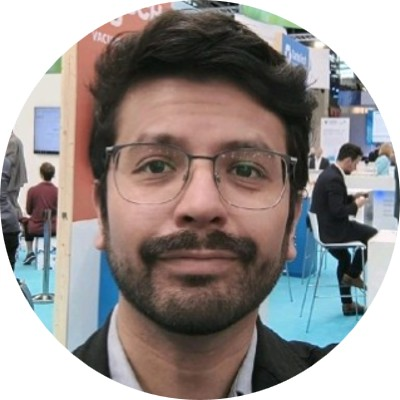
Alejandro Parra
M.Sc. Alejandro Parra is a Research Associate in the Department of Water and Environmental Technologies at HZDR. His work focuses on the development of simulation tools for energy recovery from wastewater and their integration with geothermal systems. Mr. Parra has also been extensively involved in acquiring partners and initiating projects across various fields of water management.
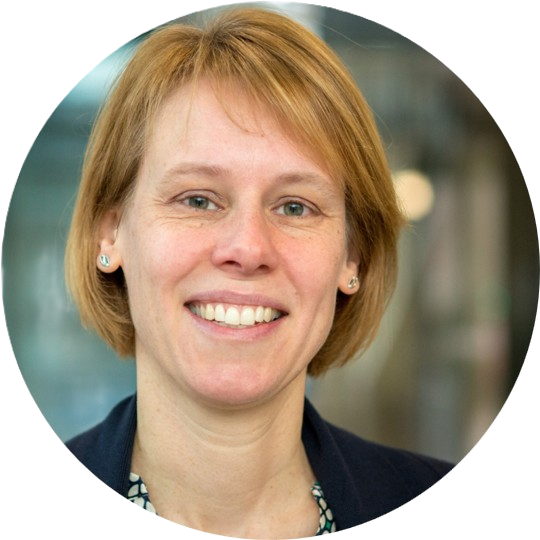
Ivonne Nijenhuis
Dr. Ivonne Nijenhuis is a Senior Scientist in the UFZ Department of Environmental Biotechnology. Her research focuses on the anaerobic biotransformation of halogenated organic contaminants and the application of stable isotope approaches. In the context of Aquifer Thermal Energy Storage (ATES) technologies, she contributes expertise in microbial transformation processes and isotope-analytical methods to assess changes in contaminated groundwater associated with the use of thermal aquifer storage systems.
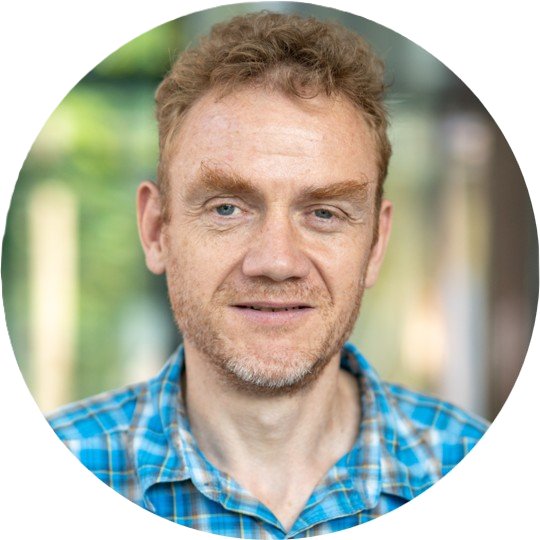
Carsten Vogt
Dr. Carsten Vogt is a Senior Scientist in the UFZ Department of Environmental Biotechnology and heads the Geomicrobiology research group. His research focuses on the aerobic and anaerobic microbial degradation of hydrocarbons as well as biogeochemical processes in subsurface habitats, particularly carbon, sulfur, and nitrogen cycling. In the context of Aquifer Thermal Energy Storage (ATES) technologies, he contributes expertise on subsurface microbial processes and their relevance for the safe operation and long-term sustainability of thermal aquifer storage systems.