URBAN LE – Systemic blue-green-red urban development
URBAN LE develops and tests new approaches in Leipzig for climate-resilient, water- and energy-sensitive urban development. At the core is an integrated blue-green-red (BGR) infrastructure concept: blue stands for water and stormwater management, green for vegetation and cooling, multifunctional urban spaces, and red for energy systems (e.g. heat supply, storage, sector coupling). In cooperation with the City of Leipzig, municipal utilities, and other partners from practice, administration, and research, solutions are not only scientifically analyzed but also implemented in real-world laboratories – including the UFZ campus, the MDR headquarters, and the Bayerischer Bahnhof development area.
A key element is functional digital twins: they combine measurement data, models, and scenarios (climate, demography, economy) into application-oriented planning and decision-making tools. In this way, measures for stormwater management, reduction of drinking water demand, safe storage and reuse of water, as well as the coupling of water and energy systems can be systematically evaluated, optimized, and made transferable to other cities.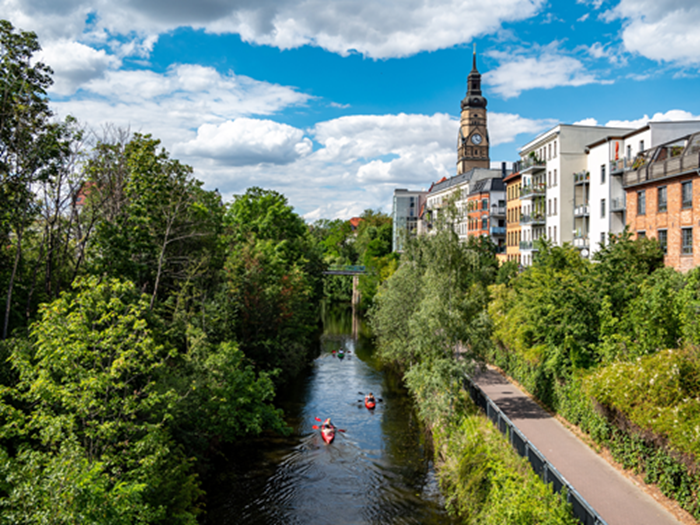
Subproject QLAW Adapt: Quantitative Impacts & Legal Frameworks
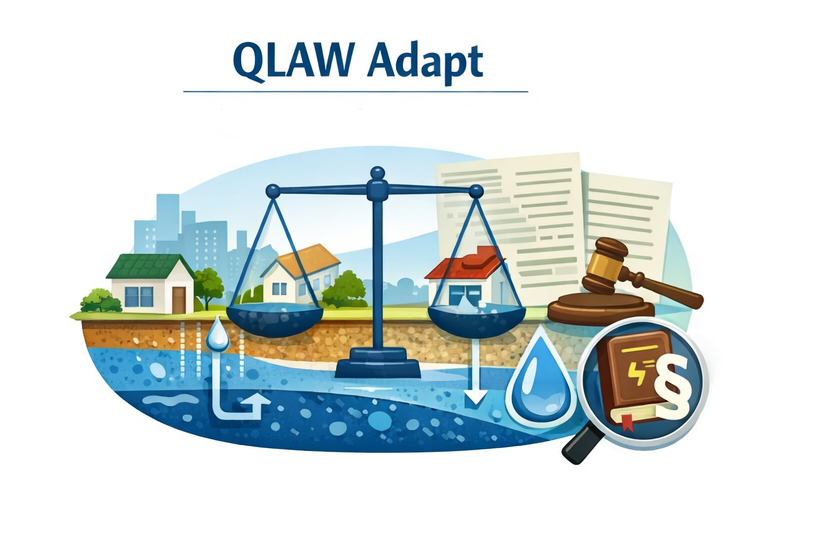
QLAW Adapt quantifies how blue-green infrastructure (e.g. de-sealing, infiltration, retention, irrigation concepts) affects the water balance, sewer systems, and drinking water demand – across the entire city and in surrounding areas (water resources/groundwater recharge). To this end, adaptation scenarios are developed together with Leipzig-based practice partners and represented in a digital twin. A particular focus lies on legal prerequisites and barriers: the subproject develops approaches for how existing regulations and procedures can be further improved so that water-sensitive measures can be implemented more quickly and reliably.Subproject BGR Sync: Synchronization of Water and Energy Systems
BGR Sync strengthens the sector coupling of water and energy in urban districts. The goal is a functional digital twin that integrates hydrological, thermo-hydraulic, and geotechnical processes, thereby supporting the planning, operation, and control of decentralized BGR systems. This is demonstrated, among other things, through concepts such as underground heat/cold storage (e.g. in groundwater) and a predictive operational strategy that takes weather, usage, and energy market conditions into account. At the same time, potential impacts on water quality and subsurface microbiology are investigated in order to identify and minimize risks at an early stage.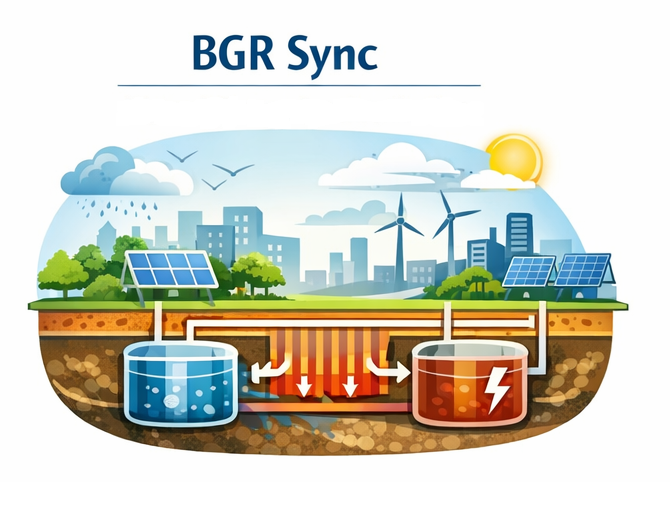
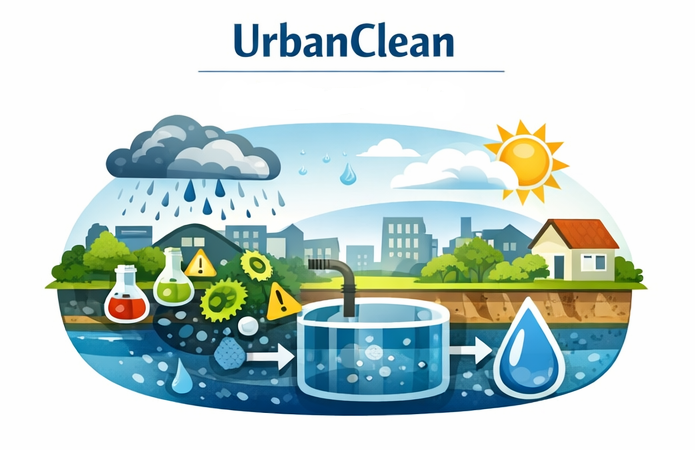
Subproject UrbanClean: Clean Water, Safe Storage and Reuse
UrbanClean addresses the key question: How can water retention and reuse in local cycles be achieved without creating new risks for humans and the environment? The subproject investigates which chemical and microbial pollutants are mobilized during extreme weather events (heavy rainfall, drought periods), how they accumulate, transform, and are transported within BGR systems – and which measures can effectively reduce their load. The results include, among others, a city-specific water quality baseline as well as strategies and methods for the safe storage, treatment, and use of rainwater and urban water.Subproject BlueGreen LE: Development of Blue-Green Urban Districts (including sustainability assessment)
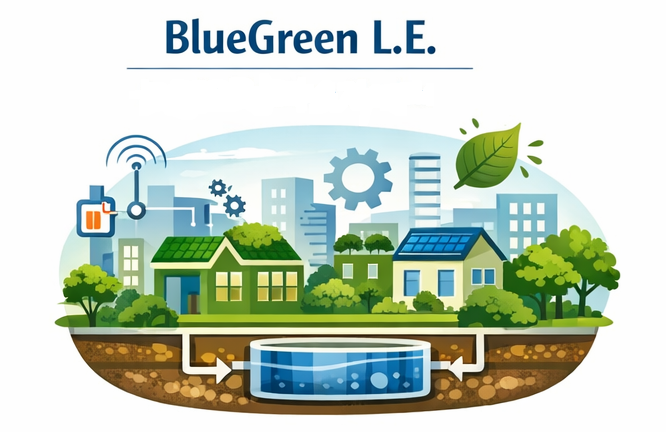
BlueGreen LE develops and tests concrete solutions for blue-green districts in Leipzig (including the MDR headquarters). Sensors and monitoring systems capture stormwater dynamics, plant vitality, and microclimate; based on this, digital twins are created that evaluate retention and cooling effects and enable optimizations (e.g. decentralized rainwater use for irrigation). A key focus is the integration of climate adaptation with the heat transition and the requirements of densely used street spaces.