In4Nile Knowledge Hub
A the key synthesis product of the In4Nile PhD cohort, will be a Knowledge Hub for Nile Basin water quality data—an information system that ensures our research outcomes are easily accessible. As the project this started this is currently under construction.
In4Nile Water Quality Dataset
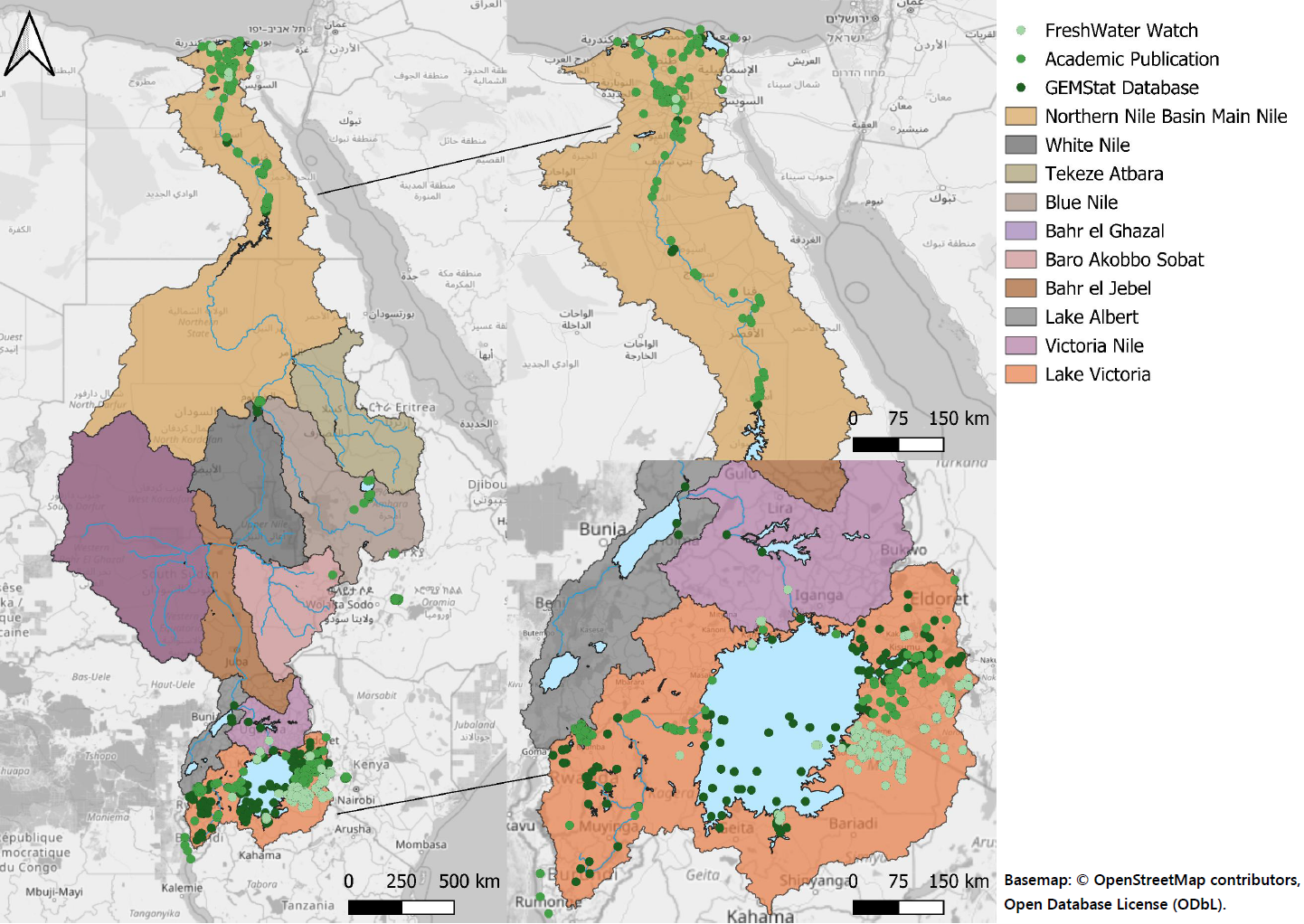
The In4Nile water quality dataset has been compiled to support the analysis of water quality conditions across the Nile River Basin.
The dataset has been published on Zenodo https://doi.org/10.5281/zenodo.20664052
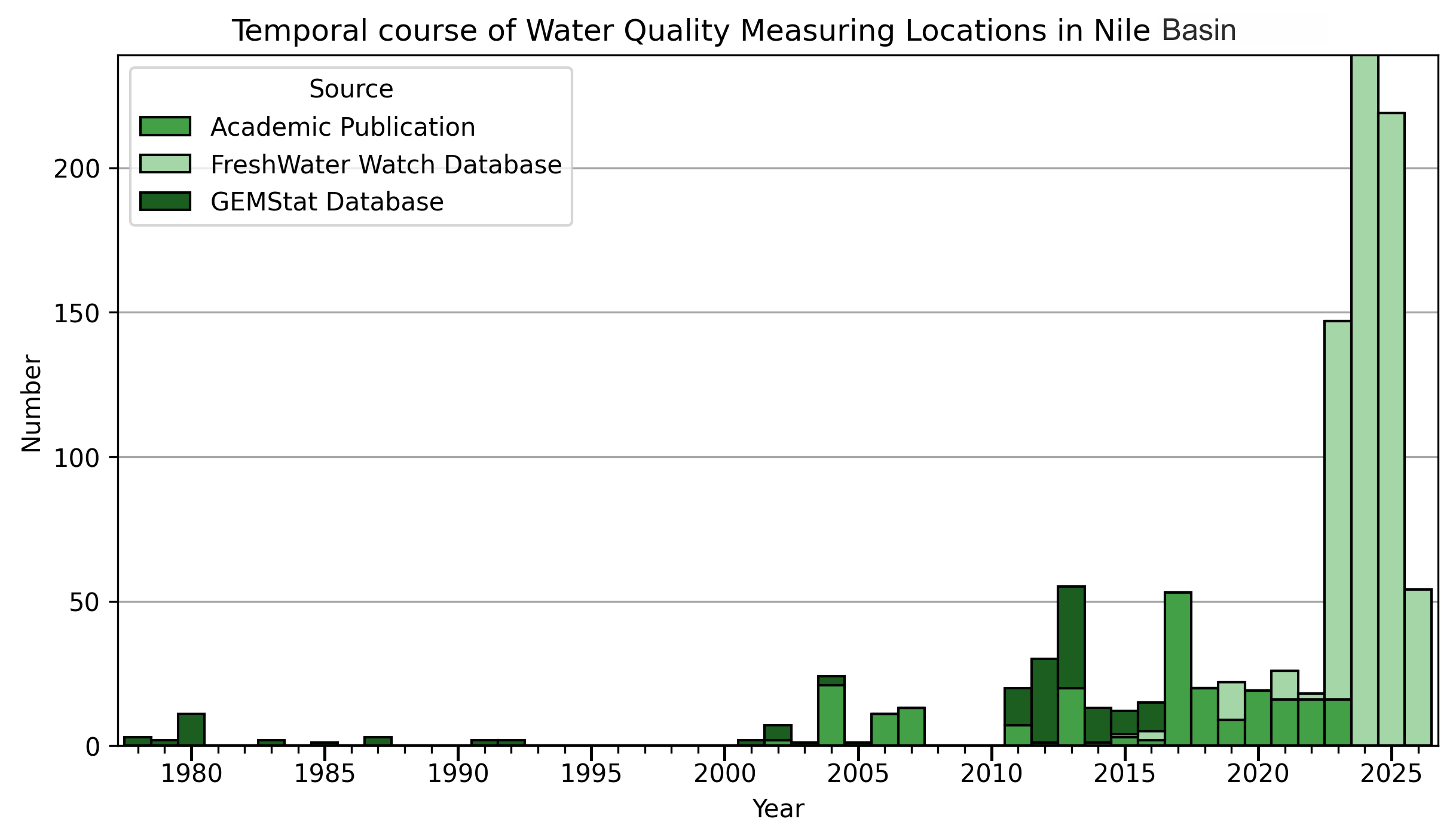
It integrates data from three primary sources: the FreshWater Watch citizen-science monitoring programme (explore their data here: https://www.freshwaterwatch.org/pages/explore-our-data) , the UNEP GEMS/Water Global Freshwater Quality Archive (GEMStat) (https://zenodo.org/records/18459694) and 21 peer-reviewed academic publications.
For records in academic publication where geographic coordinates were not reported, site locations were estimated based on the information provided in the original sources (e.g. river names, maps, etc.). For data sources that include data from beyond the combined datasets, only monitoring sites located within the Nile River Basin were retained. Relevant water quality parameters were selected according to the specifications and integrated into the master database.
The resulting dataset contains 3,143 monitoring records. Detailed information on monitoring locations and site characteristics is provided in the accompanying metadata table.
Have we missed a data base or academic papers with water quality data in the Nile Basin? Don't hesitate to contact us so we can keep the water quality data set up to date!
Christian Schmidt (christian.schmidt@ufz.de)