
News
Will NORMAN go global?
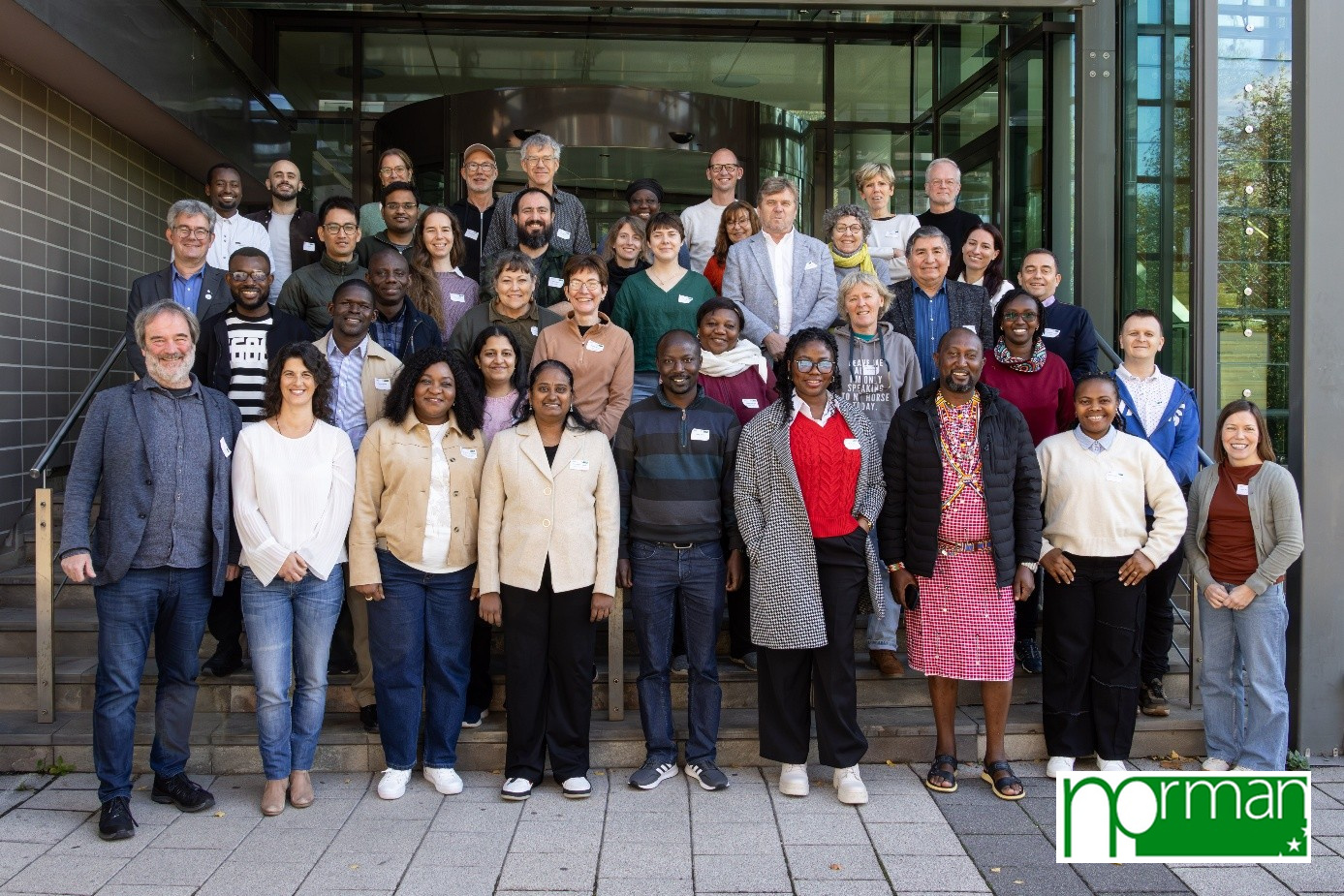
Emerging and legacy chemical pollution threatens ecosystems and human health all over the planet. Thus, in a very exciting NORMAN Network workshop at Helmholtz Centre for Environmental Research (UFZ) about 60 NORMAN members and participants from research institutions in Africa, Asia and South America and from UNEP and FAO discussed the perspectives for a European – Global South partnership on chemical pollution under the umbrella of NORMAN. A large majority of the participants were in favour of welcoming new members from different parts the world and to develop conditions that allow members from low- and middle- income countries to join the network.
In a very impressive session participants from Brazil, Chile. Vietnam, India, Zambia, Ghana, Kenya and South Africa presented their experience with chemical monitoring in their countries and underlined how important international networking in NORMAN, the NORMAN database and capacity building under the roof of NORMAN would be for their work to investigate, monitor and improve the environmental quality in their countries. Thanks a lot to Gisela Umbuzeiro, Ricardo O. Barra, Van Hoi Bui, Arya Vijayanandan, Dr Nosiku Munyinda, Saada Mohammed, Faith Kandie , PhD and Natalie. Enock Ole Kiminta from Kenya National Association of Water Resources Users' Associations (KeNAWRUA) gave us a deep insight into the role of citizen science in environmental monitoring in Africa with new perspectives for NORMAN.
Of course, global collaboration on chemical pollution should build on what is already there. Ludovic Bernaudat gave a very interesting overview on the UNEP Global Chemicals Monitoring Programme (GCMP) with a focus on POPs and mercury under Stockholm and Minamata Convention. Lucrezia Caon (FAO) illustrated global initiatives and the Asia-Pacific perspective on soil pollution. I took the opportunity to highlight the Global Chemical Monitoring (GloCheM) network, a bottom-up initiative to organize chemical monitoring studies globally and particularly in Africa, Asia and South America. All speakers expressed their hope for a closer collaboration of their institutions with NORMAN in future
PhD Cohort In4NILE
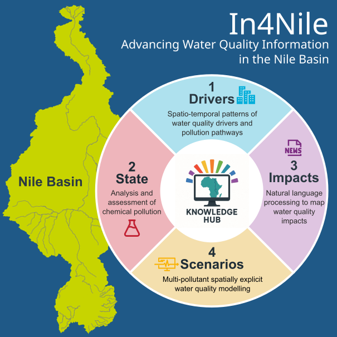
With its approach of integrating spatial data on key pollution drivers, tailored monitoring approaches, text-mined information, and water quality modelling, In4NILE addresses the critical lack of water quality information in the Nile River Basin with four interconnected PhD Projects
In4Nile is funded by the UFZ’s PhD Cohort funding scheme, bringing together four doctoral projects centred around a common research topic. The PhD projects combine the synthesizes spatial data on key pollution drivers (PhD 1), develop chemical monitoring strategies (PhD 2), (PhD 3) applies natural language processing to map reported risks and impacts, and (PhD 4) integrates these data into spatially explicit multi-pollutant models to identify hotspots and future scenarios. Together, the projects contribute to an integrated Nile Basin Knowledge Hub.
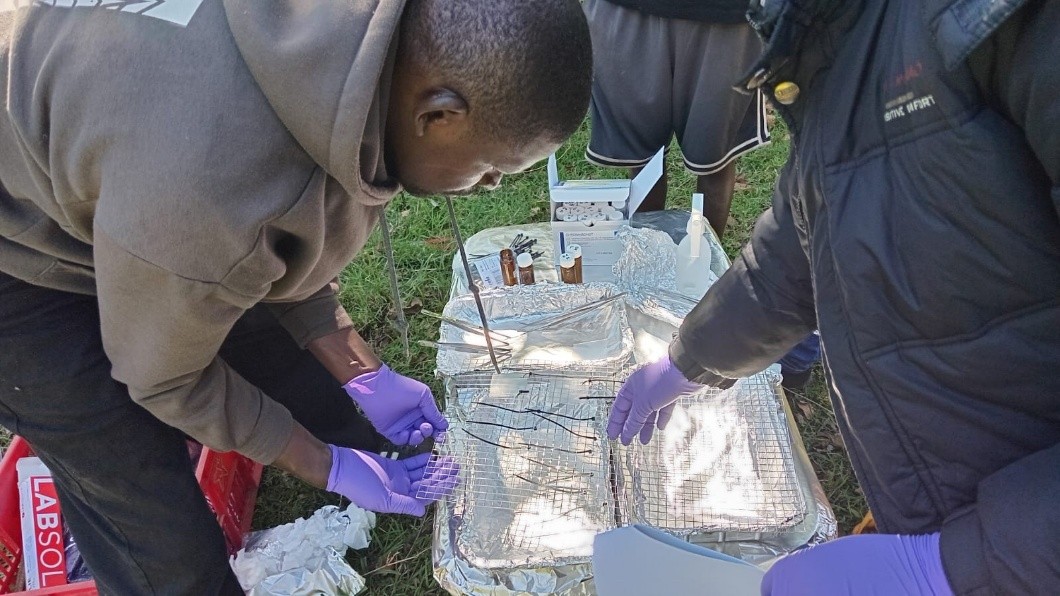
RISKTEX sampling campaign started to unravel pollution sources and risk drivers in River Sosiani, Eldoret, Kenya
RISKTEX is a DAAD funded Doctoral Degree Scholarship by Vincent Rotich based on the collaboration between UFZ, Moi University, Eldoret, Kenya, and Goethe University, Frankfurt am Main, Germany, testing strategies on pollution source and chemical risk driver identification in a multiply impacted African river. It combines passive and active sampling strategies with LC- and GC-HRMS screening, biotesting and data science. Capturing pollution remobilisation at the beginning of the rainy season, Vincent Rotich and a group of helpers from Moi University deployed passive samplers along the course of the river through the city of Eldoret and beyond to capture highly hydrophobic pollutants. More hydrophilic compounds such as pharmaceuticals, many pesticides and industrial chemicals are actively sampled following a water package downstream.
Global Seminar: Solutions for the ONE WORLD
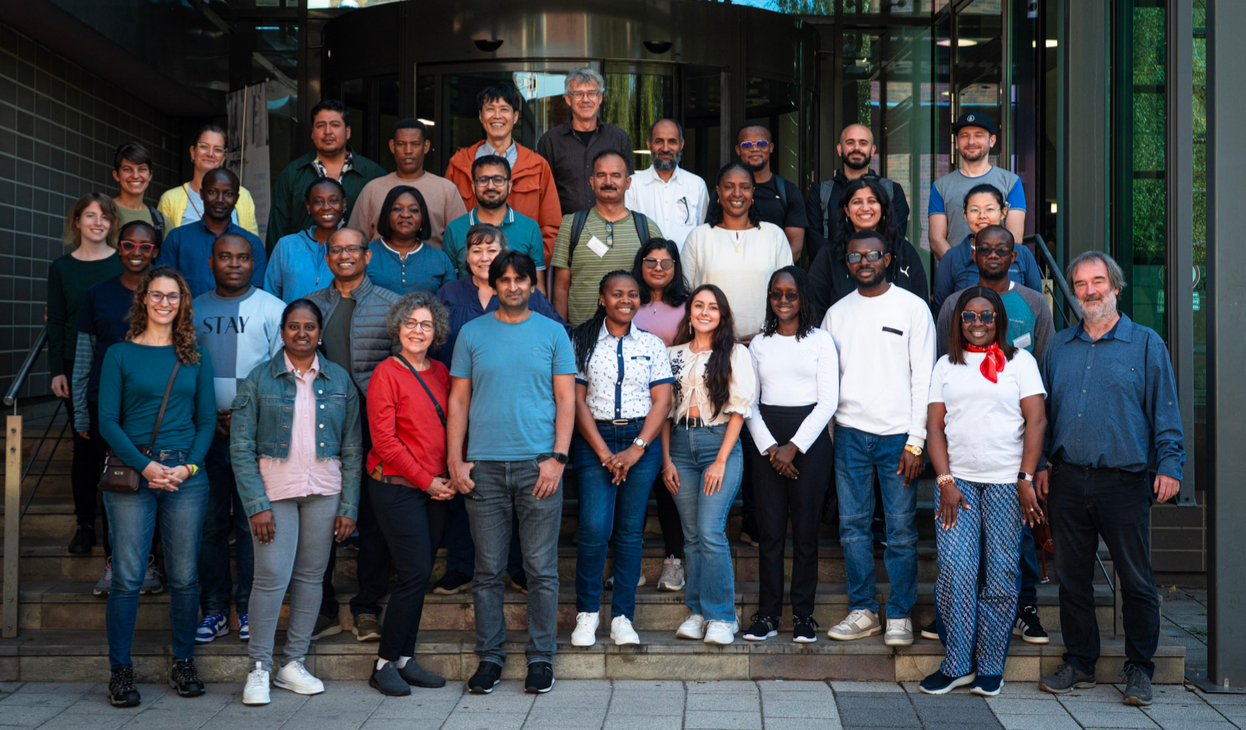
In September 2025 the "Global Seminar: Solutions for the ONE WORLD" was held with 30 international scientists in the field of chemical monitoring with a specific focus on the Global South and the establishment of a sustainable network to find solutions to pollution all over the world. It was the kick-off of this network.