|
|
|
|
|
|
|
Urban Development
|
|
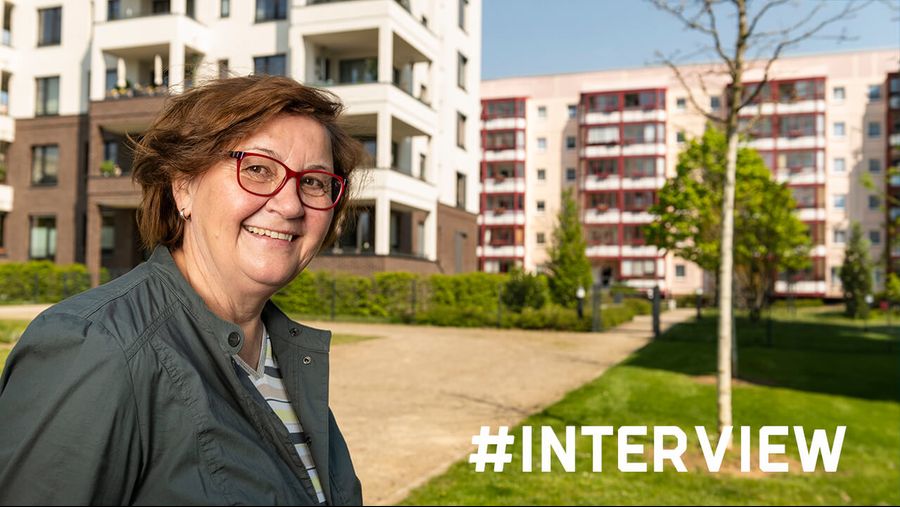
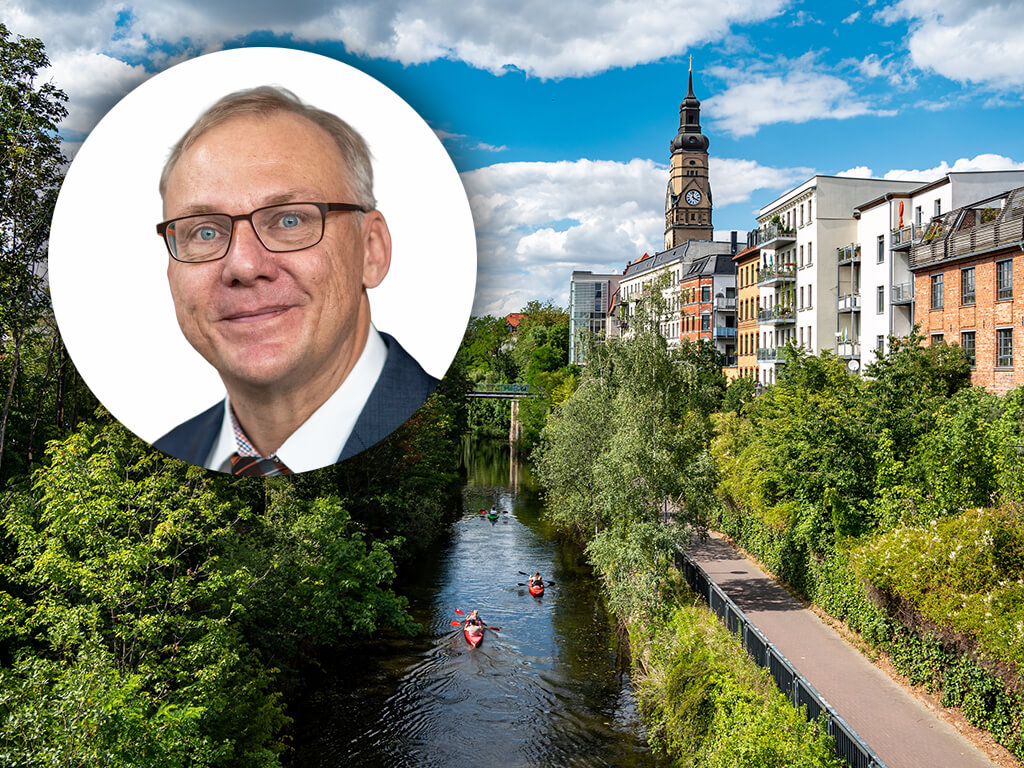
"50 Years of Leipzig-Grünau: A Reflection of Societal Development"
|
|
|
|
|
|
|
|
|
|
On
June 1st, 1976, the foundation stone was laid for what was then the
second-largest new housing estate in the GDR: Leipzig-Grünau. Its
development has been tracked since 1979 by the long-term study “Living
in Leipzig-Grünau”, in which residents are surveyed every five years.
UFZ urban sociologist Prof Sigrun Kabisch has been involved from the
outset and has been in charge since 2004. In this interview, she talks
about the development of the district, current trends and its
future.
|
|
|
|
|
|
|
|
|
|
|
|
EU Nature Restoration Regulation (NRR)
|
|
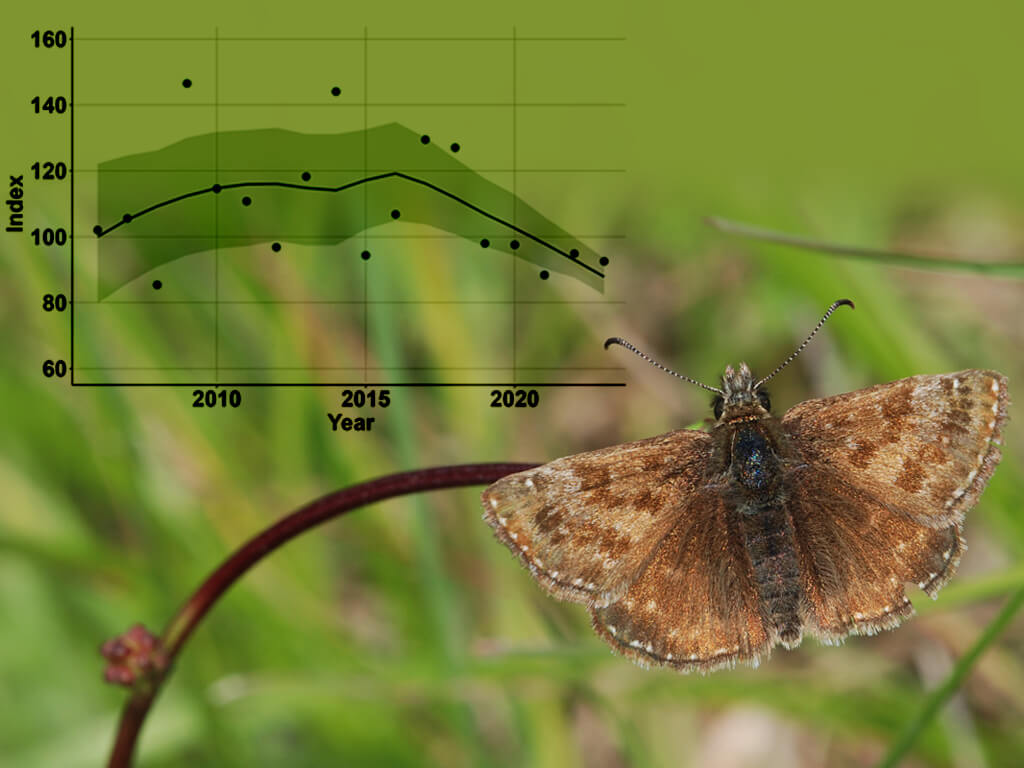
Butterfly Index should be included in the German Nature Restoration Plan
|
|
|
|
|
The
Grassland Butterfly Index (GBI) should be included in the German
Restoration Plan due to its sensitivity to environmental changes and its
direct reflection of the ecological status of agricultural landscapes.
You can read about further arguments in favour of this in the fact sheet
compiled by UFZ experts. And if you’re convinced, you can contribute
your opinion via the BMU’s public participation platform by 25 June
2026.
|
|
|
|
|
|
|
|
|
|
|
PFAS
|
|
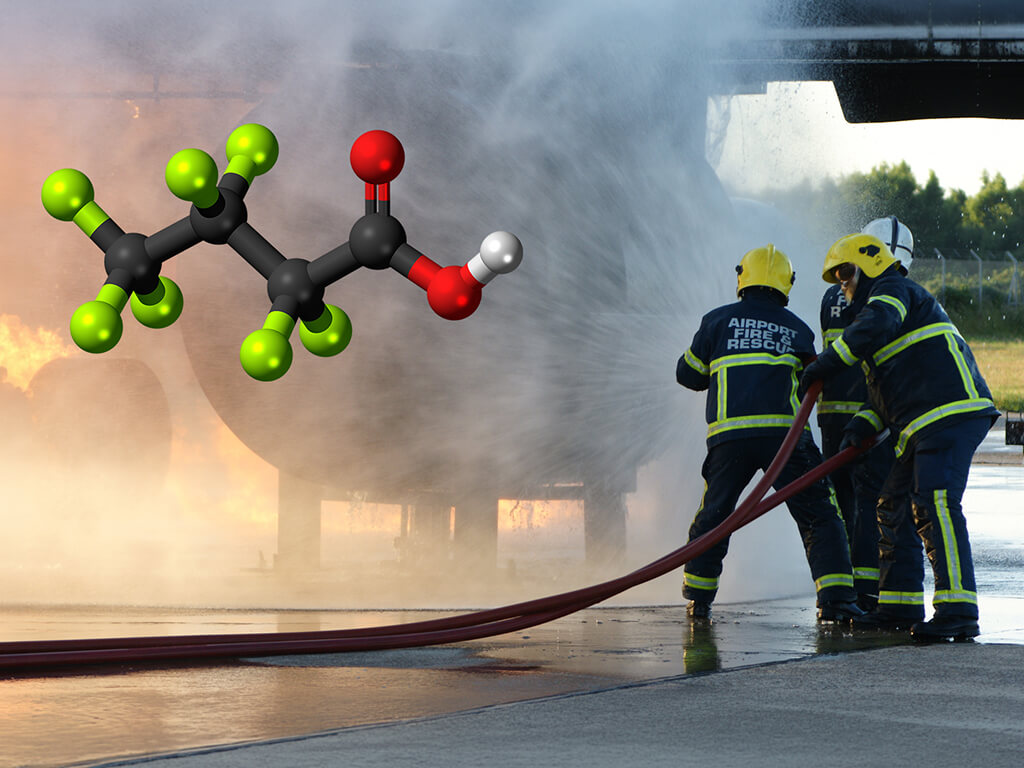
New Method to Remove Short-Chain PFAS from Water
|
|
|
|
|
|
Short-chain
per- and polyfluorinated alkyl compounds (PFAS), such as
perfluorobutanoic acid (PFBA), are increasingly entering the environment
and contaminating groundwater and drinking water. Because they are
highly mobile, they can only be removed with considerable effort. An
UFZ-team has now developed a new technology using a two-stage
electrochemical process. As the researchers write in the Chemical Engineering Journal, it is reliable, environmentally friendly and affordable.
|
|
|
|
|
|
Climate Change
|
|
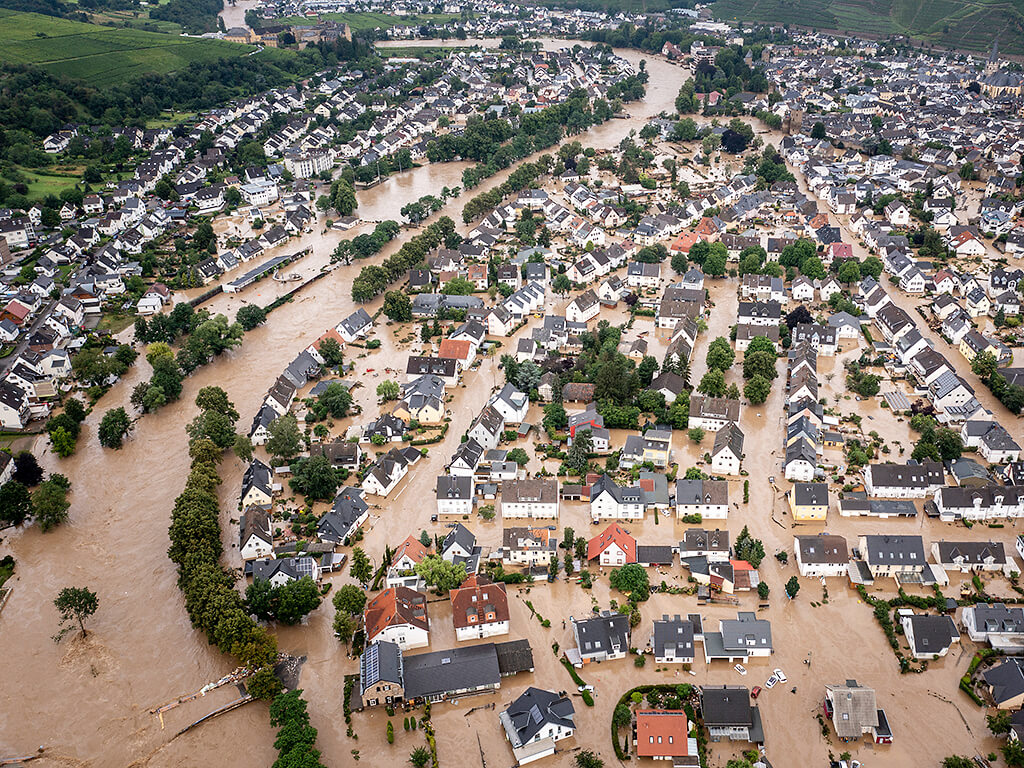
Extreme Effects are Possible Even at 2°C Global Warming
|
|
|
|
|
|
Extreme
climate impacts on people and the environment are often associated with
very high levels of global warming, of three or four degrees Celsius. A
study published in Nature and led by the UFZ shows that this
assumption falls short. Even moderate warming of 2 degrees Celsius could
pose considerable climate risks for sectors that are particularly
important for society and the environment. This underlines the urgency
of rapid climate mitigation measures to limit these risks.
|
|
|
|
|
|
|
|
|
|
|
|
|
|
|
|
|
PORTRAIT
|
|
|
|
|
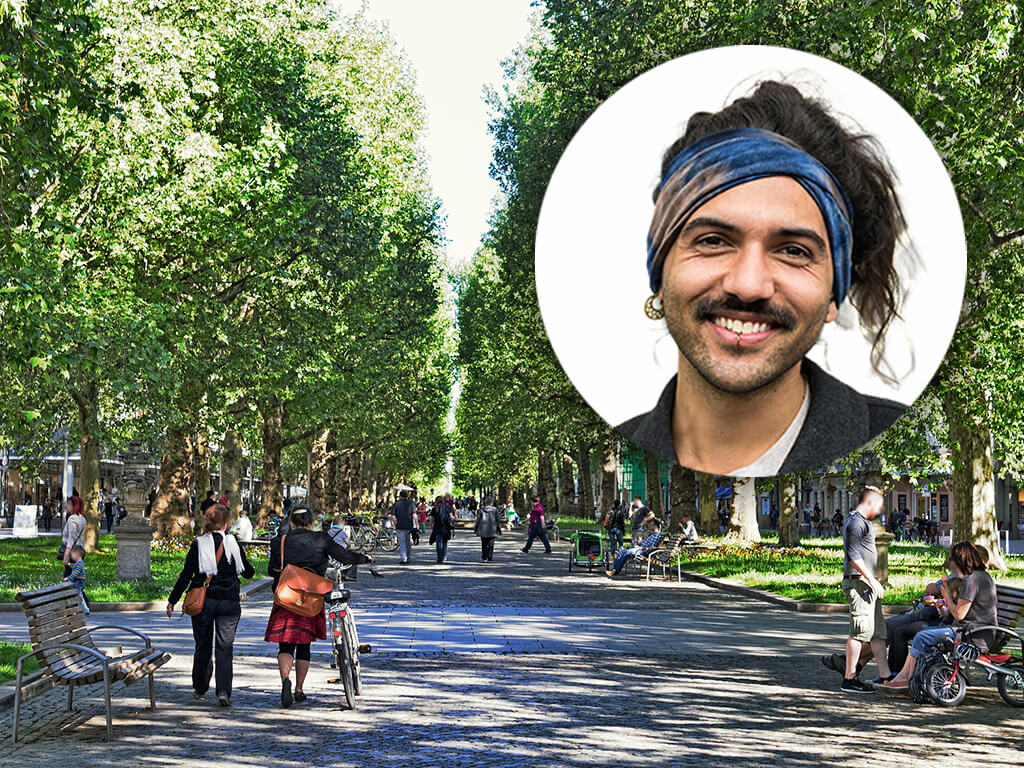
Dr Tallent Dadi
|
|
|
Sediments
in lakes and reservoirs play a crucial role in the storage and release
of nutrients and gases such as methane. These processes influence the
health of lakes and their water quality – and they are the focus of the
work of UFZ lake researcher Dr Tallent Dadi. He is investigating how
climate change is altering the dynamics between sediments and water and
how this affects nutrient flows, algal blooms and greenhouse gas
emissions from lakes.
|
|
|
|
|
|
|
|
|
|
|
|
|
Plastic Pollution
|
|
Microbes in the Plastisphere
|
|
|
|
|
|
Plastic
damages ecosystems, endangers animals and, in the form of nanoplastics,
can have consequences for human health. However, plastic can also
provide a habitat for bacteria, viruses, fungi and algae. Researchers
from UFZ and GEOMAR have shown in a study that the genomes of microbes
on plastic particles are larger and contain more gene copies for
functional processes than those of marine plankton. This adaptation
ensures their survival, they write in Environmental Pollution.
|
|
|
|
|
|
Water Crisis
|
|
Drought, Growth, Inequality
|
|
|
|
|
|
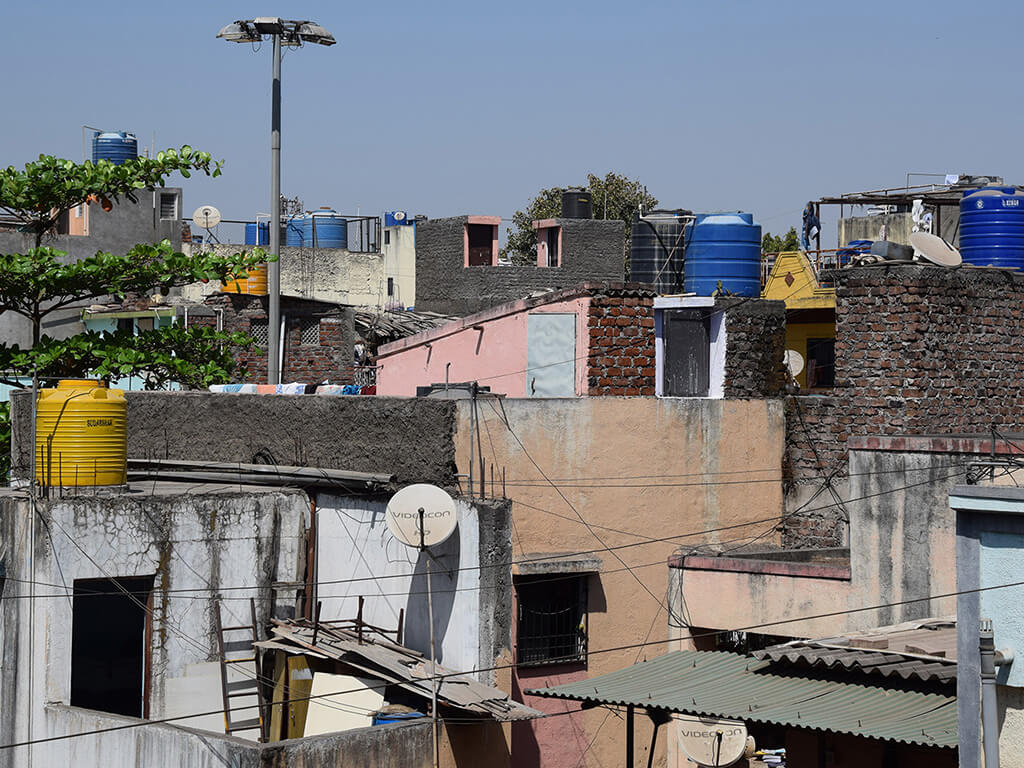
By
2050, almost half of the world’s urban population will be facing water
shortages. A study involving the UFZ and using Pune, the 9th
largest city in India as a case study, shows that poor households in
particular are severely disadvantaged in terms of water supply during
prolonged droughts – despite numerous measures to improve the situation.
The researchers analysed how policy measures affect access to water and
costs, and published their findings in Earth’s Future.
|
|
|
|
|
|
|
|
|
|
|
|
|
|
|
RECOMMENDED READING
|
|
Citizen Science – Conduct Research Together!
|
|
|
This
open-access handbook on citizen science is the first of its kind in
German to provide an overview of the theory, empirical research and
practical experience associated with this research approach. Over ninety
authors from German-speaking countries, all with many years of
experience in citizen science, explore the opportunities, obstacles and
future needs in this field. UFZ/iDiv Professor Aletta Bonn is
co-editor.
|
|
|
|
|
|
|
|
|
|
|
|
|
|
|
|
Helmholtz Water Initiative
|
|
Water Safety for People and the Environment
|
|
|
|
|
|
Droughts
and heatwaves, as well as floods and heavy rainfall, are altering the
water cycle and having consequences for humans, the economy and nature.
The Helmholtz Association is tackling these challenges and has launched
the ‘Water Security for People and the Environment’ initiative, which is
coordinated by the UFZ. In three Solution Labs, scientists from nine
Helmholtz Centres are researching key aspects and testing potential
solutions in consultation with local stakeholders.
|
|
|
|
|
|
Weather Models
|
|
Physics-Based Weather Models Versus AI
|
|
|
|
|
|
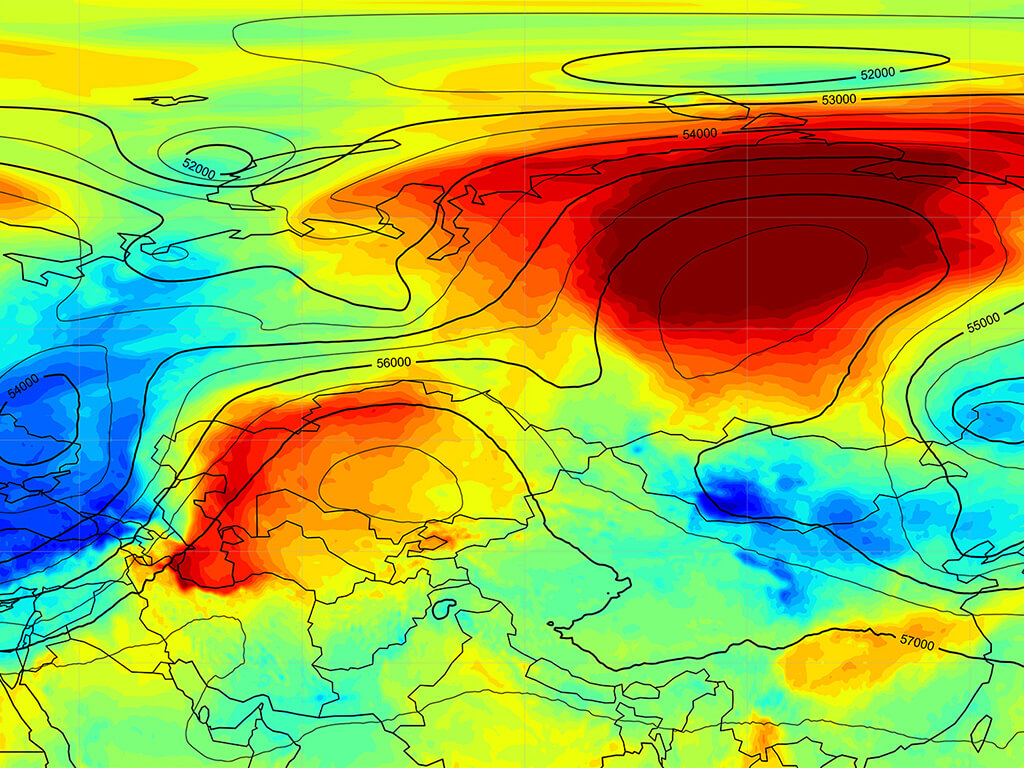
Modern
AI weather models provide fast and energy-efficient forecasts and,
under average weather conditions, often achieve an accuracy that is
comparable to or even surpasses that of traditional, physics-based
numerical models. However, for particularly severe, record-breaking
extreme events, AI-based forecasts reach their limits and exhibit
greater forecast errors. This is confirmed by a study published in Science Advances, in which the UFZ was also involved.
|
|
|
|
|
|
|
|
|
|
|
|
|
|
|
|
|
|
FILM TIP
|
|
“Mushrooms or Pandas – are we Protecting the Right Ones?”
|
|
|
|
|
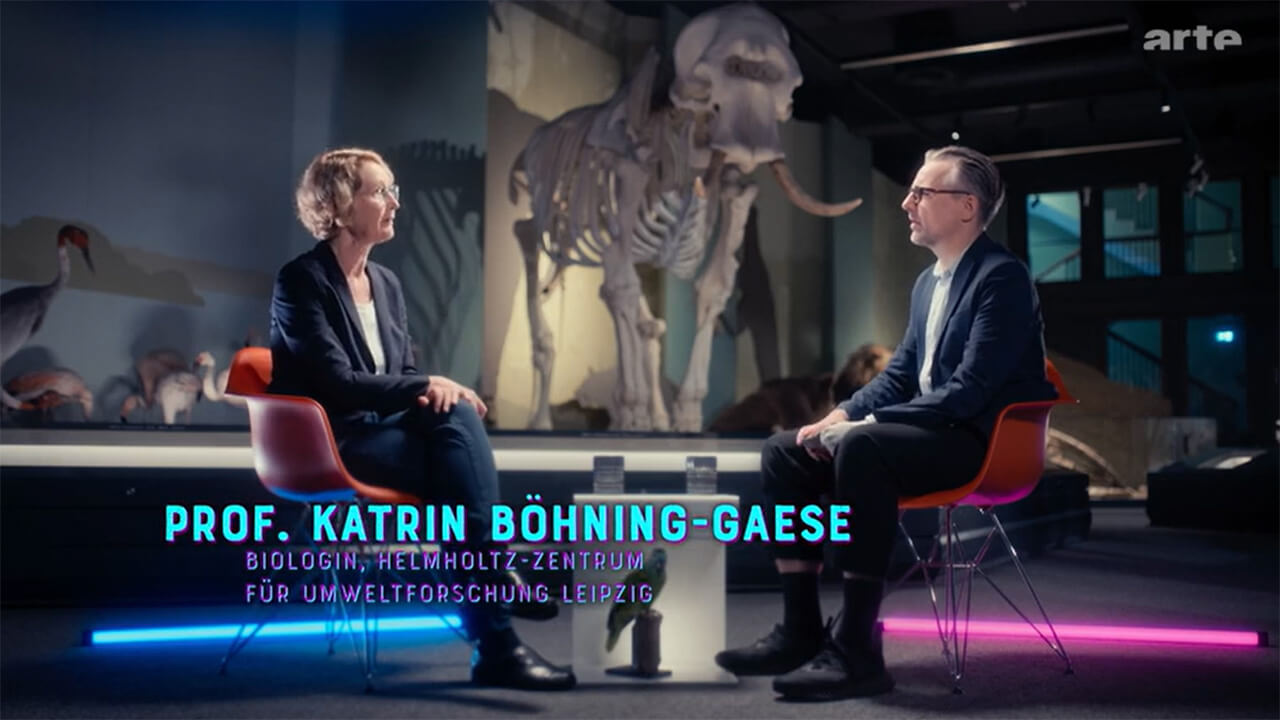
Alongside
global warming, the loss of biodiversity is regarded as the second
major environmental crisis. In the ARTE series “Agree to Disagree”, Prof
Bertolt Meyer (TU Chemnitz) discusses with Prof Katrin Böhning-Gaese
(UFZ) and Prof Chris Thomas (University of York) about protecting
biodiversity. How far should we be allowed to interfere with nature? Is
species conservation merely symbolic politics? And are humans perhaps
merely tackling the symptoms rather than the causes?
|
|
|
|
|
|
|
|
|
|
|
Agriculture
|
|
BODIUM4Farmers: A Decision-Making Tool
|
|
|
|
|
|
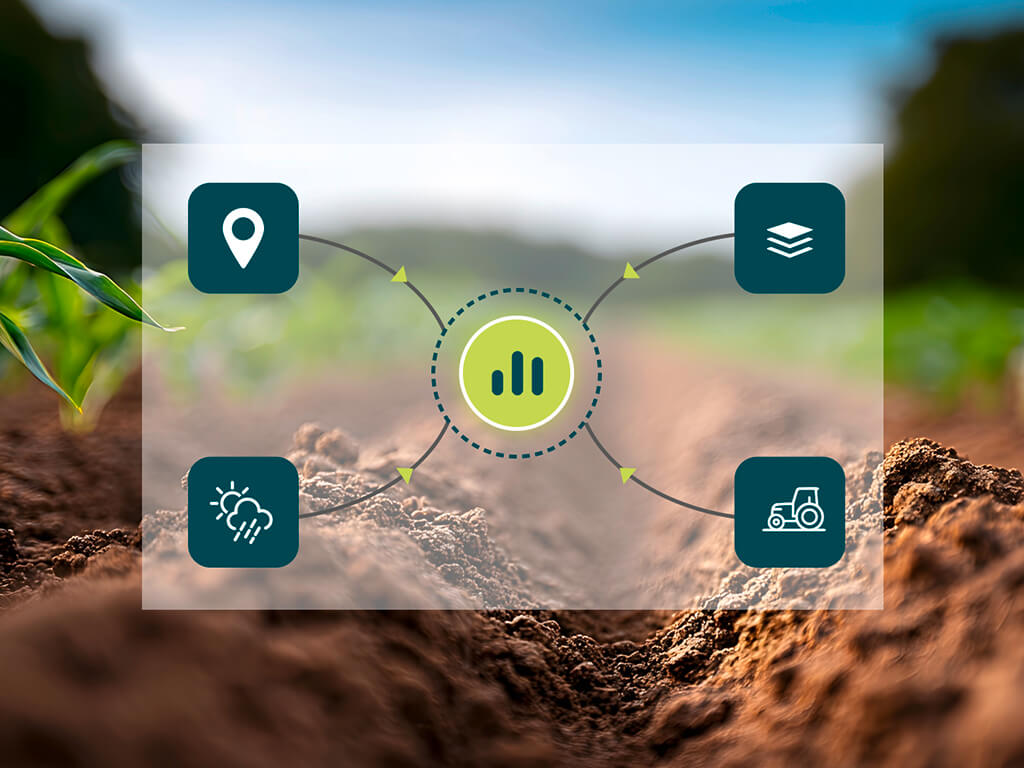
Farmers
face many challenges: Climate change, EU agricultural policy (CAP) and
rising expectations regarding environmental and resource protection
clash with the need to remain economically viable and ensure food
security. Against this background, scientists at the UFZ have developed
the BODIUM4Farmers model tool and have now made it available for use.
The practical tool is aimed at helping farmers reconcile long-term land
use, healthy soils, and stable yields.
|
|
|
|
|
|
Biotechnology
|
|
Wastewater as a Source of Energy and Raw Materials
|
|
|
|
|
|
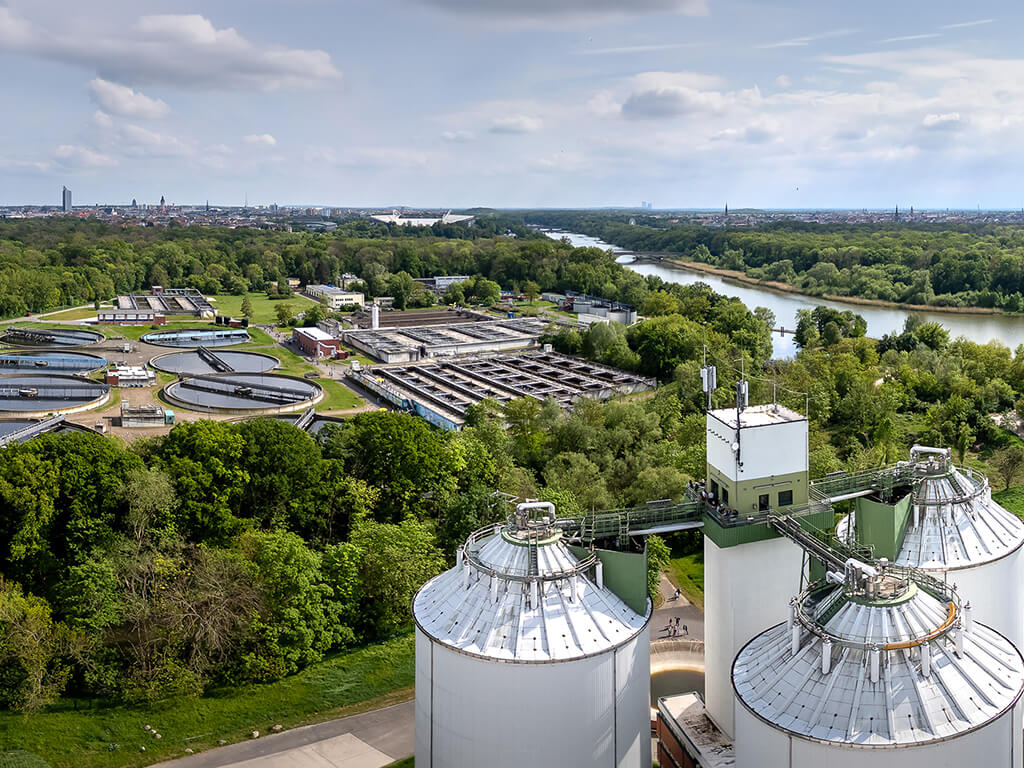
Technologies
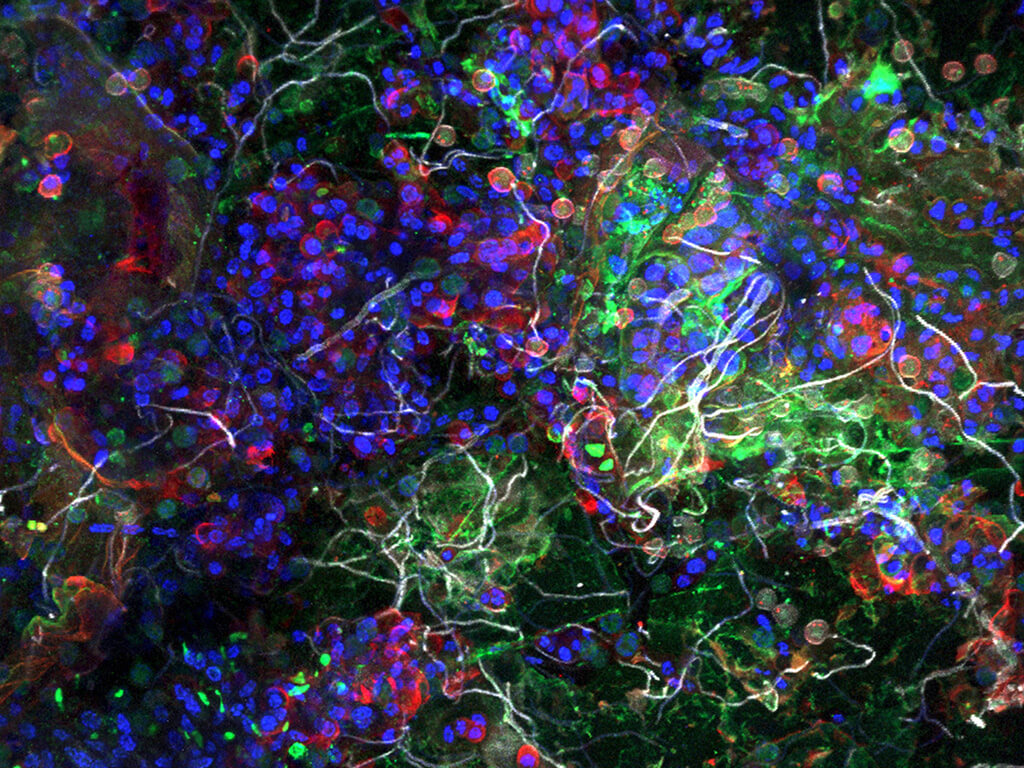
that utilise electrochemically active microorganisms make it possible
to extract not only clean water but also electricity and valuable
nutrients from wastewater. An international team, including
UFZ-researchers, demonstrates the significant environmental and
resource-saving potential of these technologies in a review published in
Frontiers in Science. Among other things, 7% of global
phosphate and 11% of the demand for ammonium nitrogen could be recovered
from wastewater.
|
|
|
|
|
|
|
|
|
|
|
|
|
|
Award
|
|
20 Years of EMAS at the UFZ
|
|
|
|
|
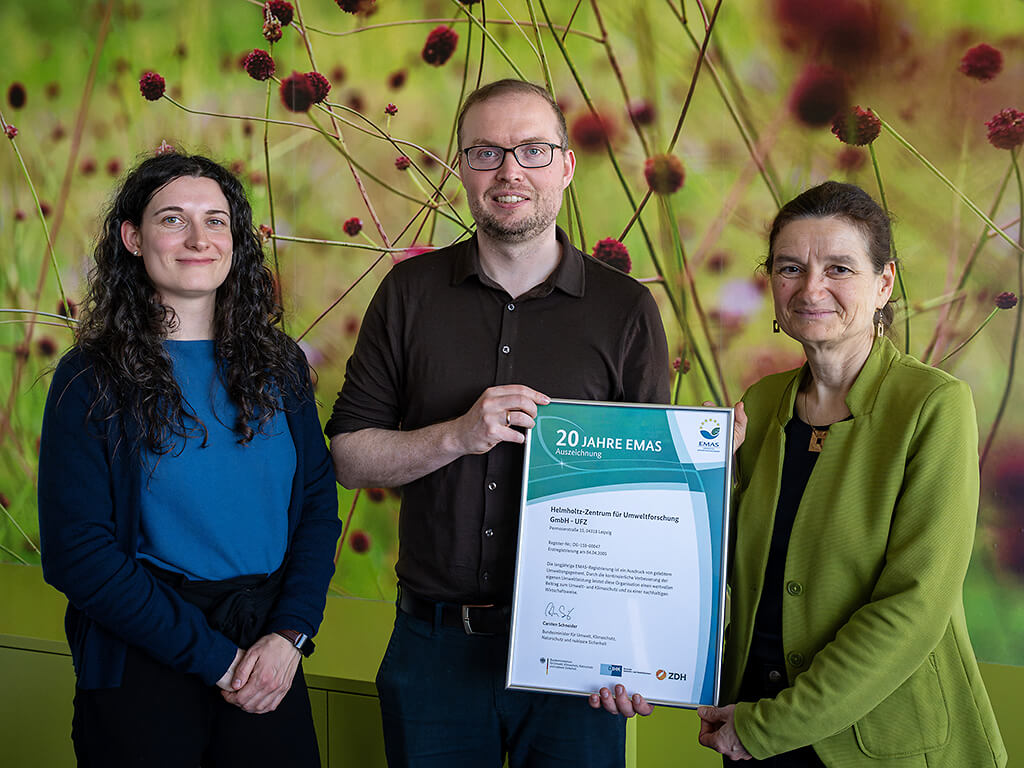
The
UFZ not only conducts outstanding environmental research, but has also
been working to reduce its environmental footprint for over 20 years
with the help of the EMAS environmental management system. In
recognition of this commitment, coordinator Peggy Kirsten and the former
Administrative Director, Dr Sabine König, received a certificate signed
by Federal Environment Minister Schneider, which was presented to them
by Patrick Hähnel from the Leipzig Chamber of Industry and Commerce.
|
|
|
|
|
|
|
|
|
|
|
|
Climate Change and Urban Planning
|
|
“Making Cities Climate-resilient”
|
|
|
|
|
|
Against
the background of increasing extreme weather events such as droughts
and heavy rainfall, UFZ biotechnologist Prof Roland Müller is
researching ways to make Germany’s cities more climate-resilient. In the
Helmholtz podcast “Earth and Environment”, he discusses the need to
plan cities differently than before, the added value of inter- and
transdisciplinary collaboration, the vision of digital twins for cities,
and what makes Leipzig a model city for blue-green-red infrastructures.
|
|
|
|
|
|
Biodiversity and Health
|
|
“Healthy Biodiversity – Nature is Good for Us”
|
|
|
|
|
|
Spending
time in nature is good for us. But why is that? And does it make a
difference what kind of natural environment we’re in? Against the
background of a sharp rise in mental illnesses, these questions are
highly topical, says environmental psychologist Kevin Rozario (PhD
student from UFZ, iDiv, Uni Jena). In the Deutschlandfunk Nova lecture
hall podcast, he explains how nature affects the mind and how
researchers measure these effects.
|
|
|
|
|
|
|
|
|
|
|
|
|
|
|
|
|
|
FILM TIP
|
|
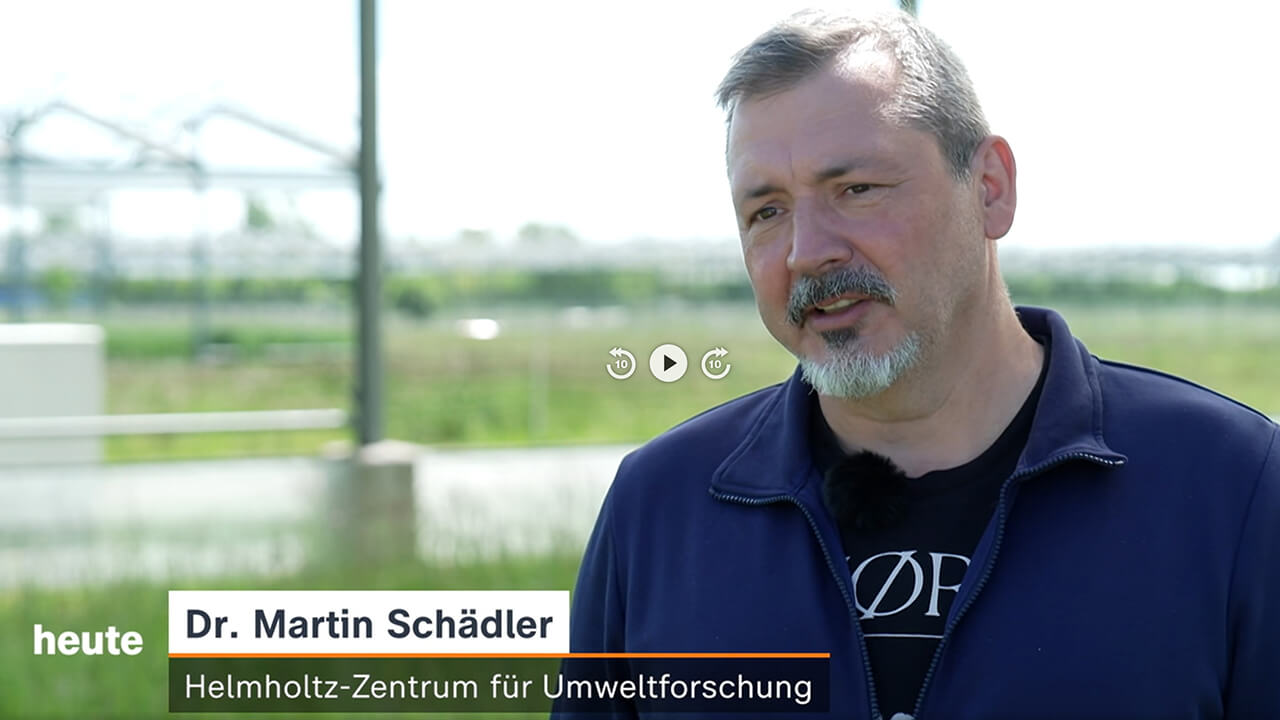
“Why Worms, Fungi, and Mites are Really Good for the Soil”
|
|
|
|
|
Life
is in full swing beneath our feet. There are more organisms in a bucket
of soil than there are people in the world. They ensure soil fertility,
provide clean drinking water and break down pollutants. And yet the
soil is a habitat that is often underappreciated, says UFZ biologist Dr
Martin Schädler. To mark World Biodiversity Day at the end of May, he
took the ZDF film crew to the UFZ research station in Bad Lauchstädt and
into his garden.
|
|
|
|
|
|
|
|
|
|
|
|
|
|
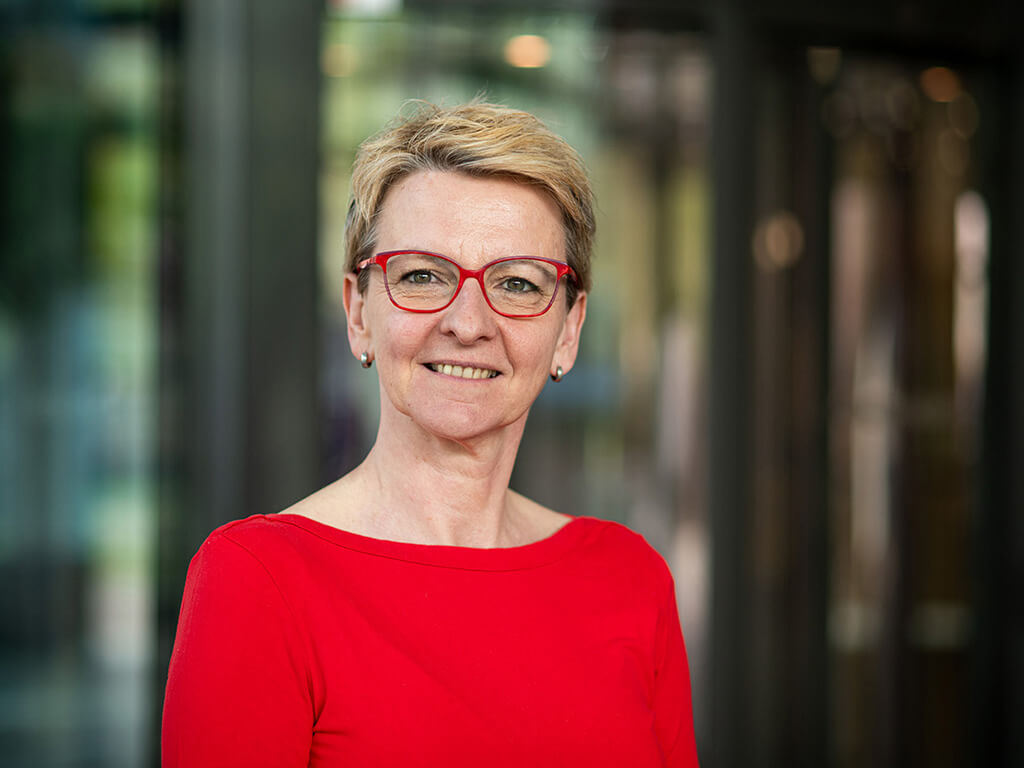
Dr Sabine Matthiä
|
|
|
|
|
Biologist
Dr Sabine Matthiä has taken over as Administrative Director of the UFZ
on 1 June 2026. She succeeds Dr Sabine König, who retired in April after
seven years at the UFZ. Sabine Matthiä previously held the position of
Head of Administration at the UFZ for two years. Prior to that, she
worked in both the private sector and scientific institutions, for
example as Managing Director at the German Centre for Integrative
Biodiversity Research (iDiv).
|
|
|
|
|
|
|
|
|
|
|
|
|
|
Tomorrow Labs and Long Night of Science
|
|
June 6, 2026 I 4 p.m. – 10 p.m. I Tomorrow Labs I Magdeburg
July 3, 2026 / 5 p.m. – 12 p.m. I Long Night of Science I Halle
|
|
|
At
both the Tomorrow Labs Festival in Magdeburg and the Long Night of
Science in Halle, there will once again be hands-on science for a wide
audience this year. Research institutions, start-ups and initiatives are
offering a wide range of lectures, talks, workshops and interactive
experiments on a diverse array of topics. The UFZ will also be present
at both events with a range of exciting activities.
|
|
|
|
|
|
|
|
|
|
|
|
|
|
|
Leipzig Night of Training
|
|
June 12, 2026 I 3 p.m. – 10 p.m. I UFZ Leipzig
|
|
|
For
one evening, companies and academic institutions in Leipzig will open
their doors to provide insights into professional trades,
apprenticeships and dual study programmes, thereby offering career
guidance. They will offer a glimpse into everyday working life, hands-on
activities and the chance to chat with apprentices and trainers. School
pupils from Year 7 onwards, as well as parents and accompanying adults,
are welcome to attend.
|
|
|
|
|
|
|
|
|
|
|
|
|
|
|
Helmholtz Environmental Lecture (HEL)
|
|
September 8, 2026 I Lecture and Discussion I UFZ Leipzig
|
|
|
Founded
in 2025, the Centre for the Transformation of Chemistry (CTC), with
sites in Delitzsch and Merseburg, is Germany’s first major research
centre dedicated to the circular economy in the chemical sector. Its
mission is to drive forward the transformation of the chemical industry.
Prof Peter Seeberger, Scientific Director of the CTC, will be a guest
at the 23rd HEL to provide a broad audience with an insight
into this endeavour. More information and registration details will
follow shortly.
|
|
|
|
|
|
|
|
|
|
|
|
|
|
|
|
|
|
|
|
|
|
|
|

|
|
|
SOCIAL MEDIA
|
|
|
You can find even more topics from the research centre
on our website and social media channels:
|
|
|
|
|
|
|
|
|
|
|
|
|
|
|
|
PUBLISHER
Helmholtz-Zentrum für Umweltforschung - UFZ
Permoserstraße 15, 04318 Leipzig
Text / image editing: Susanne Hufe • Benjamin Haerdle • Dr Reinart Feldmann • Susan Walter-Pantzer • Doris Wolst I PR Department UFZ
Photo credits:
André Künzelmann I UFZ • Erk Dallmeyer • burnstuff2003 I AdobeStock •
Christian I AdobeStock • InOneMedia • Thomas Neu I UFZ • Heinrich
Zozmann I UFZ • Springer-Verlag • Freepik • Zhongwei Zhang I KIT • arte •
ZDF • Leipziger Gruppe • Sebastian Wiedling I UFZ • Animaflora
PicsStock I AdobeStock • Ar-To AdobeStock • Aurore-Delsoir
|
|
|
|
|
|