|
|
|
|
|
|
|
Global Plastics Treaty
|
|
What was Achieved in the Negotiations in Geneva?
|
|
|
|
|
|
|
|
|
|
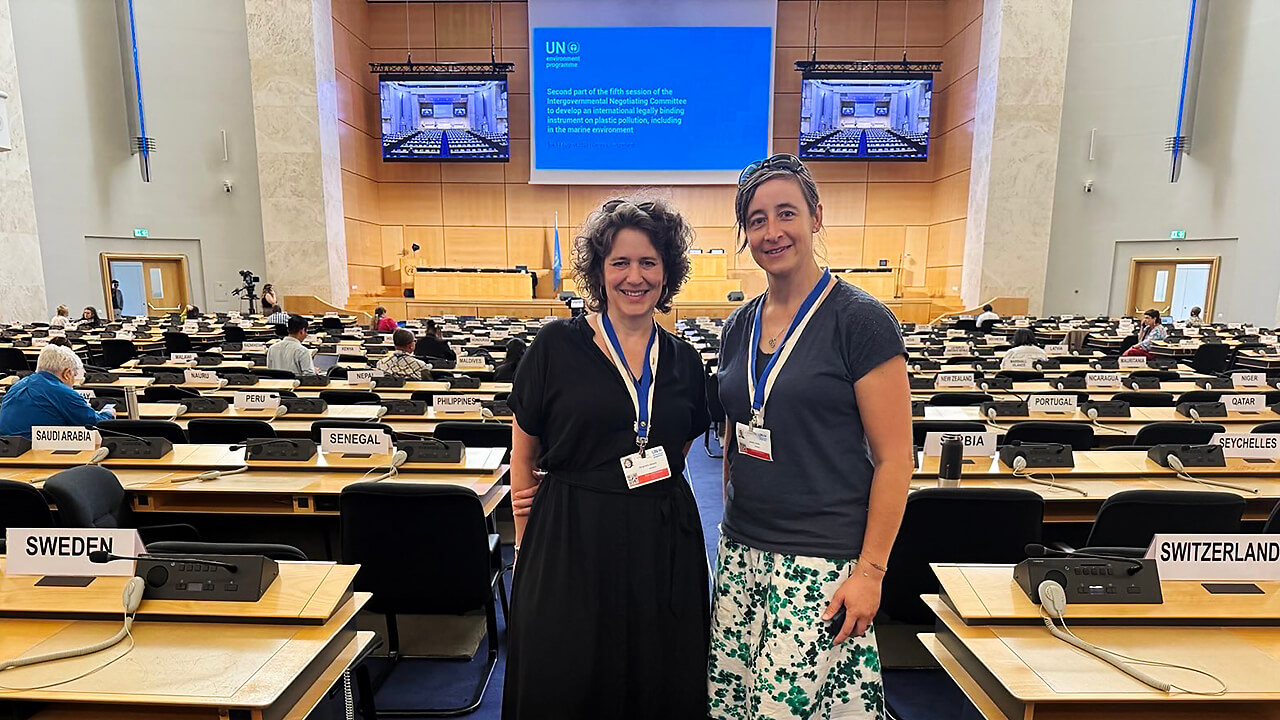
From
5th to 14th of August, the international community, under the auspices
of the UN, tried in vain to reach an agreement on global plastic
pollution. However, marine biologist Dr Melanie Bergmann from the Alfred
Wegener Institute (AWI) and UFZ environmental chemist Prof Annika
Jahnke, who were present in Switzerland, say that the negotiations did
not fail. After all, it is better to continue negotiations in order to
conclude a ‘strong’ agreement.
|
|
|
|
|
|
|
|
|
|
|
Plastic Pollution
|
|
Nanoplastics in the North Atlantic
|
|
|
|
|
|
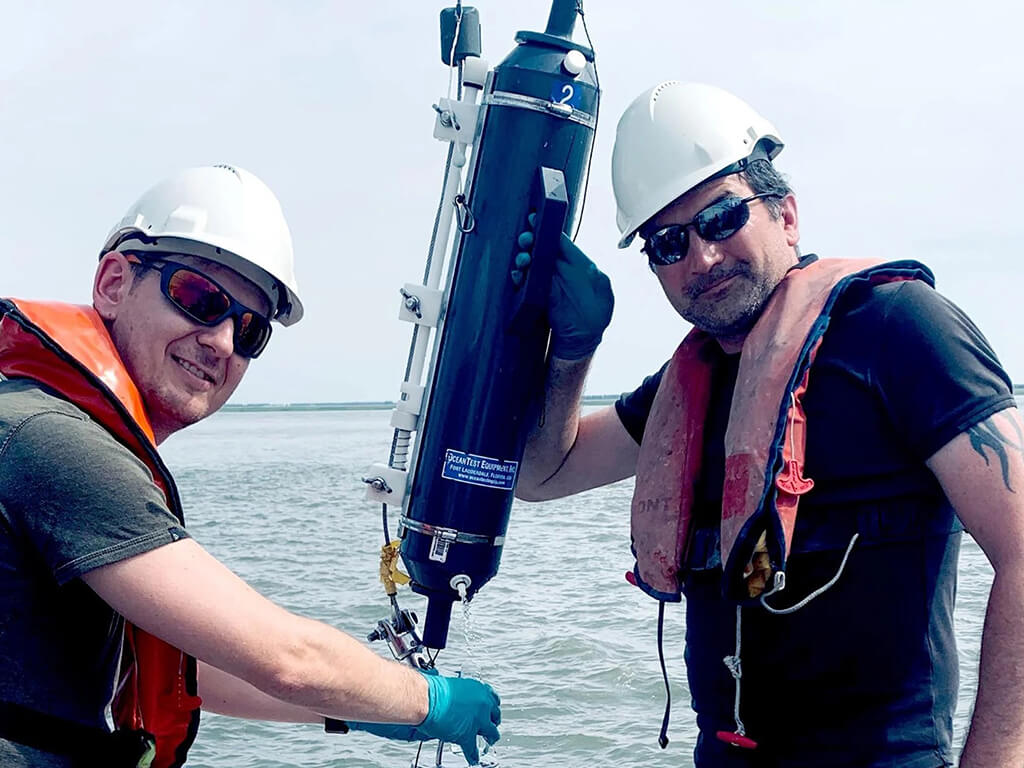
A
UFZ research group teamed up with Dutch colleagues to search for
nanoplastics in the North Atlantic. They found the tiny plastic
particles in all depth zones between the temperate and subtropical zones
of the ocean. In terms of mass, the amount is comparable to what has
been found in microplastics to date, they write in the journal Nature. Therefore, nanoplastics play a much more important role in marine pollution than previously assumed.
|
|
|
|
|
|
Biodiversity Policy
|
|
Five Steps to Successful Nature Restoration
|
|
|
|
|
|
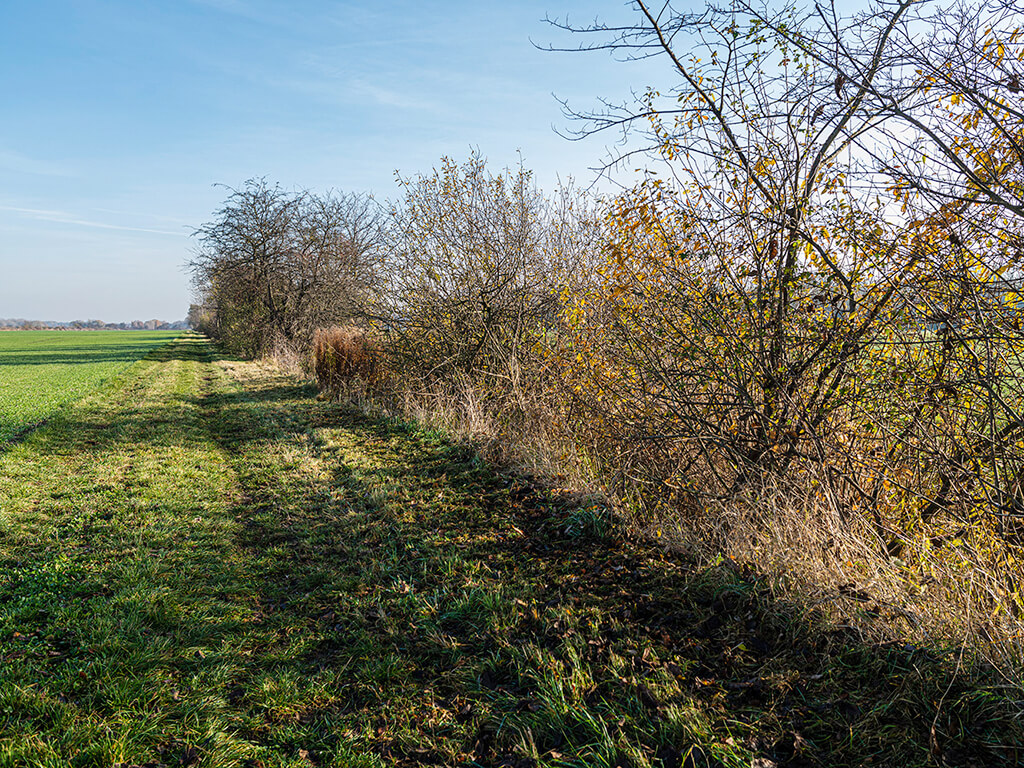
Military
defense and competitiveness are currently at the top of the political
agenda in Europe. As a result, another important issue is at risk of
being overlooked: the protection of biodiversity. However, the EU Nature
Restoration Regulation (NRR) offers good opportunities for progress in
this area. In the journal Restoration Ecology, experts from three German policy advisory bodies, including UFZ researchers, describe how this can be achieved.
|
|
|
|
|
|
|
|
|
|
|
|
|
|
Extreme Events
|
|
Why Germany needs a National Drought Management
|
|
|
|
|
|
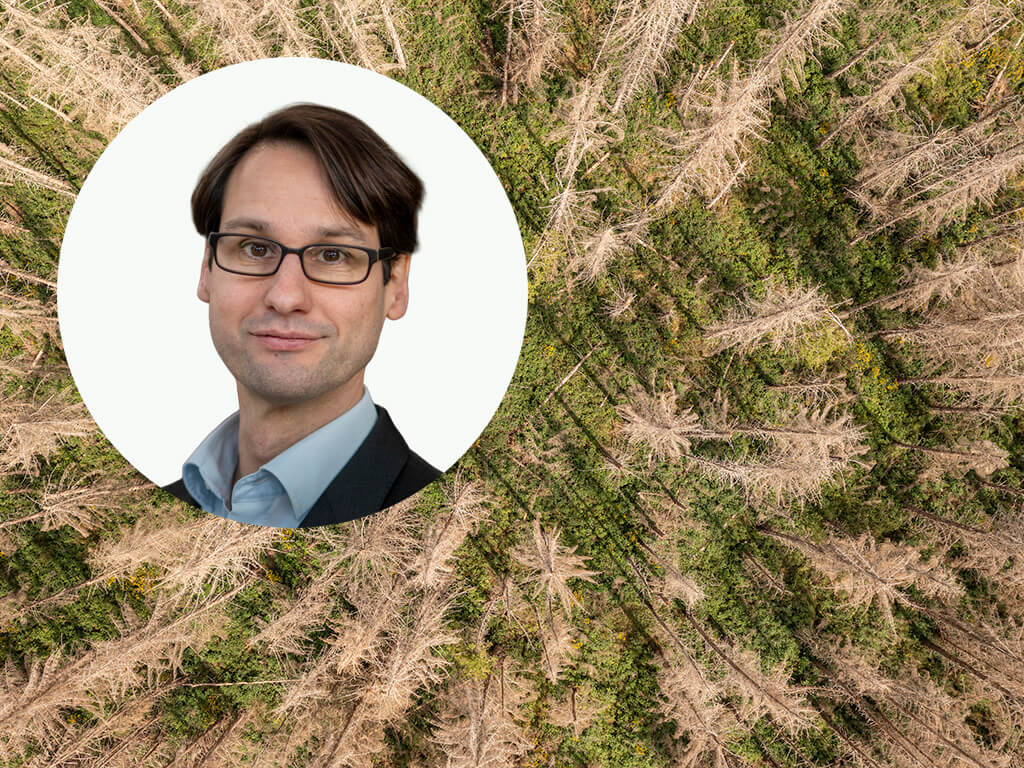
For
more than ten years, the UFZ has been publishing the Drought Monitor,
which provides daily comprehensive information on soil moisture
conditions in Germany. It helps water, forestry, and agriculture sectors
to adapt their use of water resources. When it comes to dealing with
droughts, the federal government, municipalities, and other stakeholders
need a management plan, says UFZ scientist Dr Andreas Marx. He explains
what this might look like.
|
|
|
|
|
|
Earth and Environment
|
|
Planetary Solutions and Science Communication
|
|
|
|
|
|
Economic
strength and security cannot be achieved if policy loses sight of the
protection of the climate and biodiversity, says UFZ Director Prof
Katrin Böhning-Gaese. However, constant warnings of an ecological
catastrophe can lead to climate anxiety, fear of the future, or
resignation among the population. Therefore, science communication must
focus more strongly than before on solutions in order to create broad
public acceptance for transformation.
|
|
|
|
|
|
|
|
|
|
|
|
|
|
|
|
|
|
FILM TIP
|
|
“Pool Stories – the Dream of Cool Water”
|
|
|
|
|
What
would humans be without swimming pools? For some, they bring back
memories of sunny summer days and splashing around in the water, while
for others they represent pure luxury. One of the protagonists in this
journey through the history of swimming pools is UFZ lake researcher
Prof Karsten Rinke, who may not have a pool in his garden, but is
concerned about water consumption. The film also raises the question:
Does the classic pool still have a future in the face of climate
change?
|
|
|
|
|
|
|
|
|
|
|
Statement
|
|
Science-Policy Panel on Chemicals founded
|
|
|
|
|
|
On
June 20, the Intergovernmental Science-Policy Panel on Chemicals, Waste
and Pollution was established under the umbrella of the UN. Alongside
the IPCC (climate change) and IPBES (biodiversity loss), it aims to
tackle the third global environmental crisis – environmental pollution.
For UFZ environmental chemist Prof Werner Brack this is an important
milestone in the long-overdue global environmental monitoring.
|
|
|
|
|
|
Natural Climate Protection
|
|
Healthy Ecosystems – a Key Lever for Climate Protection
|
|
|
|
|
|
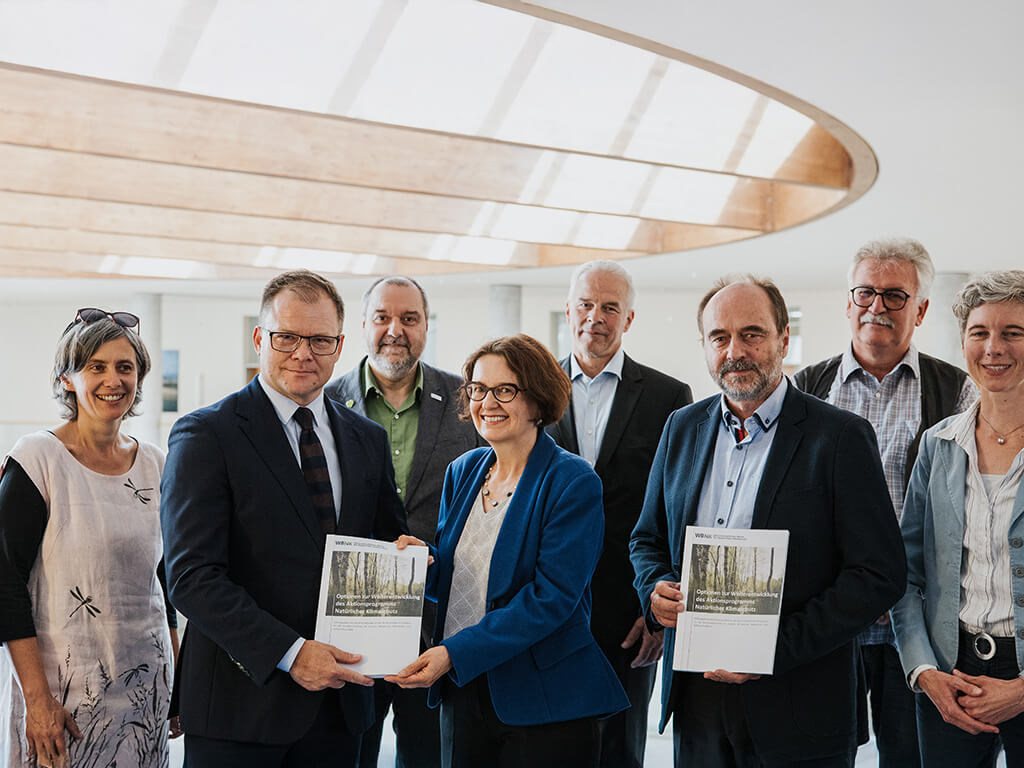
The
Federal Government's Action Program Natural Climate Protection is one
of the largest nature conservation funding programs in Germany. The
Scientific Advisory Board for Natural Climate Protection, which includes
two UFZ researchers, has identified areas for action in a statement and
proposed recommendations on how the climate protection potential of
natural ecosystems such as peatlands, floodplains, coasts, and forests
can be consistently utilised.
|
|
|
|
|
|
|
|
|
|
|
|
|
|
|
|
PORTRAIT
|
|
|
|
|
Dr Kristin Schubert
|
|
|
Do
substances such as plasticizers, flame retardants, or microplastic
particles contribute to the development of overweight and obesity? UFZ
toxicologist Kristin Schubert is addressing this question in a DFG
junior research group within the Emmy Noether Program. “We want to
understand how chemicals and their mixtures take effect in order to
develop preventive measures that protect our health,” she says.
|
|
|
|
|
|
|
|
|
|
|
|
|
Statement
|
|
Three Levers to Stop Living on Credit
|
|
|
|
|
|
Humanity
is wasting the Earth's natural resources. This is clearly demonstrated
by Earth Overshoot Day. This day, on which mankind has used up all the
natural resources that the Earth can regenerate within a year, has been
moved forward every year. But we can change that, says UFZ
director Katrin Böhning-Gaese: By changing our consumption patterns,
population growth, and resource use.
|
|
|
|
|
|
Chemical Testing
|
|
Neurotoxic? New Approach Provides Rapid Answers
|
|
|
|
|
|
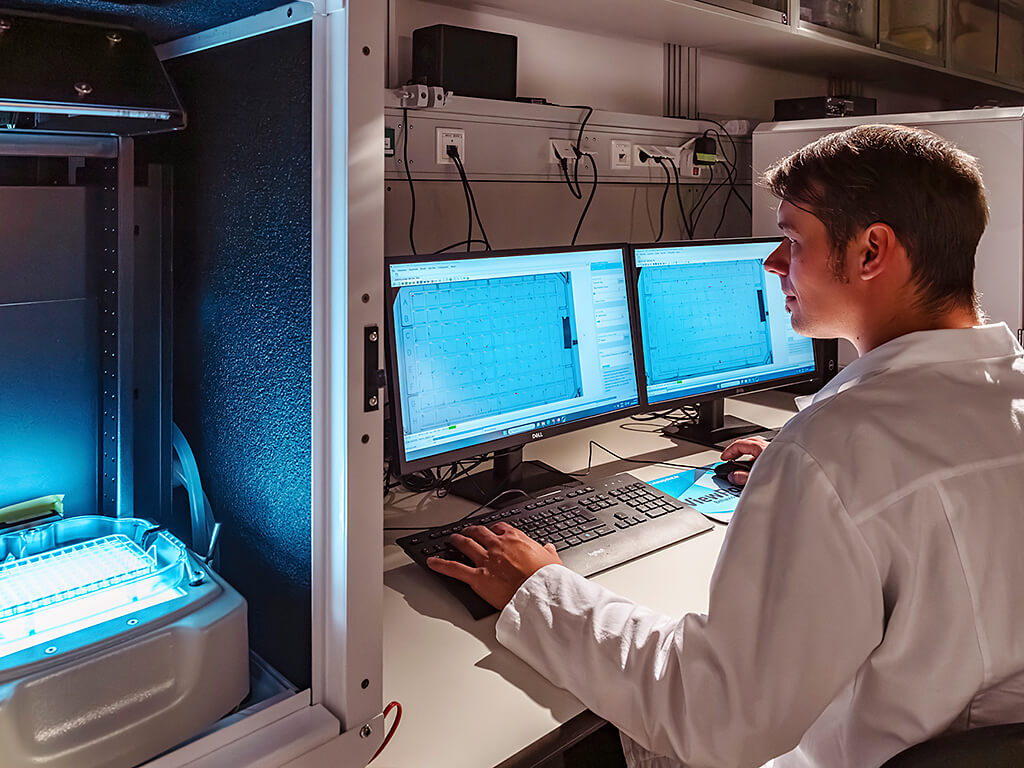
An
estimated 350,000 chemicals are currently commercially available
worldwide. Little is known about which of these may be harmful to the
(developing) brain. UFZ researchers have therefore designed and tested a
method that can close this gap. It enables high-throughput
neurotoxicity testing and avoids conventional animal testing. The study
was published in the journal Environmental Health Perspectives.
|
|
|
|
|
|
|
|
|
|
|
|
|
|
|
|
|
PORTRAIT
|
|
|
|
|
Dr Lucie Moeller
|
|
|
In
the “One of 46,000” section of its monthly newsletter, the Helmholtz
Association introduces employees of the 18 research centres. The current
issue features a profile of biotechnologist Lucie Moeller. She leads a
working group at the UFZ that focuses on solutions for human adaptation
to climate change. The group's primary focus is on urban water
management, including how to retain and reuse rainwater in cities for
use during dry periods.
|
|
|
|
|
|
|
|
|
|
|
|
|
Low Water Levels
|
|
Consequences for the Elbe Floodplain
|
|
|
|
|
|
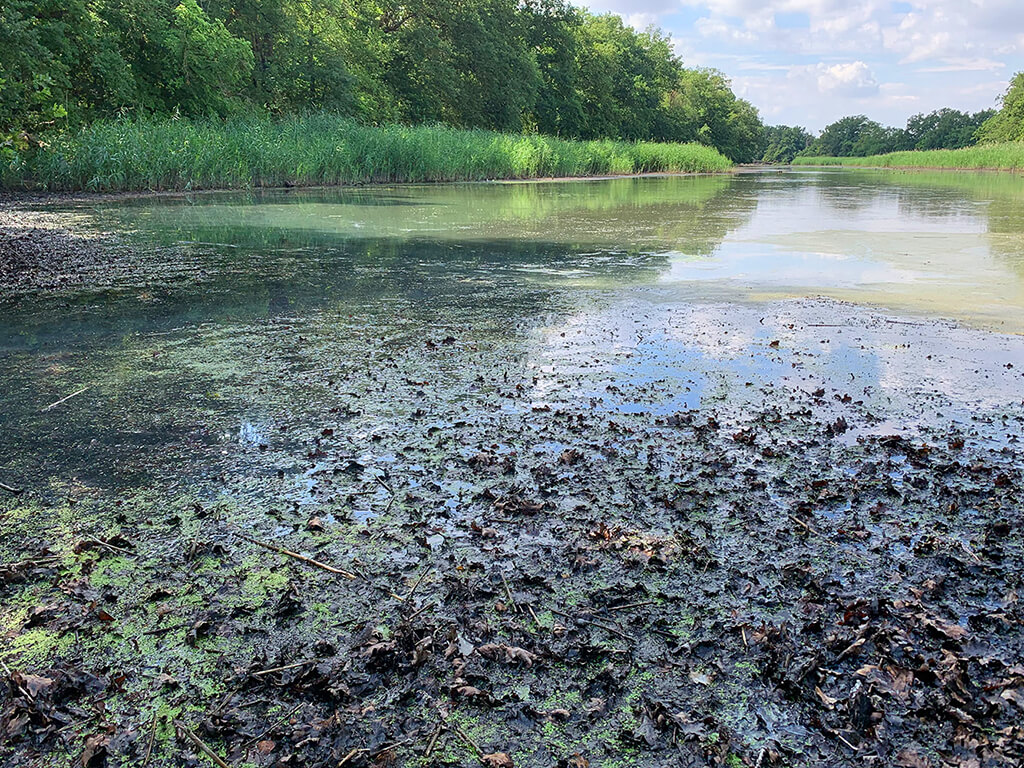
Low
water levels are not limited to the river itself, but also lower the
groundwater level along its banks. Floodplain waters then become
increasingly subject to drought stress – especially if they are
permanently separated from the main river channel. This has been
demonstrated by a UFZ research team that studied the condition of
countless small water bodies in the Elbe floodplains near Magdeburg. The
results were published in the journal Ecological Engineering.
|
|
|
|
|
|
National “Jugend forscht” Competition
|
|
Young Researchers Successful with UFZ Support
|
|
|
|
|
|
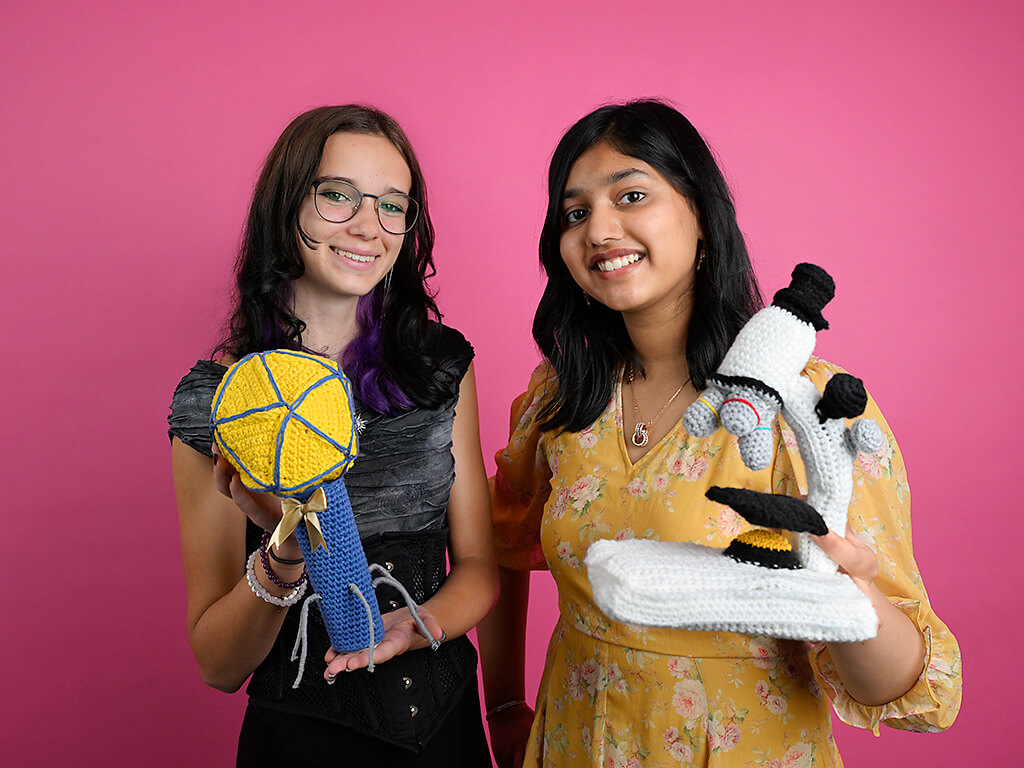
Congratulations!
A total of 167 young people made it to the 60th national ‘Jugend
forscht’ competition with their research projects in the fields of
mathematics, computer science, natural sciences and technology. Among
the award winners were two teams whose work was supported by scientists
at the UFZ. The students' research focused on the use of viruses for
pest control and a special application of the simulation software
OpenGeoSys in the field of groundwater remediation.
|
|
|
|
|
|
|
|
|
|
|
|
|
|
Prof Ana Zenclussen
|
|
|
|
|
The
head of the UFZ Department of Environmental Immunology and professor of
pediatric environmental immunology at the University of Leipzig was
awarded the American Journal of Reproductive Immunology Prize. Ana
Zenclussen was also elected as the new vice president of the American
Society for Reproductive Immunology at this year's conference.
|
|
|
|
|
|
|
|
|
|
|
|
|
|
|
9th World Conference of the International Society for Microbial Electrochemistry and Technology (ISMET)
|
|
September 16 – 19, 2025 I Conference I UFZ Leipzig
|
|
|
ISMET9
will bring together leading scientists, researchers, and industry
professionals from around the world at the UFZ in Leipzig to share the
latest discoveries, innovations, and insights in the field of microbial
electrochemistry and related disciplines. The conference offers a
diverse program of lectures and poster presentations, making it a
platform for knowledge exchange and networking.
|
|
|
|
|
|
|
|
|
|
|
|
|
|
|
International Symposium on Anaerobic Microbiology (ISAM)
|
|
September 22 – 25, 2025 I Conference I UFZ Leipzig
|
|
|
The
ISAM conference brings together researchers from all areas of anaerobic
microbiology. This year's meeting at the UFZ in Leipzig will focus on
topics such as biogas microbiology, anaerobic fungi, anaerobic
wastewater treatment, and other biotechnological applications of
anaerobes. The event aims to encourage doctoral students and young
scientists in particular to present their research results.
|
|
|
|
|
|
|
|
|
|
|
|
|
|
|
Explore Science Festival
|
|
September 25 – 27, 2025 I Public Science Event I Magdeburg
|
|
|
How
will we live in the future? How will technology help us? What can
science change? These are the questions addressed by the Explore Science
Festival in Magdeburg, in which the UFZ is also participating with
experiments related to the water resource. The central aim is to give
children and young people the opportunity to discover scientific
phenomena for themselves. To this end, the festival offers them hands-on
stations, workshops, and shows related to science and technology.
|
|
|
|
|
|
|
|
|
|
|
|
|
|
|
Magdeburg Gewässerschutzseminar 2025
|
|
October 8 – 9, 2025 I Conference I Magdeburg
|
|
|
On
the initiative of the UFZ and the International Commission for the
Protection of the Elbe River (ICPER), experts from science,
administration, and practice will meet again this year for the Magdeburg
Water Protection Seminar. The agenda includes topics such as securing
water supplies and the ecosystem functions of the Elbe considering
climate change, as well as the possibilities and limitations of the Elbe
as a waterway.
|
|
|
|
|
|
|
|
|
|
|
|
|
|
|
|
|
|
|
|
|
|
|
|
|
|
|
|
|
|
|
|

|
|
|
SOCIAL MEDIA
|
|
|
You can find even more topics from the research centre
on our website and social media channels:
|
|
|
|
|
|
|
|
|
|
|
|
|
|
|
|
PUBLISHER
Helmholtz-Zentrum für Umweltforschung - UFZ
Permoserstraße 15, 04318 Leipzig
Text / image editing: Susanne Hufe • Benjamin Haerdle • Dr Reinart Feldmann • Susan Walter-Pantzer • Doris Wolst I presse@ufz.de
Photo credits:
Laurianne Trimoulla I Gallifrey Foundation • NIOZ • André Künzelmann I
UFZ • Anton Balazh I Fotolia • Peter Kiefer • navintar I AdobeStock •
Sebastian Wiedling I UFZ • Sascha Hilgers • hogehoge511 I AdobeStock •
Stiftung Jugend forscht e. V. • Karsten Rinke I UFZ
|
|
|
|
|
|