
Microbial adaptation and contaminant degradation
Research group Dr. Hermann Heipieper, Dr. Uwe Kappelmeyer
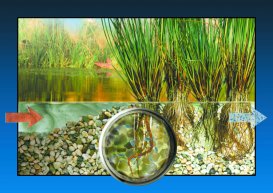 We are a team of microbiologists and environmental engineers aiming at the improvement of water treatment with particular focus on constructed wetlands. We aim to understand microbiological transformation processes in the rhizosphere of the systems, which is the key compartment governing the fate of chemicals in such treatment systems. The rhizosphere is a highly dynamic environment with multiple oxic-anoxic interfaces and numerous micrometer-scale heterogeneities. In this complex habitat, various microorganisms can thrive by the catabolic transformation of organic and inorganic pollutants. By applying a suite of high-end analytical tools, we aim to unravel which particular microbe is involved in the transformation, which genes and enzymes are involved, and how the organism adapts to the ambient environment.
We apply planted mesocosms placed in a greenhouse as well as pilot-scale constructed wetlands (link to pictures). Examples of our recent work include the transformation of contaminants of emerging concern such as plastics, the prevalence and fate of antimicrobial resistance, and the application of constructed wetlands in informal settlements.
- Fate of anthropogenic chemicals in constructed wetlands
- Isolation of bacteria capable to degrade Contaminants of Emerging Concern (CEC) assessment of their physiological parameters, biochemistry, and catabolic capabilities
- Effect of fluctuating conditions and release of root exudates on the expression of catabolic genes in planted systems
- Process-relevant adaptive mechanisms of microorganisms to changing environmental conditions
Working group members
Kerstin Ethner