
Research for the Environment

Functional Genomics Group

Influence of ncRNA on protein expression in cells of the immune system

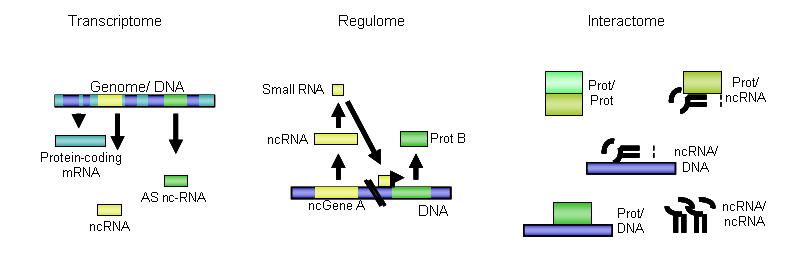
For the regulation of cell processes in higher organisms like mammals, a complex machinery consisting of DNA, RNA and proteins is needed for the cell to work ‘properly’. For the last ten years it became evident that beside the normal mRNA transcripts there are RNA molecules present that do not code for a protein but exert crucial functions in terms of regulation. These molecules are called noncoding (nc) RNAs which can further be divided into subclasses of microRNAs (miRNA), small interfering RNAs (siRNA), small RNAs and medium and large RNAs.

These ncRNAs are important players in the regulation of the protein expression. They do not only regulate the mRNA translation, but also take over different functions in the regulome and interactome.
Template - Grossbild

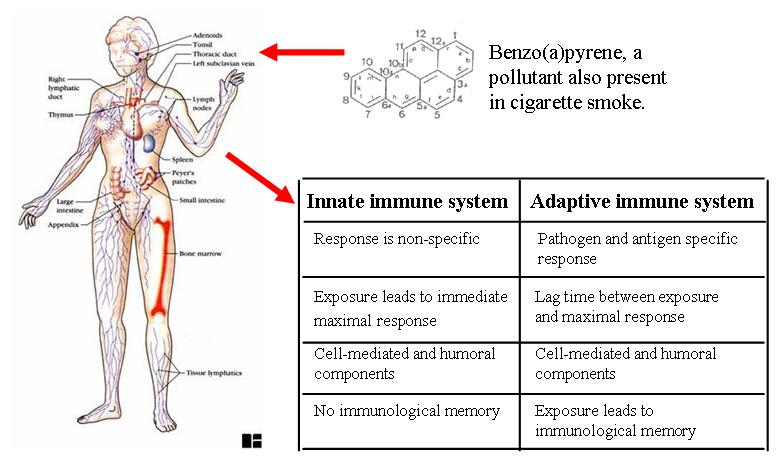
There is emerging evidence that ncRNAs also play a major role in the regulation of differentiation and functions of immune cells. Immune cells defend the body against extracellular or intracellular pathogens, diseases and cancer via the humoral or the cell-mediated immune response. In a time where environmental pollutants are a widely discussed topic, also the function of the immune system gains importance, as these pollutants have been shown to affect the immune system even at low concentrations. It has been found that pollutants, like Benzo(a)pyrene for example, higher the risk of allergic reactions.
Template - Grossbild

To examine the largely unknown effects of ncRNAs, specifically miRNAs, on global protein expression in immune cells different proteomic techniques will be applied. A special focus hereby will be laid on the influence of environmental pollutants. Global and targeted proteome analysis will be carried out using gel based (DIGE), LC-MS based (SILAC) and multiple reaction monitoring (mrm) approaches.

Staff involved in this research topic:

publications

Kliemt S, Lange C, Otto W, Hintze V, Möller S, von Bergen M, Hempel U, Kalkhof S.
Sulfated hyaluronan containing collagen matrices enhance cell-matrix-interaction, endocytosis, and osteogenic differentiation of human mesenchymal stromal cells.
J Proteome Res. 2012 Nov 21. [Epub ahead of print] PMID:23170904

Haange SB, Oberbach A, Schlichting N, Hugenholtz F, Smidt H, von Bergen M, Till H, Seifert J.
Metaproteome analysis and molecular genetics of rat intestinal microbiota reveals section and localisation resolved species distribution and enzymatic functionalities.
J Proteome Res. 2012 Nov 2;11(11):5406-17. PMID: 23016992

Müller SA, van der Smissen A, von Feilitzsch M, Anderegg U, Kalkhof S, von Bergen M.
Quantitative proteomics reveals altered expression of extracellular matrix related proteins of human primary dermal fibroblasts in response to sulfated hyaluronan and collagen applied as artificial extracellular matrix.
J Mater Sci Mater Med. 2012 Dec;23(12):3053-65. PMID: 22990618

Goettsch C, Kliemt S, Sinningen K, von Bergen M, Hofbauer LC, Kalkhof S.
Quantitative proteomics reveals novel functions of osteoclast-associated receptor in STAT signaling and cell adhesion in human endothelial cells.
J Mol Cell Cardiol. 2012 Dec;53(6):829-37. PMID: 22985931

Salbach J, Kliemt S, Rauner M, Rachner TD, Goettsch C, Kalkhof S, von Bergen M, Möller S, Schnabelrauch M, Hintze V, Scharnweber D, Hofbauer LC.
The effect of the degree of sulfation of glycosaminoglycans on osteoclast function and signaling pathways.
Biomaterials 2012 Nov;33(33):8418-29. PMID: 22954516

Guazzaroni ME, Herbst FA, Lores I, Tamames J, Peláez AI, López-Cortés N, Alcaide M, Del Pozo MV, Vieites JM, von Bergen M, Gallego JL, Bargiela R, López-López A, Pieper DH, Rosselló-Móra R, Sánchez J, Seifert J, Ferrer M.
Metaproteogenomic insights beyond bacterial response to naphthalene exposure and bio-stimulation.
ISME J. 2012 Jul 26. doi: 10.1038/ismej.2012.82.[Epub ahead of print] PMID: 22832345

Taubert M, Vogt C, Wubet T, Kleinsteuber S, Tarkka MT, Harms H, Buscot F, Richnow HH, von Bergen M, Seifert J
Protein-SIP enables time-resolved analysis of the carbon flux in a sulfate-reducing, benzene-degrading microbial consortium.
ISME J. 2012 Jul 12. doi: 10.1038/ismej.2012.68. [Epub ahead of print] PMID: 22791237.


Boll K, Reiche K, Kasack K, Mörbt N, Kretzschmar AK, Tomm JM, Verhaegh G, Schalken J, von Bergen M, Horn F, Hackermüller J.
MiR-130a, miR-203 and miR-205 jointly repress key oncogenic pathways and are downregulated in prostate carcinoma.
Oncogene. 2012 Mar 5. doi: 10.1038/onc.2012.55. [Epub ahead of print] PubMed PMID: 22391564.


Haas S, Jahnke HG, Moerbt N, von Bergen M, Aharinejad S, Andrukhova O, Robitzki AA
DIGE proteome analysis reveals suitability of ischemic cardiac in vitro model for studying cellular response to acute ischemia and regeneration.
PLoS One. 2012;7(2):e31669. Epub 2012 Feb 22. PubMed PMID: 22384053