
Dr. habil. Christian Siebert
Hydrogeologe
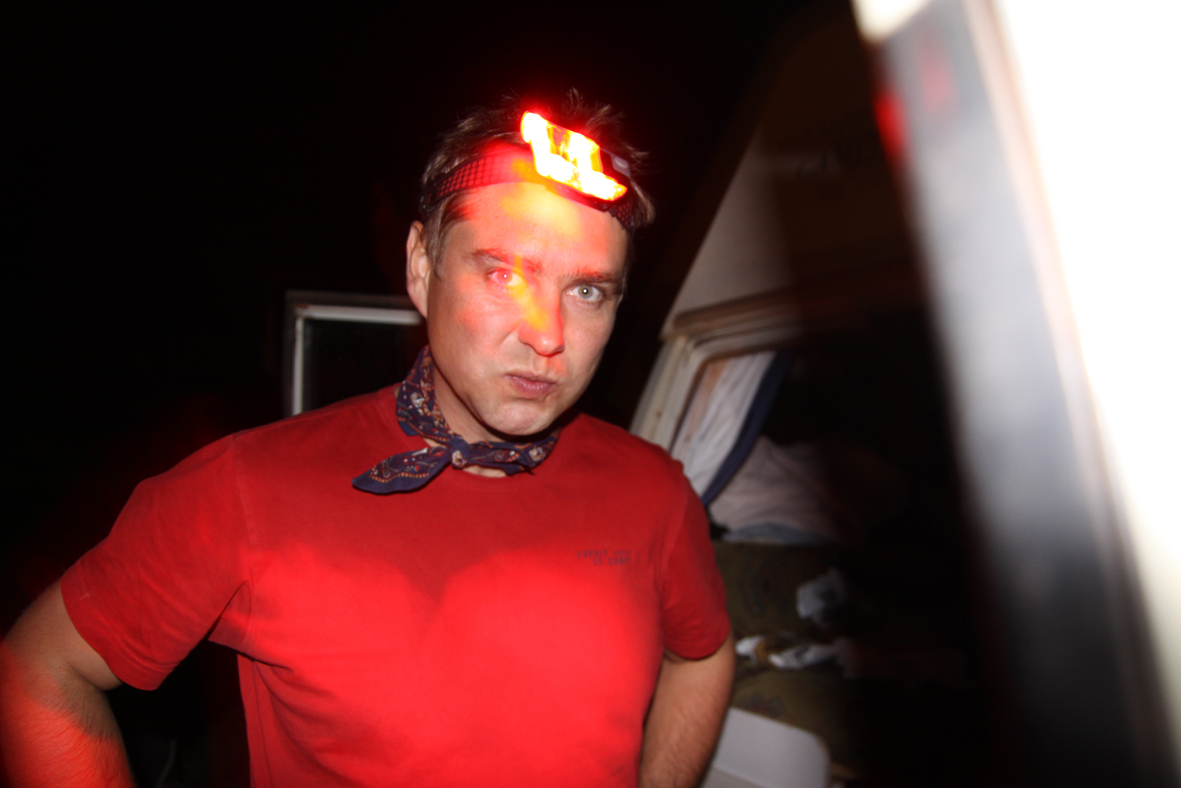
Helmholtz-Zentrum für Umweltforschung, UFZ
Dept. Catchment Hydrology
Tel Büro: +49-345-558-5211
Tel Labor: +49-345-558-5281; -5274
Fax: +49-345-558-5559
Interessensgebiete
Als Hydrogeologe phasziniert mich die Erforschung unserer meist gekoppelten Wasserressourcen um wissenschaftlich fundierte Fakten zur intelligenten Nutzung und zum Schutz der Grund- und Oberflächenwasserkörper zu liefern.Insbesondere die vielfältigen Auswirkungen des Klimawandels und die steigenden Anforderungen an Menge und Qualität der Wasserressourcen sind von großem Interesse.
Die Aktivitäten meiner Gruppe konzentrieren sich auf das:
- definieren großräumiger Grundwasserressourcen und der Verbindungen zwischen Grund- und Oberflächengewässern (Flüsse, Seen, Ozeane) über alle Klimazonen hinweg
- lokalisieren und charakterisieren von Grundwasserbewegungen und -reaktionen vom Neubildungsgebiet über die Transferzone bis zu den Austrittsstellen
- bewerten von Verweilzeiten des Grundwassers und der damit verbundenen Auswirkungen auf die Wasserqualität
Unsere Forschung stützt sich auf die gekoppelte Anwendung von hydrochemischen, isotopischen und gasförmigen Tracern wie
- REE, Chemie der Hauptelemente, δ18O, δ2H, δ13C, 87Sr/86Sr,
- 3H/3He, 14C, 36Cl,
- SF6, FCKW
- N2/Ar
um die Hydrosysteme zu konzeptualisieren und Prozesse geochemisch und durch numerische Strömungsmodellierung zu modellieren.
Darüber hinaus ist die interdisziplinäre Zusammenarbeit ein wesentlicher Bestandteil unseres Denkens.
Akademische Ausbildung
1995 – 2002 Studium der Geologie und Geowissenschaften an der Friedrich–Schiller–Universität Jena (Fokus: Hydrogeologie)
2001 – 2002 Diplomarbeit „Untersuchung des hydraulisch–hydrochemischen Verhaltens eines Kalkstein-Karstgrundwasserleiters am Beispiel der Mühltalquellen bei Jena“
2002 – 2006 Promotion an der Freien Universität Berlin und dem Helmholtz-Zentrum für Umweltforschung - UFZ: „Saisonale chemische Variationen des See Genezareth, seiner Zuflüsse und deren Ursachen.” (summa cum laude)
2016 Habilitation an der TU Bergakademie Freiberg "The application of hydrogeology, hydrogeochemistry and remote sensing to investigate water resources in semi-arid regions: the Jordan-Dead Sea Transform."
Aktivitäten
Leitung der Integrierten Projektteams:
WatQ2E - Modellierung von Wasserquantität, Güte und aquatischer Ökosysteme
Nationales Grundwasser-Ressourcenmodell im LandTrans Simulator
Projekte
- 2000 – 2001 EU COST-Action 620 Teilprojekt „Kartierung der Grundwasserverschmutzungsempfindlichkeit eines Muschelkalk-Grundwasserleiter am Beispiel des Einzugsgebietes der Mühltalquellen bei Jena, Thüringen.“
- 2002 – 2005 „German-Israeli-Jordanian-Palestinian Joint Research Project: Water Resources Evaluation for a Sustainable Development in the Jordan Rift Basin”. (BMBF Förder-Kz.: 02WT0250).
- 2006 – 2009 IWRM-Projekts “SMART- Sustainable Management of Available Water Resources with Innovative Technologies”, BMBF Förder-Kz. 02WM0801), multilateral (D, ISR, PLA, JO); Leitung des Arbeitspaketes: DAISY - data and information system
- 2009 – 2012 IWRM-Projekts “SMART 2- Sustainable Management of Available Water Resources with Innovative Technologies”, BMBF, multilateral (D, ISR, PLA, JO); Leitung des Arbeitspaketes: DAISY - data and information system of SMART
- 2007-2012 IWRM-Projekts “Sustainable Management of Water Resources (Quantity and Quality) in the Dead Sea Area (SUMAR)”, BMBF Förder-Kz.: 02WM0848, multilateral (D, ISR, PLA, JO); Leitung Hydrochemie and stellvertretender Gesamtprojektleiter
- 2010-2014 IWAS Regional Projekt Mittlerer Osten: "Quantification of Resources within the Upper-Mega-Aquifer in Kingdom of Saudi-Arabia and Sultanate of Oman". Projektleiter
- 2011-2013 “PAMIR-water: Integrated study on water resources in Western Tibet and their potential climate-induced changes.”, BMBF.
- 2012-2018: Erkundung der submarinen Grundwasseraustritte im Toten Meer (DESERVE-VI).
- 2018-heute Projektleitung Modellierungsoffensive: Nationales Grundwasser-Ressourcenmodell
Textpublikation
Artikel in ISI-gelisteten Zeitschriften (54)
- Clemens, M., Khurelbaatar, G., Merz, R., Siebert, C., van Afferden, M., Rödiger, T. (2020):
Groundwater protection under water scarcity; from regional risk assessment to local wastewater treatment solutions in Jordan
Sci. Total Environ. 706 , art. 136066 10.1016/j.scitotenv.2019.136066 - Goretzki, N., Inbar, N., Kühn, M., Möller, P., Rosenthal, E., Schneider, M., Siebert, C., Raggad, M., Magri, F. (2016):
Inverse problem to constrain hydraulic and thermal parameters inducing anomalous heat flow in the Lower Yarmouk Gorge
Energy Procedia 97 , 419 - 426 10.1016/j.egypro.2016.10.038 - Gräbe, A., Rödiger, T., Rink, K., Fischer, T., Sun, F., Wang, W., Siebert, C., Kolditz, O. (2013):
Numerical analysis of the groundwater regime in the western Dead Sea escarpment, Israel + West Bank
Environ. Earth Sci. 69 (2), 571 - 585 10.1007/s12665-012-1795-8 - Häusler, S., Weber, M., Siebert, C., Holtappels, R., Noriega-Ortega, B.E., de Beer, D., Ionescu, D. (2014):
Sulfate reduction and sulfide oxidation in extremely steep salinity gradients formed by freshwater springs emerging into the Dead Sea
FEMS Microbiol. Ecol. 90 (3), 956 - 969 10.1111/1574-6941.12449 - Hillel, N., Geyer, S., Licha, T., Khayat, S., Laronne, J.B., Siebert, C. (2015):
Water quality and discharge of the Lower Jordan River
J. Hydrol. 527 , 1096 - 1105 10.1016/j.jhydrol.2015.06.002 - Hillel, N., Wine, M.L., Laronne, J.B., Licha, T., Be'eri-Shlevin, Y., Siebert, C. (2019):
Identifying spatiotemporal variations in groundwater-surface water interactions using shallow pore water chemistry in the lower Jordan river
Adv. Water Resour. 131 , art. 103388 10.1016/j.advwatres.2019.103388 - Inbar, N., Rosenthal, E., Magri, F., Alraggad, M., Möller, P., Flexer, A., Guttman, J., Siebert, C. (2019):
Faulting patterns in the Lower Yarmouk Gorge potentially influence groundwater flow paths
Hydrol. Earth Syst. Sci. 23 (2), 763 - 771 10.5194/hess-23-763-2019 - Ionescu, D., Siebert, C., Polerecky, L., Munwes, Y.Y., Lott, C., Häusler, S., Bižić-Ionescu, M., Quast, C., Peplies, J., Glöckner, F.O., Ramette, A., Rödiger, T., Dittmar, T., Oren, A., Geyer, S., Stärk, H.-J., Sauter, M., Licha, T., Laronne, J.B., de Beer, D. (2012):
Microbial and chemical characterization of underwater fresh water springs in the Dead Sea
PLoS One 7 (6), e38319 10.1371/journal.pone.0038319 - Khayat, S., Möller, P., Geyer, S., Marei, A., Siebert, C., Abu Hilo, F. (2009):
Hydrochemical variation in the springs water between Jerusalem-Ramallah Mountains and Jericho Fault, Palestine
Environ. Geol. 57 (8), 1739 - 1751 10.1007/s00254-008-1459-x - Koltzer, N., Möller, P., Inbar, N., Siebert, C., Rosenthal, E., Magri, F. (2017):
Thermal impacts of magmatic intrusions: a hypothesis of paleo-heating processes in the Tiberias Basin, Jordan-Dead Sea Transform
Energy Procedia 125 , 80 - 87 10.1016/j.egypro.2017.08.071 - Kottmeier, C., Agnon, A., Al-Halbouni, D., Alpert, P., Corsmeier, U., Dahm, T., Eshel, A., Geyer, S., Haas, M., Holohan, E., Kalthoff, N., Kishcha, P., Krawczyk, C., Lati, J., Laronne, J.B., Lott, F., Mallast, U., Merz, R., Metzger, J., Mohsen, A., Morin, E., Nied, M., Rödiger, T., Salameh, E., Sawarieh, A., Shannak, B., Siebert, C., Weber, M. (2016):
New perspectives on interdisciplinary earth science at the Dead Sea: The DESERVE project
Sci. Total Environ. 544 , 1045 - 1058 10.1016/j.scitotenv.2015.12.003 - Kraushaar, S., Herrmann, N., Ollesch, G., Vogel, H.-J., Siebert, C. (2014):
Mound measurements — quantifying medium-term soil erosion under olive trees in Northern Jordan
Geomorphology 213 , 1 - 12 10.1016/j.geomorph.2013.12.021 - Kraushaar, S., Konzett, M., Kiep, J., Siebert, C., Meister, J. (2021):
Suitability of phytoliths as a quantitative process tracer for soil erosion studies
Earth Surf. Process. Landf. 46 (9), 1797 - 1808 10.1002/esp.5121 - Kraushaar, S., Ollesch, G., Siebert, C., Vogel, H.-J., Fuchs, M. (2015):
Long-term sediment export estimates from northern Jordan using Roman cisterns as sediment traps
Geoarchaeology 30 (4), 369 - 378 10.1002/gea.21517 - Kraushaar, S., Schumann, T., Ollesch, G., Schubert, M., Vogel, H.-J., Siebert, C. (2015):
Sediment fingerprinting in northern Jordan: element-specific correction factors in a carbonatic setting
J. Soils Sediments 15 (19), 2155 - 2173 10.1007/s11368-015-1179-2 - Lazar, M., Siebert, C. (2023):
Out of sight, out of mind. Submarine springs in the Dead Sea — An underappreciated phenomenon
Geomorphology 436 , art. 108777 10.1016/j.geomorph.2023.108777 - Magri, F., Inbar, N., Siebert, C., Rosenthal, E., Guttman, J., Möller, P. (2015):
Transient simulations of large-scale hydrogeological processes causing temperature and salinity anomalies in the Tiberias Basin
J. Hydrol. 520 , 342 - 355 10.1016/j.jhydrol.2014.11.055 - Magri, F., Möller, S., Inbar, N., Möller, P., Raggad, M., Rödiger, T., Rosenthal, E., Siebert, C. (2016):
2D and 3D coexisting modes of thermal convection in fractured hydrothermal systems - implications for transboundary flow in the Lower Yarmouk Gorge
Mar. Pet. Geol. 78 , 750 - 758 10.1016/j.marpetgeo.2016.10.002 - Mallast, U., Gloaguen, R., Friesen, J., Rödiger, T., Geyer, S., Merz, R., Siebert, C. (2014):
How to identify groundwater-caused thermal anomalies in lakes based on multi-temporal satellite data in semi-arid regions
Hydrol. Earth Syst. Sci. 18 (7), 2773 - 2787 10.5194/hess-18-2773-2014 - Mallast, U., Gloaguen, R., Geyer, S., Rödiger, T., Siebert, C. (2011):
Derivation of groundwater flow-paths based on semi-automatic extraction of lineaments from remote sensing data
Hydrol. Earth Syst. Sci. 15 (8), 2665 - 2678 10.5194/hess-15-2665-2011 - Mallast, U., Schwonke, F., Gloaguen, R., Geyer, S., Sauter, M., Siebert, C. (2013):
Airborne thermal data identifies groundwater discharge at the north-western coast of the Dead Sea
Remote Sens. 5 (12), 6361 - 6381 10.3390/rs5126361 - Mallast, U., Siebert, C. (2019):
Combining continuous spatial and temporal scales for SGD investigations using UAV-based thermal infrared measurements
Hydrol. Earth Syst. Sci. 23 (3), 1375 - 1392 10.5194/hess-23-1375-2019 - Mallast, U., Siebert, C., Wagner, B., Sauter, M., Gloaguen, R., Geyer, S., Merz, R. (2013):
Localisation and temporal variability of groundwater discharge into the Dead Sea using thermal satellite data
Environ. Earth Sci. 69 (2), 587 - 603 10.1007/s12665-013-2371-6 - Michelsen, N., Reshid, M., Siebert, C., Schulz, S., Knöller, K., Weise, S.M., Rausch, R., Al-Saud, M., Schüth, C. (2015):
Isotopic and chemical composition of precipitation in Riyadh, Saudi Arabia
Chem. Geol. 413 , 51 - 62 10.1016/j.chemgeo.2015.08.001 - Möller, P., De Lucia, M., Rosenthal, E., Inbar, N., Salameh, E., Magri, F., Siebert, C. (2020):
Sources of salinization of groundwater in the Lower Yarmouk Gorge, East of the River Jordan
Water 12 (5), art. 1291 10.3390/w12051291 - Möller, P., Geyer, S., Siebert, C., Guttman, J., Rosenthal, E. (2008):
Localisation of groundwater sources by combining δ18O, δD and Rare Earths studies
Geochim. Cosmochim. Acta 72 (12 Suppl.), A643 10.1016/j.gca.2008.05.016 - Möller, P., Rosenthal, E., Inbar, N., Siebert, C. (2018):
Development of the Inland Sea and its evaporites in the Jordan-Dead Sea Transform based on hydrogeochemical considerations and the geological consequences
Int. J. Earth Sci. 107 (7), 2409 - 2431 10.1007/s00531-018-1605-y - Möller, P., Rosenthal, E., Siebert, C. (2019):
Comments on “The Sdom evaporite formation in Israel and its relationship with the Messinian Salinity Crisis” by J. Charrach
Carbonates Evaporites 34 (4), 1877 - 1880 10.1007/s13146-019-00486-3 - Möller, P., Siebert, C. (2016):
Cycling of calcite and hydrous metal oxides and chemical changes of major element and REE chemistry in monomictic hardwater lake: impact on sedimentation
Chem. Erde-Geochem. 76 (1), 133 - 148 10.1016/j.chemer.2016.01.003 - Möller, P., Siebert, C., Geyer, S., Inbar, N., Rosenthal, E., Flexer, A. (2012):
Relationship of brines in the Kinnarot basin, Jordan-Dead Sea Rift Valley
Geofluids 12 (2), 166 - 181 10.1111/j.1468-8123.2011.00353.x - Munwes, Y.Y., Geyer, S., Katoshevski, D., Ionescu, D., Licha, T., Lott, C., Laronne, J.B., Siebert, C. (2020):
Discharge estimation of submarine springs in the Dead Sea based on velocity or density measurements in proximity to the water surface
Hydrol. Process. 34 (2), 455 - 472 10.1002/hyp.13598 - Odeh, T., Geyer, S., Rödiger, T., Siebert, C., Schirmer, M. (2013):
Groundwater chemistry of strike slip faulted aquifers: the case study of Wadi Zerka Ma'in aquifers, north east of the Dead Sea
Environ. Earth Sci. 70 (1), 393 - 406 10.1007/s12665-012-2135-8 - Rödiger, T., Geyer, S., Mallast, U., Merz, R., Krause, P., Fischer, C., Siebert, C. (2014):
Multi-response calibration of a conceptual hydrological model in the semiarid catchment of Wadi al Arab, Jordan
J. Hydrol. 509 , 193 - 206 10.1016/j.jhydrol.2013.11.026 - Rödiger, T., Geyer, S., Odeh, T., Siebert, C. (2023):
Data scarce modelling the impact of present and future groundwater development on Jordan multiaquifer groundwater resources
Sci. Total Environ. 870 , art. 161729 10.1016/j.scitotenv.2023.161729 - Rödiger, T., Magri, F., Geyer, S., Mallast, U., Odeh, T., Siebert, C. (2020):
Calculating man-made depletion of a stressed multiple aquifer resource on a national scale
Sci. Total Environ. 725 , art. 138478 10.1016/j.scitotenv.2020.138478 - Rödiger, T., Magri, F., Geyer, S., Morandage, S.T., Subah, H.E.A., Alraggad, M., Siebert, C. (2017):
Assessing anthropogenic impacts on limited water resources under semi-arid conditions: three-dimensional transient regional modelling in Jordan
Hydrogeol. J. 25 (7), 2139 - 2149 10.1007/s10040-017-1601-5 - Rosenthal, E., Guttman, J., Möller, P., Shentsis, I., Siebert, C., Magri, F., Inbar, N. (2020):
Natural processes determining the hydrochemistry of groundwater in the Yarmouk basin
Environ. Earth Sci. 79 (3), art. 71 10.1007/s12665-019-8792-0 - Schubert, M., Siebert, C., Knoeller, K., Roediger, T., Schmidt, A., Gilfedder, B. (2020):
Investigating groundwater discharge into a major river under low flow conditions based on a radon mass balance supported by tritium data
Water 12 (10), art. 2838 10.3390/w12102838 - Schulz, S., de Rooij, G.H., Michelsen, N., Rausch, R., Siebert, C., Schüth, C., Al-Saud, M., Merz, R. (2016):
Estimating groundwater recharge for an arid karst system using a combined approach of time-lapse camera monitoring and water balance modelling
Hydrol. Process. 30 (5), 771 - 782 10.1002/hyp.10647 - Schulz, S., Horovitz, M., Rausch, R., Michelsen, N., Mallast, U., Köhne, M., Siebert, C., Schüth, C., Al-Saud, M., Merz, R. (2015):
Groundwater evaporation from salt pans: examples from the eastern Arabian Peninsula
J. Hydrol. 531 (Part 3), 792 - 801 10.1016/j.jhydrol.2015.10.048 - Schulz, S., Siebert, C., Rödiger, T., Al-Raggad, M., Merz, R. (2013):
Application of the water balance model J2000 to estimate groundwater recharge in a semi-arid environment - a case study in the Zarqa River catchment, NW-Jordan
Environ. Earth Sci. 69 (2), 605 - 615 10.1007/s12665-013-2342-y - Seegert, J., Berendonk, T.U., Bernhofer, C., Blumensaat, F., Dombrowsky, I., Fuehner, C., Grundmann, J., Hagemann, N., Kalbacher, T., Kopinke, F.-D., Liedl, R., Leidel, M., Lorz, C., Makeschin, F., Markova, D., Niemann, S., Röstel, G., Schanze, J., Scheifhacken, N., Schuetze, N., Siebert, C., Stefan, C., Strehlitz, B., Teutsch, G., Weigelt, C., Weiß, H., Kolditz, O., Borchardt, D., Krebs, P. (2014):
Integrated water resources management under different hydrological, climatic and socio-economic conditions: results and lessons learned from a transdisciplinary IWRM project IWAS
Environ. Earth Sci. 72 (12), 4677 - 4688 10.1007/s12665-014-3877-2 - Shalev, E., Wetzler, N., Shatanawi, A., Rödiger, T., Kurzon, I., Lyakhovsky, V., Salameh, E., Siebert, C. (2023):
Induced seismicity by groundwater extraction at the Dead Sea fault, Jordan
J. Geophys. Res.-Solid Earth 128 (1), e2022JB025044 10.1029/2022JB025044 - Siebert, C., Möller, P., Geyer, S., Berger, D. (2005):
The dynamic hydrochemical environment of Lake Tiberias, Israel
Geochim. Cosmochim. Acta 69 (10 Suppl.), A424 10.1016/j.gca.2005.03.030 - Siebert, C., Möller, P., Geyer, S., Kraushaar, S., Dulski, P., Guttman, J., Subah, A., Rödiger, T. (2014):
Thermal waters in the Lower Yarmouk Gorge and their relation to surrounding aquifers
Chem. Erde-Geochem. 74 (3), 425 - 441 10.1016/j.chemer.2014.04.002 - Siebert, C., Möller, P., Magri, F., Shalev, E., Rosenthal, E., Al-Raggad, M., Rödiger, T. (2019):
Applying rare earth elements, uranium, and 87Sr/86Sr to disentangle structurally forced confluence of regional groundwater resources: The case of the Lower Yarmouk Gorge
Geofluids 2019 , art. 6727681 10.1155/2019/6727681 - Siebert, C., Rödiger, T., Mallast, U., Gräbe, A., Guttman, J., Laronne, J.B., Storz-Peretz, Y., Greenman, A., Salameh, E., Al-Raggad, M., Vachtman, D., Zvi, A.B., Ionescu, D., Brenner, A., Merz, R., Geyer, S. (2014):
Challenges to estimate surface- and groundwater flow in arid regions: The Dead Sea catchment
Sci. Total Environ. 485-486 , 828 - 841 10.1016/j.scitotenv.2014.04.010 - Siebert, C., Rosenthal, P., Möller, P., Rödiger, T., Meiler, M. (2012):
The hydrochemical identification of groundwater flowing to the Bet She’an-Harod multiaquifer system (Lower Jordan Valley) by rare earth elements, yttrium, stable isotopes (H, O) and tritium
Appl. Geochem. 27 (3), 703 - 714 10.1016/j.apgeochem.2011.11.011 - Tzoufka, K., Magri, F., Rödiger, T., Inbar, N., Shalev, E., Möller, P., Raggad, M., Rosenthal, E., Siebert, C. (2018):
The effect of hydraulic anisotropies on intensely exploited groundwater resources: the numerical evaluation of a hydrothermal transboundary aquifer system in the Middle East
Hydrogeol. J. 26 (8), 2875 - 2890 10.1007/s10040-018-1827-x - Wannous, M., Siebert, C., Tröger, U. (2016):
The investigation of fault-controlled groundwater recharge within a suburban area of Damascus, Syria
Hydrogeol. J. 24 (5), 1185 - 1197 10.1007/s10040-016-1394-y - Wannous, M., Theilen-Willige, B., Troeger, U., Falk, M., Siebert, C., Bauer, F. (2021):
Hydrochemistry and environmental isotopes of spring water and their relation to structure and lithology identified with remote sensing methods in Wadi Araba, Egypt
Hydrogeol. J. 29 (6), 2245 - 2266 10.1007/s10040-021-02343-x - Watson, R.A., Holohan, E.P., Al-Halbouni, D., Saberi, L., Sawarieh, A., Closson, D., Alrshdan, H., Abou Karaki, N., Siebert, C., Walter, T.R., Dahm, T. (2019):
Sinkholes and uvalas in evaporite karst: spatio-temporal development with links to base-level fall on the eastern shore of the Dead Sea
Solid Earth 10 (4), 1451 - 1468 10.5194/se-10-1451-2019 - Wilske, C., Suckow, A., Mallast, U., Meier, C., Merchel, S., Merkel, B., Pavetich, S., Rödiger, T., Rugel, G., Sachse, A., Weise, S.M., Siebert, C. (2020):
A multi-environmental tracer study to determine groundwater residence times and recharge in a structurally complex multi-aquifer system
Hydrol. Earth Syst. Sci. 24 (1), 249 - 267 10.5194/hess-24-249-2020 - Zill, J., Siebert, C., Rödiger, T., Schmidt, A., Gilfedder, B.S., Frei, S., Schubert, M., Weitere, M., Mallast, U. (2023):
A way to determine groundwater contributions to large river systems: The Elbe River during drought conditions
J. Hydrol. Reg. Stud. 50 , art. 101595 10.1016/j.ejrh.2023.101595
Artikel in anderen Zeitschriften (nicht ISI gelistet) (1)
- Möller, P., Siebert, C., Geyer, S. (2011):
REE in groundwater as indicator of catchment lithology in semi arid regions
Mineralogical Magazine 75 (3), 1488 - 1488
Buchkapitel (13)
- Mallast, U., Siebert, C., Schwonke, F., Wagner, B., Rödiger, T., Geyer, S., Gloaguen, R., Sauter, M., Kühn, F., Merz, R. (2012):
Application of thermal data for groundwater studies in arid regions at the example of the Dead Sea
In: Rausch, R., Schüth, C., Himmelsbach, T. (eds.)
Hydrogeology of arid environments : proceedings ; [results of the Conference "Hydrogeology of Arid Environments", March 2012 in Hannover (Germany)]
Borntraeger, Stuttgart, p. 84 - 88 - Odeh, T., Geyer, S., Schirmer, M., Rödiger, T., Siebert, C., Gloaguen, R. (2011):
Development of groundwater salinity in the Wadi Zerka Ma'in catchment area, Dead Sea, Jordan
In: Schirmer, M., Hoehn, E., Vogt, T. (eds.)
GQ10: Groundwater quality management in a rapidly changing world. Proceedings 7th International Groundwater Quality Conference held in Zurich, Switzerland, 13-18 June 2010
IAHS Publ. 342
International Association of Hydrological Sciences (IAHS), Wallingford, Oxfordshire, p. 487 - 490 - Odeh, T., Gloaguen, R., Schirmer, M., Geyer, S., Rödiger, T., Siebert, C. (2009):
Exploration of Wadi Zerka Ma'in rotational fault and its drainage pattern, Eastern of Dead Sea, by means of remote sensing, GIS and 3D geological modeling
In: Michel, U. (ed.)
SPIE Europe's International Symposium on Remote Sensing (ERS09), 31 August to 3 September 2009, Berlin, Germany
Proceedings / SPIE 7478
SPIE, Bellingham, WA, 10.1117/12.829922 - Odeh, T., Gloaguen, R., Schirmer, M., Geyer, S., Rödiger, T., Siebert, C. (2010):
Investigation of catchment areas migrations through a sinstral and dextral strike slip faults: the case study of Zerka Ma'in and Al Hasa catchment areas, east of the Dead Sea in Jordan
In: Schmitter, E.D., Mastorakis, N. (eds.)
4th IASME/WSEAS International Conference on Geology and Seismology (GES '10), Cambridge, UK, February 20-25, 2010
Energy and Environmental Engineering Series
World Scientific and Engineering Academy and Society (WSEAS), Athens, p. 120 - 126 - Rödiger, T., Meier, A., Siebert, C., Königer, F., Kallioras, A., Forestier, P., Fuest, T., Schüth, C., Rausch, R., Al-Saud, M., Dietrich, P. (2012):
Identification of potential groundwater recharge using 3D-spatial soil moisture observations in the Ad-Dahna Desert, Kingdom of Saudi Arabia
In: Rausch, R., Schüth, C., Himmelsbach, T. (eds.)
Hydrogeology of arid environments : proceedings ; [results of the Conference "Hydrogeology of Arid Environments", March 2012 in Hannover (Germany)]
Borntraeger, Stuttgart, p. 129 - 132 - Rödiger, T., Siebert, C., Krause, P. (2009):
Linkage of a finite element flow model with a soil moisture model: challanges under semiarid conditions
In: Christodoulou, S. (ed.)
Water resources conservancy and risk reduction under climatic instability : proceedings ; [European Water Resources Association, 7th International Conference, Limassol, Cyprus, 25 – 27 June 2009] - Siebert, C., Geyer, S., Möller, P., Rödiger, T., Rosenthal, E. (2010):
The multiaquifer system of Bet Shean-Harod (Israel): resources seperation by REE+yttrium and stable isotopes
In: Hoppe, A., Röhling, H.-G., Schüth, C. (Hrsg.)
GeoDarmstadt 2010: Geowissenschaften sichern Zukunft / Geoscience secure the future. Tagung der Deutschen Gesellschaft für Geowissenschaften (DGG) 10.–13. Oktober 2010, Darmstadt
Schriftenreihe der Deutschen Gesellschaft für Geowissenschaften 68
Schweizerbart, Stuttgart, - Siebert, C., Mallast, U., Rödiger, T., Strey, M., Ionescu, D., Häusler, S., Noriega, B., Pohl, T., Merkel, B. (2014):
Submarine groundwater discharge at the Dead Sea
In: Wiederhold, H., Michaelsen, J., Hinsby, K., Nommensen, B. (eds.)
SWIM 2014 : 23rd Salt Water Intrusion Meeting; Programme and Proceedings
Leibniz-Institut für Angewandte Geophysik, Hannover, p. 366 - 370 - Siebert, C., Möller, P., Geyer, S. (2004):
Untersuchung der Versalzungsmechanismen im Dead Sea Graben am Beispiel des See Genezaret (Sea of Galilee), Israel
In: Jacobs, F., Röhling, H.-G., Uhlmann, O. (Hrsg.)
GeoLeipzig 2004 - Geowissenschaften sichern Zukunft : Leipzig, 29. September bis 1. Oktober 2004 ; Gemeinschaftstagung der Deutschen Geologischen Gesellschaft e.V. (DGG) und der Gesellschaft für Geowissenschaften e.V. (GGW) ausgerichtet vom Institut für Geophysik und Geologie der Universität Leipzig ; Kurzfassungen der
Vorträge und Poster
Schriftenreihe der Deutschen Geologischen Gesellschaft 34
Deutsche Geologische Gesellschaft, Hannover, S. 319 - Siebert, C., Rödiger, T., Geyer, S., Laronne, J.B., Hillel, N., Sauter, M., Mallast, U. (2016):
Multidisciplinary investigations of the transboundary Dead Sea basin and its water resources
In: Borchardt, D., Bogardi, J., Ibisch, R.B. (eds.)
Integrated water resources management: concept, research and implementation
Springer, Basel, p. 107 - 127 10.1007/978-3-319-25071-7_5 - Siebert, C., Rödiger, T., Rausch, R., Döhler, J, Michelsen, N., Al-Saud, M. (2012):
The upper mega aquifer system on the Arabian Peninsula – delineation of sub-aquifer interaction using hydrochemical and REE+Y pattern
In: Rausch, R., Schüth, C., Himmelsbach, T. (eds.)
Hydrogeology of arid environments : proceedings ; [results of the Conference "Hydrogeology of Arid Environments", March 2012 in Hannover (Germany)]
Borntraeger, Stuttgart, p. 154 - 158 - Siebert, C., Rödiger, T., Schulz, S., Horovitz, M., Merz, R., Friesen, J., Dietrich, P., Michelsen, N., Kallioras, A., Rausch, R., Engelhardt, I., Al-Saud, M., Schüth, C. (2016):
New tools for coherent information base for IWRM in arid regions: the Upper Mega Aquifer System on the Arabian Peninsula
In: Borchardt, D., Bogardi, J., Ibisch, R.B. (eds.)
Integrated water resources management: concept, research and implementation
Springer, Basel, p. 85 - 106 10.1007/978-3-319-25071-7_4 - Zill, J., Siebert, C., Weitere, M., Mallast, U. (2023):
Diffuse nutrient input to large rivers: quantifying the dimension of groundwater discharge and its effects on riverine eutrophication in the Elbe
Extreme hydrologische Ereignisse und deren Folgen im Einzugsgebiet der Elbe. Magdeburger Gewässerschutzseminar 2023 = Magdeburský seminář o ochraně vod 2023, 11.–12.10.2023
Povodí Ohře (státní podnik), Chomutov, p. 175 - 176
Qualifizierungsarbeiten (1)
- Siebert, C. (2006):
Saisonale chemische Variationen des See Genezareth, seiner Zuflüsse und deren Ursachen
Dissertation, Freie Universität Berlin
PhD Dissertation 1/2006
Helmholtz-Zentrum für Umweltforschung - UFZ, Leipzig, 180 S.
Tagungsbeiträge (51)
- Al Raggad, M., Elias, S., Inbar, N., Rosenthal, E., Möller, P., Siebert, C., Magri, F. (2017):
Processes of mineralization in the Hauran Basin (Syria and Jordan) and in adjoining areas
EGU General Assembly 2017, Vienna, Austria, 23–28 April 2017
Geophysical Research Abstracts 19
European Geosciences Union (EGU), EGU2017-3789-1 - Geyer, S., Khayat, S., Rödiger, T., Siebert, C. (2008):
Anthropogenic influence on groundwater quality in Jericho and adjoining Wadis (Lower Jordan Valley, Palestine)
American Geophysical Union, Fall Meeting 2008
Abstract H13G-1009 - Goretzki, N., Inbar, N., Kühn, M., Möller, P., Rosenthal, E., Schneider, M., Siebert, C., Magri, F. (2016):
Sensitivity analysis of hydraulic and thermal parameters inducing anomalous heat flow in the Lower Yarmouk Gorge
EGU General Assembly 2016, Vienna, Austria, 17-22 April 2016
Geophysical Research Abstracts 18
European Geosciences Union (EGU), EGU2016-9211 - Goretzki, N., Inbar, N., Siebert, C., Möller, P., Rosenthal, E., Schneider, M., Magri, F. (2015):
Inverse problem to constrain the controlling parameters of large-scale heat transport processes: the Tiberias Basin example
EGU General Assembly 2015, Vienna, Austria, 12–17 April 2015
Geophysical Research Abstracts 17
European Geosciences Union (EGU), EGU2015-9897 - Heinzle, J., Konzett, M., Siebert, C., Kraushaar, S. (2019):
Tracing discharge in the Southern Pyrenees
21st EGU General Assembly, EGU2019, Proceedings from the conference held 7-12 April, 2019 in Vienna, Austria
Geophysical Research Abstracts 21
European Geosciences Union (EGU), EGU2019-1553 - Hillel, N., Geyer, S., Khayat, S., Licha, T., Laronne, J.B., Siebert, C. (2016):
Source detection by chemical and isotopic means - the Lower Jordan River
EGU General Assembly 2016, Vienna, Austria, 17-22 April 2016
Geophysical Research Abstracts 18
European Geosciences Union (EGU), EGU2016-4595 - Hillel, N., Siebert, C., Licha, T., Laronne, J.B. (2016):
Source detection in the Lower Jordan River - how to monitor the impossible
EGU General Assembly 2016, Vienna, Austria, 17-22 April 2016
Geophysical Research Abstracts 18
European Geosciences Union (EGU), EGU2016-4646 - Horovitz, M., Schulz, S., Köhne, J.M., Rausch, R., Siebert, C., Michelsen, N., Schüth, C. (2013):
Estimation of Sabkha evaporation as an important sink of groundwater on the Arabian Peninsula
EGU General Assembly 2013, Vienna, Austria, 07–12 April 2013
Geophysical Research Abstracts 15
European Geosciences Union (EGU), EGU2013-12647 - Houben, T., Di-Dato, M., Siebert, C., Kalbacher, T., Fischer, T., Attinger, S. (2023):
Spectral analysis of groundwater level time series reveals hydrogeological parameters
EGU General Assembly 2023, Vienna, Austria, 24–28 Apr 2023
EGUsphere
Copernicus Publications, EGU23-5635 10.5194/egusphere-egu23-5635 - Inbar, N., Al-Raggad, M., Magri, F., Yellin-Dror, A., Rosenthal, E., Möller, P., Siebert, C., Salameh, E., Guttman, J. (2014):
New structural/tectonical model and its implication on hydrological thinking and groundwater management – the Lake Tiberias, Jordan Rift Valley
EGU General Assembly 2014, Vienna, Austria, 27 April–02 May 2014
Geophysical Research Abstracts 16
European Geosciences Union (EGU), EGU2014-10007 - Inbar, N., Raggad, M., Siebert, C., Möller, P., Rödiger, T., Rosenthal, E., Guttman, J., Magri, F. (2017):
Active tectonics at the Lower Yarmouk Gorge?
EGU General Assembly 2017, Vienna, Austria, 23–28 April 2017
Geophysical Research Abstracts 19
European Geosciences Union (EGU), EGU2017-9563 - Inbar, N., Rosenthal, E., Flexer, A., Möller, P., Siebert, C., Guttman, J., Yellin-Dror, A., Magri, F. (2016):
Dealing with uncertainty and limited data availability at Lake Tiberias, Israel: imaging salt diapir using hydrogeological data
EGU General Assembly 2016, Vienna, Austria, 17-22 April 2016
Geophysical Research Abstracts 18
European Geosciences Union (EGU), EGU2016-9548 - Inbar, N., Rosenthal, E., Möller, P., Yellin-Dror, A., Guttman, J., Siebert, C., Magri, F. (2015):
The Tiberias Basin salt deposits and their effects on lake salinity
EGU General Assembly 2015, Vienna, Austria, 12–17 April 2015
Geophysical Research Abstracts 17
European Geosciences Union (EGU), EGU2015-8759 - Ionescu, D., Haeusler, S., Siebert, C., Noriega, B., Adeboyejo, F., Dittmar, T., de Beer, D. (2013):
Oases of life in the Dead Sea
SAME13 Aquatic Microbial Ecology. Stresa, Italy - Knoche, M., Ebert, C., Rödiger, T., Siebert, C., Geyer, S., Weise, S., Gloaguen, R., Merz, R. (2012):
Precipitation downscaling and spatial trends in the Pamirs
EGU General Assembly 2012, Vienna, Austria, 22–27 April 2012
Geophysical Research Abstracts 14
European Geosciences Union (EGU), EGU2012-10892 - Koltzer, N., Möller, P., Inbar, N., Siebert, C., Rosenthal, E., Al-Raggad, M., Magri, F. (2017):
Thermal impacts of magmatic intrusions on dolomitization processes in the Tiberias Basin, Jordan-Dead Sea Transform
EGU General Assembly 2017, Vienna, Austria, 23–28 April 2017
Geophysical Research Abstracts 19
European Geosciences Union (EGU), EGU2017-10525 - Kraushaar, S., Ollesch, G., Siebert, C., Vogel, H.-J. (2013):
Olive mounds, Roman cisterns, erosion pins - potential to characterize erosion in a Mediterranean catchment in north Jordan
EGU General Assembly 2013, Vienna, Austria, 07–12 April 2013
Geophysical Research Abstracts 15
European Geosciences Union (EGU), EGU2013-11187 - Kraushaar, S., Schumann, T., Ollesch, G., Siebert, C., Vogel, H.-J. (2014):
Sediment fingerprinting in Northern Jordan - approaching sediment comparability
EGU General Assembly 2014, Vienna, Austria, 27 April–02 May 2014
Geophysical Research Abstracts 16
European Geosciences Union (EGU), EGU2014-841-1 - Kraushaar, S., Schumann, T., Wilkinson, S., Ollesch, G., Siebert, C., Vogel, H.-J. (2013):
Measurements, fingerprint, modeling - Compiling a sediment budget in a data scarce catchment in NW Jordan
EGU General Assembly 2013, Vienna, Austria, 07–12 April 2013
Geophysical Research Abstracts 15
European Geosciences Union (EGU), EGU2013-11998 - Kraushaar, S., Wilkinson, S., Ollesch, G., Siebert, C., Vogel, H.-J. (2013):
Understanding erosion better in a data scarce catchment in NW Jordan - A multiple response approach
Proceedings 8th IAG International Conference on Geomorphology, Paris 2013
482 - 482 - Magri, F., Guttman, J., Inbar, N., Raggad, M., Siebert, C. (2014):
Simulations of coupled fluid transport processes in faulted systems: an example based on the groundwater hydrology of the Tiberias Basin, Jordan Valley
Computational Methods in Water Resources 2014. XX. international conference. 10-13 June 2014, Stuttgart - Magri, F., Inbar, N., Guttman, J., Rosenthal, E., Yellin-Dror, A., Kühn, M., Möller, P., Raggad, M., Salameh, E., Siebert, C. (2014):
Potential salinization mechanisms of drinking water due to large-scale flow of brines across faults in the Tiberias Basin
EGU General Assembly 2014, Vienna, Austria, 27 April–02 May 2014
Geophysical Research Abstracts 16
European Geosciences Union (EGU), EGU2014-8236 - Magri, F., Inbar, N., Möller, P., Raggad, M., Rödiger, T., Rosenthal, E., Shentsis, I., Tzoufka, K., Siebert, C. (2017):
3D hydrogeological model of the Lower Yarmouk Gorge, Jordan Rift Valley
EGU General Assembly 2017, Vienna, Austria, 23–28 April 2017
Geophysical Research Abstracts 19
European Geosciences Union (EGU), EGU2017-4628-2 - Magri, F., Inbar, N., Möller, P., Raggad, M., Rödiger, T., Rosenthal, E., Siebert, C. (2016):
3D coexisting modes of thermal convection in the faulted Lower Yarmouk Gorge
EGU General Assembly 2016, Vienna, Austria, 17-22 April 2016
Geophysical Research Abstracts 18
European Geosciences Union (EGU), EGU2016-6197 - Magri, F., Möller, S., Inbar, N., Siebert, C., Möller, P., Rosenthal, E., Kühn, M. (2015):
3D features of delayed thermal convection in fault zones: consequences for deep fluid processes in the Tiberias Basin, Jordan Rift Valley
EGU General Assembly 2015, Vienna, Austria, 12–17 April 2015
Geophysical Research Abstracts 17
European Geosciences Union (EGU), EGU2015-3299-2 - Mallast, U., Schwonke, F., Siebert, C., Maraschek, U., Kemper, G., Geyer, S., Kühn, F. (2011):
Hochauflösende flugzeuggestützte Thermalfernerkundung zur Kartierung submariner und terrestrischer Grundwasserquellen in der hochsalinaren Uferzone des Toten Meeres. Erste Ergebnisse von Befliegungskampagnen am Westufer des Toten Meeres im Januar 2011
In: Seyfert, E. (Hrsg.)
Geodaten – eine Ressource des 21. Jahrhunderts. Vorträge 31. Wissenschaftlich-Technische Jahrestagung der DGPF, 13. - 15. April 2011 in Mainz
Publikationen der Deutschen Gesellschaft für Photogrammetrie, Fernerkundung und Geoinformation e.V. 20
Geschäftsstelle der DGPF, Münster, 1 - 10 - Mallast, U., Siebert, C. (2019):
UAV in combination with a thermal infrared sensor for the use in groundwater research
21st EGU General Assembly, EGU2019, Proceedings from the conference held 7-12 April, 2019 in Vienna, Austria
Geophysical Research Abstracts 21
European Geosciences Union (EGU), EGU2019-15129 - Mallast, U., Siebert, C., Gloaguen, R., Wagner, B., Schwonke, F., Rödiger, T., Geyer, S., Krieg, R., Sauter, M., Kühn, F., Merz, R. (2012):
Remote sensing application possibilities on groundwater characterization in arid regions at the example of the Dead Sea
EGU General Assembly 2012, Vienna, Austria, 22–27 April 2012
Geophysical Research Abstracts 14
European Geosciences Union (EGU), EGU2012-5273 - Mallast, U., Siebert, C., Schwonke, F., Gloaguen, R., Rödiger, T., Geyer, S., Sauter, M., Merz, R. (2013):
Airborne thermal data reveal groundwater discharge at the north-western coast of the Dead Sea
EGU General Assembly 2013, Vienna, Austria, 07–12 April 2013
Geophysical Research Abstracts 15
European Geosciences Union (EGU), EGU2013-5586 - Michelsen, N., Reshid, M., Siebert, C., Schulz, S., Rausch, R., Knöller, K., Weise, S., Al-Saud, M., Schüth, C. (2015):
Isotopic composition of Riyadh rainfall, Saudi Arabia
EGU General Assembly 2015, Vienna, Austria, 12–17 April 2015
Geophysical Research Abstracts 17
European Geosciences Union (EGU), EGU2015-12839-1 - Raggad, M., Salameh, E., Magri, F., Muller, P., Siebert, C. (2015):
Structural control on the evolution of groundwater quality for B2A7 aquifer in the area extending from Ajlun to Yarmouk river in Jordan
EGU General Assembly 2015, Vienna, Austria, 12–17 April 2015
Geophysical Research Abstracts 17
European Geosciences Union (EGU), EGU2015-8642 - Raggad, M., Salameh, E., Magri, F., Siebert, C., Rödiger, T., Moller, P. (2016):
Groundwater recharge in a semi-arid environment under high climatic variability and over-pumping: Ajlun Highlands example, Jordan
EGU General Assembly 2016, Vienna, Austria, 17-22 April 2016
Geophysical Research Abstracts 18
European Geosciences Union (EGU), EGU2016-10292 - Rödiger, T., Siebert, C., Geyer, S., Krause, P. (2010):
Development of a hydrological trans-boundary model for the Lower Jordan Valley, Israel, Palestine, Jordan
Transboundary Aquifers: Challenges and New directions. ISARM2010 International Conference; 6-8 December 2010; UNESCO Paris, France
UNESCO, Paris, 703 - 705 - Rödiger, T., Siebert, C., Krause, P. (2008):
Linkage of a finite element flow model with a soil moisture model: challanges under semiarid conditions
American Geophysical Union, Fall Meeting 2008
Abstract H12D-06 - Schulz, S., de Rooij, G.H., Michelsen, N., Rausch, R., Siebert, C., Schüth, C., Merz, R. (2015):
Setting up a groundwater recharge model for an arid karst system using time lapse camera data
EGU General Assembly 2015, Vienna, Austria, 12–17 April 2015
Geophysical Research Abstracts 17
European Geosciences Union (EGU), EGU2015-12957 - Schulz, S., Rausch, R., Siebert, C., Michelsen, N., Kolditz, O., Al-Saud, M., Schüth, C. (2013):
3D groundwater modeling of the Upper Mega Aquifer System (Arabian Peninsula) using OpenGeoSys
EGU General Assembly 2013, Vienna, Austria, 07–12 April 2013
Geophysical Research Abstracts 15
European Geosciences Union (EGU), EGU2013-12435 - Siebert, C., Geyer, S., Knöller, K., Rödiger, T., Weise, S.M., Dulski, P., Möller, P., Guttman, Y., Subah, A. (2010):
Ajloun and Golan – a transboundary groundwater resource?
Transboundary Aquifers: Challenges and New directions. ISARM2010 International Conference; 6-8 December 2010; UNESCO Paris, France
UNESCO, Paris, 129 - 134 - Siebert, C., Geyer, S., Knöller, K., Weise, S., Rödiger, T., Dulski, P., Möller, P., Guttman, J. (2008):
Golan Heights groundwater systems: separation by REE+Y and stable isotopes
American Geophysical Union, Fall Meeting 2008
Abstract H12D-02 - Siebert, C., Herrmann, B., Geyer, S., Rödiger, T., Subah, A., Al-Hadidi, K., Inbar, N., Yellin-Dror, A., Khayat, S., Guttman, Y., Toll, M., Werz, H., Margane, A. (2009):
The multidisciplinary and multinational data- and information system DAISY – the key for an IWRM-project in the Lower Jordan Valley (Israel-Jordan-Palestine)
In: Christodoulou, S. (ed.)
Water resources conservancy and risk reduction under climatic instability. Proceedings European Water Resources Association, 7th International Conference, Limassol, Cyprus, 25–27 June 2009 - Siebert, C., Mallast, U., Rödiger, T., Ionescu, D., Schwonke, F., Hall, J.K., Sade, A.R., Pohl, T., Merkel, B. (2014):
Multiple sensor tracking of submarine groundwater discharge: concept study along the Dead Sea
EGU General Assembly 2014, Vienna, Austria, 27 April–02 May 2014
Geophysical Research Abstracts 16
European Geosciences Union (EGU), EGU2014-11217 - Siebert, C., Merkel, B., Pohl, T., Ionescu, D., Mallast, U. (2015):
Exploration of SGD structures by remote sensing technologies and aquatic geochemistry
EGU General Assembly 2015, Vienna, Austria, 12–17 April 2015
Geophysical Research Abstracts 17
European Geosciences Union (EGU), EGU2015-3686 - Siebert, C., Merkel, B., Pohl, T., Yechieli, Y., Hazan, E., Ionescu, D., Mallast, U. (2017):
New types of submarine groundwater discharge from a saliferous clay formation – the case of the Dead Sea
EGU General Assembly 2017, Vienna, Austria, 23–28 April 2017
Geophysical Research Abstracts 19
European Geosciences Union (EGU), EGU2017-14991 - Siebert, C., Möller, P., Geyer, S. (2008):
Tracking flow-paths by REE+Y and stable isotopes: the Golan Heights
EGU General Assembly 2008, Vienna, Austria, 13–18 April 2008
Geophysical Research Abstracts 10
European Geosciences Union (EGU), EGU2008-A-00000 - Siebert, C., Möller, P., Geyer, S., Guttman, Y., Berger, D. (2004):
Tracing saline water entries in Lake Kinneret
In: Chatzipetros, A., Pavlides, S. (eds.)
5th International Symposium on Eastern Mediterranean Geology, Thessaloniki/Greece, 14-20 April 2004
S7 - 16 - Siebert, C., Möller, P., Rödiger, T., Al-Raggad, M., Magri, F. (2015):
Assessment of groundwater dynamics by applying rare earth elements and stable isotopes – the case of the Tiberias Basin, Jordan Valley
EGU General Assembly 2015, Vienna, Austria, 12–17 April 2015
Geophysical Research Abstracts 17
European Geosciences Union (EGU), EGU2015-3552 - Siebert, C., Möller, P., Rosenthal, E., Salameh, E., Guttman, J., Yellin-Dror, A., Inbar, N., Al-Raggad, M., Magri, F. (2014):
Distribution of Upper Pliocene brines in the northern Jordan Rift Valley, Israel and Jordan
EGU General Assembly 2014, Vienna, Austria, 27 April–02 May 2014
Geophysical Research Abstracts 16
European Geosciences Union (EGU), EGU2014-11053-1 - Siebert, C., Rödiger, T., Geyer, S., Subah, A., Guttman, Y. (2013):
Using multi-component hydrochemical pattern for water balance calculations of intricate water resources in semi-arid regions – a case study in Wadi Al Arab, Jordan
EGU General Assembly 2013, Vienna, Austria, 07–12 April 2013
Geophysical Research Abstracts 15
European Geosciences Union (EGU), EGU2013-12126 - Tzoufka, K., Siebert, C., Rödiger, T., Inbar, N., Shalev, E., Möller, P., Raggad, M., Rosenthal, E., Magri, F. (2017):
Numerical simulations of the impact of hydraulic anisotropy and anthropogenic activities on the complex hydrogeological system of the Lower Yarmouk Gorge
EGU General Assembly 2017, Vienna, Austria, 23–28 April 2017
Geophysical Research Abstracts 19
European Geosciences Union (EGU), EGU2017-5260 - Wilske, C., Rödiger, T., Suckow, A., Geyer, S., Weise, S., Merchel, S., Rugel, G., Pavetich, S., Merkel, B., Siebert, C. (2017):
Discovering complex groundwater dynamics of a multiple aquifer system on the base of stable and radio-isotope patterns
EGU General Assembly 2017, Vienna, Austria, 23–28 April 2017
Geophysical Research Abstracts 19
European Geosciences Union (EGU), EGU2017-15175 - Wilske, C., Siebert, C., Geyer, S., Rödiger, T., Merkel, B. (2013):
Investigating Western Dead Sea spring systems and their origin by application of hydrogeochemical patterns
EGU General Assembly 2013, Vienna, Austria, 07–12 April 2013
Geophysical Research Abstracts 15
European Geosciences Union (EGU), EGU2013-12633 - Wilske, C., Siebert, C., Rödiger, T., Geyer, S., Merkel, B. (2013):
Characterisation of the aquifer system along the NW Dead Sea using stable isotope signatures and strontium isotope ratios
Isotope Workshop XII organised by the European Isotope Research ESIR, 24-27 July 2013, Freiberg
abgeschlossene betreute Arbeiten:
Greenman, Anat (2010): Report on Isotopic composition of Groundwater discharge from the Western side of the Dead Sea. (MSc-student from Ben Gurion University of the Negev, 8 weeks stay within the YSEP program).
Wernicke, Jakob (2010): Sinkholes as an indicator for groundwater flow: A remote sensing supported sedimentological study from the West Coast of the Dead Sea. Diploma Thesis at University Leipzig. 113 p.
Meier, Andreas (2011): Estimation of Water Infiltration into Dune Sands of Saudi Arabia by Using Large Scale TDR Sensors. Diploma Thesis at Technical University Dresden. 61 p.
Schulz, Stephan (2011): Groundwater recharge estimation using the hydrological model J2000g in the Zarqa River Catchment, NW-Jordan. Diploma-Thesis. TU Bergakademie Freiberg. 52 p.
Odeh, Taleb (2011): Structural control on groundwater chemistry, recharge and flow – Integrated approach using remote sensing, GIS and modelling: The case study of Wadi Zerka Ma’in catchment area (Jordan). PhD-Thesis. TU Bergakademie Freiberg. 147 p.
Schuhmann, Thomas (2012): Sediment fingerprinting of the recent Wadi Al-Arab dam reservoir sediments
(N.W. Jordan). MSc-Thesis. University Leipzig.
Madi, Raneem (2012): Scenario-based simulation of infiltration at a test site in Ad-Dahna desert in Saudi Arabia. MSc-Thesis. TU Dresden. 60 p.
laufende betreute Arbeiten:
Gräbe, Agnes (PhD-student): Water balance of the Western Dead Sea Catchment by integrated modelling hydrological and groundwater flow conditions in a structural complex environment. (2008- )
Kraushaar, Sabine (PhD-student): Analysis and quantification of erosion processes and the resulting qualitative consequences in the transition zone of the Mediterranean to the semi-arid zone in northern Jordan. (2010- )
Mallast Ulf (PhD-student): A new approach to combine remote sensing and hydrochemistry to calculate ground- and surface water discharge to the Dead Sea. TU Bergakademie Freiberg (2009-2013).
Schulz, Stephan (PhD-student): 3D groundwater modelling of the Upper Mega Aquifer (Arabian Peninsula) by using Open Geosys and advanced tracer technologies. TU Darmstadt (2011- ).
Wilske, Cornelia (PhD-student): Application of a combined REE, stable isotopes and organic components approach to evaluate the groundwater flow system between Jerusalem/Ramallah and the Dead Sea. TU Bergakademie Freiberg (2011- ).
Strey, Matthias (MSc-student): 2d-numerical modelling of groundwater flow through the Dead Sea Group. TU Bergakademie Freiberg (2013- ).
Braun, Mascha (MSc-student): Modellierung der Abflusshydraulik in einem semiariden Kalksteineinzugsgebiet (Wadi Al Arab, Jordanien). TU Braunschweig (2013- ).